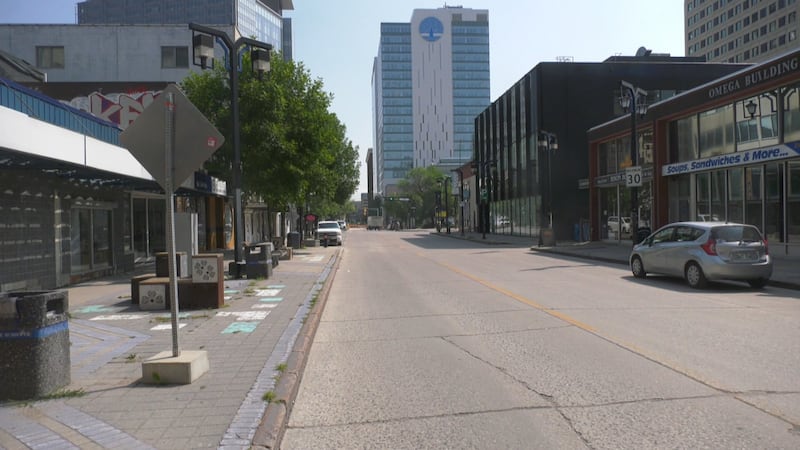
Calgary is set to receive billions of dollars in provincial funding under Alberta’s 2026 budget, with major investments directed toward transit expansion, schools, post-secondary institutions, health-care facilities and municipal infrastructure. The provincial government’s fiscal plan commits $74.1 billion in operating spending for 2026-27 alongside a three-year, $28.3-billion capital plan. More than $6 billion of that spending is tied to projects and funding streams affecting Calgary. The budget provides significant funding for LRT expansion, new schools, Deerfoot Trail upgrades, University of Calgary projects and downtown cultural infrastructure, while also introducing education property tax changes expected to affect Calgary property owners. Education property tax increase and Calgary impact One of the key revenue changes in Budget 2026—and one that will attract attention in Calgary—is an increase to education property tax (EPT) rates, which help fund school operating costs. Effective in 2026, residential and farmland EPT rates will rise to $2.84 per $1,000 of equalized assessment, while non-residential rates will increase to $4.17 per $1,000. For the median Calgary home, this translates to an additional $340 per year. The government says the increase is necessary to ensure EPT revenue covers one-third of education-related operating expenses, as outlined in the budget. For Calgary homeowners and businesses, where property assessments are among the highest in Alberta, the changes are expected to result in noticeably higher contributions to education funding. Municipal leaders, including Calgary Mayor Jeromy Farkas, have previously raised concerns about provincial influences on local tax levies and the pressure these place on municipal budgets. Critics say increase could hurt taxpayers Kris Sims, Alberta director for the Canadian Taxpayers Federation, called it “a tax hike, plain and simple,” noting Calgary homeowners are seeing higher increases than Edmonton because of the province’s valuation formula. “A lot of people don’t realize it’s the province hiking local property taxes in Calgary,” Sims said. Sims said rising property taxes, combined with growing government spending and debt, could frustrate residents and deter housing growth. Sims also said there’s a lack of fiscal discipline, pointing to increasing government spending on grants and arts funding while simultaneously raising property taxes. Anna Bodnar, senior director of government relations and policy at BILD Alberta, offered a different perspective, emphasizing the balance between taxation and infrastructure development. Bodnar said Calgary’s housing market remains strong, with demand continuing to outpace supply. “The budget invests in growth, infrastructure and schools that support our communities,” Bodnar said, adding that $808 million for municipal growth and the addition of new schools are key to sustaining Calgary’s expanding population. Bodnar said modernization of the housing regulatory environment and streamlined permitting could help lower costs and facilitate development, even as property taxes rise. Calgary projects and infrastructure funding Several of the largest allocations target Calgary’s transportation network. The province has committed $1.1 billion over three years to expand the Calgary LRT system, including development of an LRT connector to Calgary International Airport—a project that has been part of the city’s long-term transit plans for years. Deerfoot Trail, Calgary’s busiest highway corridor, will receive $266 million over three years for upgrades and improvements. Municipal funding represents another major component of Calgary’s share. The city is slated to receive $808 million over three years through the Local Government Fiscal Framework—funding designed to help municipalities manage infrastructure demands, growth pressures and service delivery. Education: schools and classroom supports Education spending remains a central feature of the provincial budget. Alberta has allocated $10.8 billion in K-12 operating funding for 2026-27, marking a 7.2 per cent increase from the previous year. The government also plans to add 3,000 teachers and 1,500 educational assistants over three years to address enrolment growth and classroom complexity. Within Calgary, the budget provides support for 45 ongoing school projects and introduces 14 new school developments. The city will also benefit from a portion of the province’s broader $3.3-billion school construction and modernization program aimed at expanding capacity in rapidly growing communities. University of Calgary and post-secondary investments Calgary’s post-secondary funding is anchored by investments at the University of Calgary. The budget earmarks $160 million over three years for a new Multi-Disciplinary Hub intended to expand research capacity and science-based programming. An additional $83 million over three years will support efforts to double enrolment at the university’s Faculty of Veterinary Medicine by the 2028-29 academic year. Health-care projects and community supports Health care continues to account for the largest share of provincial spending, with several Calgary-specific projects identified. The Richmond Road Diagnostic Treatment Centre will receive $36 million over three years for development of a new renal dialysis unit, including $34 million in new funding. Bow Valley College is slated for $5 million over two years to support expansion and development of a new health centre. Calgary is also included in a broader $319-million allocation shared with Edmonton for Compassionate Intervention Centres, facilities intended to provide addiction recovery and treatment services. Justice, public safety and oversight Budget 2026 outlines investments in justice and oversight infrastructure within Calgary. The province has committed $67 million over three years for a Court of Appeal facility in the city. Funding is also included to establish permanent Calgary offices for the Police Review Commission, supported by a $6-million allocation. Arts, culture and civic spaces Downtown cultural and public-space projects form another part of Calgary’s capital funding. The budget provides $59 million over three years for the Arts Commons (Werklund Centre) and Olympic Plaza transformation. The Contemporary Calgary Centennial Planetarium project will additionally receive $16 million.