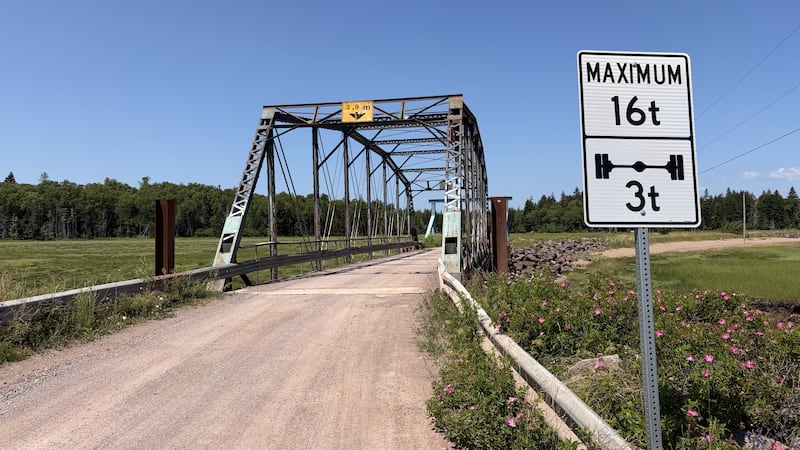
Not much has changed in the past year on the Peck’s Cove Bridge near Rockport, N.B. It’s still in pretty rough shape. In 2025, the Department of Transportation and Infrastructure (DTI) restricted its weight load from 43 tonnes to 20 because of its deteriorating condition. About a month ago, it was dropped again down to 16 tonnes. It’s an inconvenience for people who live in the rural area, and a financial and safety issue as well. Farmer Greg Hindmarsh had a large load of hay delivered for his horses two weeks ago, but the shipment didn’t make it to his door. “The guy was 16 tonnes empty, so he couldn’t cross the bridge. So, I was forced to take both of my tractors at each spot, split the tractors up and go back and forth for six hours hauling hay,” said Hindmarsh. “It’s brutal. Really brutal.” His neighbours, Mary and Larry Shaw from Massachusetts, recently built their dream home, but the cost was more than they expected. Mary said the bridge’s weight restriction was reduced last May about a week before work was scheduled to start. “One of the basic building materials you need to build a house is concrete,” she said. They went ahead with the build, but in some cases had to pay double for materials because smaller loads had to be delivered in multiple trips. “It substantially increased our construction costs,” said Mary. But the really big concern in Rockport is whether fire services could reach them in case of an emergency. “We would be very much out of luck if there were a fire down here,” said Mary. “They can’t get a fire truck over the bridge loaded and that’s a huge requirement to put a fire out,” said Hindmarsh. That’s Tantramar-Memramcook MLA Megan Mitton’s big concern, too. Mitton believes there are some tentative plans in place in case of an emergency, but stresses the bridge is a lifeline for people here. “There is no detour. That means that this is the only way in and out for people. That means it’s the only way in and out for emergency responders, fire service. So, this can be the difference between life or death,” said Mitton. Mitton said the level of stress for some people living in the area is high and the weight restriction is weighing on people. “Sometimes it’s because they can’t get insurance for fire. They can’t get a well drilled. They can’t get water delivered because of the weight of the machinery,” said Mitton. “What happens in an emergency. what happens if a fire starts?” CTV News Atlantic reached out to DTI for an update and a timeline on repair work, but did not hear back by deadline. Mitton said she’s been in constant contact with DTI and has been told repairs are slated for 2028, but she’s not certain the bridge will last that long. “That’s too far away. I’m very afraid that the bridge is going to fail and that it might even be reduced further in terms of weight restrictions,” said Mitton. Larry Shaw isn’t sure they would have built their retirement home if he knew in advance about the bridge. “But we love the place, we love the people. We can only assume something will happen and the bridge will get fixed or replaced or something,” said Larry. “But until that happens it is kind of a negative. If we had known in advance that the weight limit was going to drop this low I don’t know if we would have built.” Mitton believes the province needs to address the issue before there is an emergency, or possibly a tragedy. “People who live in rural areas deserve infrastructure that serves them just like people who live in urban areas,” said Mitton. For more New Brunswick news, visit our dedicated provincial page.