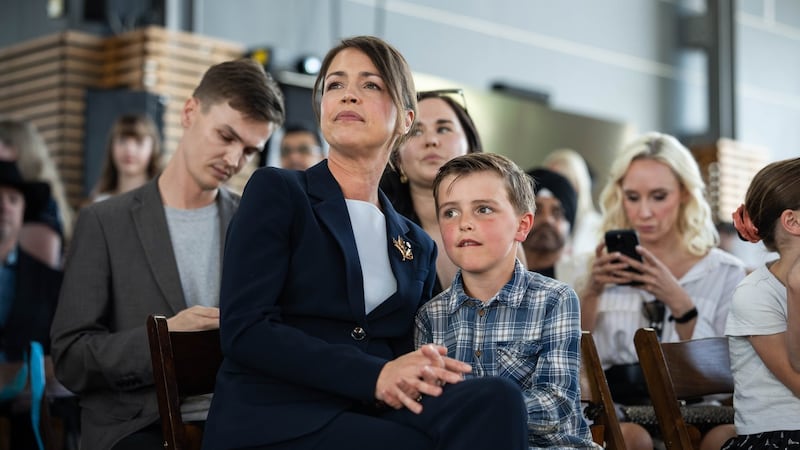
Parents of children set to lose autism funding under changes made by the NDP government made their case outside the B.C. legislature Thursday, along with members of the B.C. Conservatives. Diane Pearce stood along her daughter Madison, in Grade 10, saying she has benefited from support and arguing the funding changes set to be brought in by the NDP government are a mistake. “We didn’t have a hope,” Pearce told reporters in Victoria. “Public schools told us not to—we were wishing too much for her and pushing her too hard. But she’s where she is today because of that funding. Her dream’s to be an [education assistant], to help out.” Madison then jumped in, saying if she can become an EA she’d eventually want to move on to teach kindergarten. It’s an outcome that Pearce said wouldn’t be possible without the direct funding in place under the old system. April Johnman was another protest participant. She has a seven-year-old son with autism and with changes to direct funding, fears her son will no longer be able to work with those specialists she was able to involve using the previous direct funding model. “We are currently struggling with this news about the funding and losing it,” Johnman said. “It is important that he receives it, because we’ve already built a strong team, and with the new funding, or lack thereof, we will be losing those supports.” Under the changes children with autism who have higher needs will receive more money than before. If a child’s needs are classified as low, they may see reduced funding or no direct funding at all, though the government stresses there will be additional community supports put in place. The government has said the total funding will increase, and that the decision followed extensive consultation. “We are making a $475-million net-new investment for services and supports for children and youth with disabilities,” Minister of Children and Family Development Jodie Wickens said Thursday, before referencing the consultation process involving experts and families. “They told us other diagnoses that didn’t receive funding before needed to receive funding. Children with down syndrome, fetal alcohol spectrum disorder, intellectual disabilities—those children will have access to funding for the very first time.” But the B.C. Conservatives say increased support for some shouldn’t come at the expense of others. “We are excited and we celebrate the expansion that all kids with neurodiverse needs are being included in the new model,” BC Conservative critic Reann Gasper told the crowd at the protest. “But we cannot forget that because of that expansion, now other kids are being cut out.” Under the changes approximately 10,000 children with autism are expected to receive less direct support or lose funding altogether.