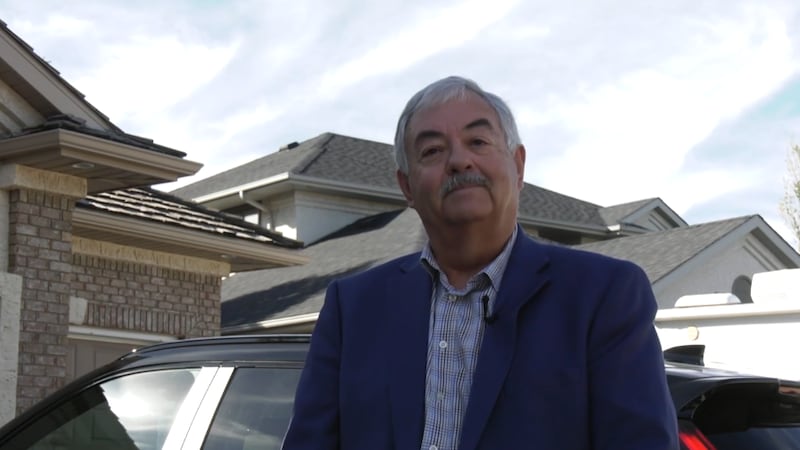
With Edmonton leading the country in increased housing starts and affordability, home buyers in the city now face a choice between well-loved houses or new builds. New Edmonton homeowner Brooke Truong is very familiar with how exhausting the process of moving – and buying – can be. She just bought a home in the Sherwood Park area built in 2017, which is not old by a housing standard, but not brand-new. She said it feels like “the one.” To her, the process is all about being prepared. For example, she said it’s always smart to properly inspect the places you’re looking at – at a professional level, if possible. “Don’t be afraid to spend money to inspect everything in advance, so you don’t have to spend another ton of money when you figure out, like, the sewer is messed up or something,” Truong said. “You have to fully prepare mentally and financially before getting a place.” She got the keys to her new home on Friday after moving from Calgary. She also used to live in Vancouver, where she rented, and quickly became aware of how “dense” the housing market was there. “Buying a house in Vancouver used to be my target, but the more I grew up … getting done with school and starting to go to work, I feel like it’s not worth it. So it’s always changing,” she said. Truong isn’t a first-time buyer, but said a realtor still helped her fill in knowledge gaps. “Realtors work with multiple clients. They won’t just know what to tell you, [so] whatever you need to know, just ask,” she said. Truong’s realtor, Rick Aujla, said home buyers in Edmonton should know the financial risks of what they’re buying. “If you buy a brand new home, then Alberta builders are actually legislated to provide home warranty, and there’s protection up to 10 years,” Aujla said. He said even slightly older homes like Truong’s are not always under warranty, making the owner “on the hook” for fixing anything. “Some people will tend to lean towards new homes, because there’s that peace of mind,” he said. Newer homes, he said, will have a “more modern finish up to today’s standard,” with more energy-efficient appliances. Older homes, though, win in personality, especially in more established neighbourhoods. “You get the canopy trees, you get more mature areas, you get the playgrounds close to schools,” he said. Ultimately, Aujla says it comes down to “individual styles and preferences [that] could change based on what you actually end up seeing and experiencing firsthand.” ‘A similar amount of problems,’ but ‘different problems’ Calgary-based lawyer Michael Bokhaut said there’s always a lot to consider when buying any property, new or old. “There’s probably a similar amount of problems in both, you just have different problems,” Bokhaut said. “Older homes, you tend to have problems, but you sort of know about them or expect them … For new homes, I find there are a lot more surprises. So you’ll buy a house and then the roof is leaking, and you can’t figure out why.” Older homes, he said, also tend to have had their initial new-home problems fixed or at least disclosed by previous owners. “You have to disclose defects that you know about, but most of the time … you just leave it for the buyer to do their own investigation,” he said. New homes, he said, still require Truong’s level of inspection, but on a more on-site and regular level as the home is being built. “Often the builders will invite you in for some of the inspections,” he said. Ultimately, Bokhaut said it’s about “trusting your gut,” bringing in an inspector and negotiating before buying if you notice any problems. Truong’s next adventure, she said, will be making her home her own – and dealing with any issues as they come. “I’m already looking in my bank account to see how I’m gonna fill up this place,” she said. “It’s rewarding to see the final outcome of this place.” With files from CTV News Edmonton’s Nicole Weisberg