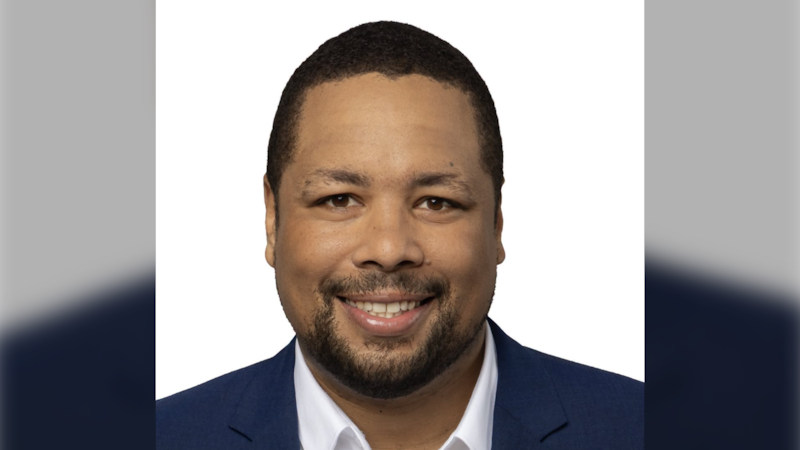
It was the Edmonton Oilers arena debate all over again at city hall on Thursday with a slightly different flavour. Most city councillors and business leaders agree a special tax program in the core is vital for the future prosperity of downtown. The sticking point is a directive from the provincial government to spend tens of millions of public dollars to build projects on land owned by the Oilers. City councillor and mayoral candidate Andrew Knack wants to halt a $250-million event park beside Rogers Place, the home of the Edmonton Oilers. The Oilers Entertainment Group (OEG), which owns the site, is using it as their outdoor Fan Park. The event park is listed as one of the so-called catalyst projects city money would help fund through the downtown Community Revitalization Levy (CRL). “I do support downtown revitalization, but I will not support a bad deal,” Knack, who represents the west-end Ward Nakota Isga, told media on Thursday morning. “We don’t even know if we need an event park yet ... there’s just this assumption that something new and shiny will solve everything.” The CRL was introduced in 2014 as part of the deal to build Rogers Place, which opened two years later with a final price tag of $613.7 million. The city paid $312 million of it in cash and through the levy, the team paid $165.5 million and the rest came via a ticket surcharge, the federal government and MacEwan University. The home arena of the Oilers opened in 2016, replacing Rexall Place, following years of debate and negotiation after Daryl Katz bought the National Hockey League team in 2008 from the Edmonton Investors Group for a reported $200 million. As the area within its boundary is redeveloped, the CRL is meant to reinvest that extra tax revenue into downtown. City staff have crunched the numbers and say extending the 20-year levy by an extra decade is worthwhile. “It is a comprehensive approach to developing downtown Edmonton, encompassing underground utilities, beautification of our streets and parks, creation and expansion of event spaces, improvement to transit stations and incentives for attainable housing,” Brett Latchford, the city’s director of strategy and emerging economy, said at Thursday’s public hearing. Kris Sims, the Alberta director of the Canadian Taxpayers Federation, drove to Edmonton from Lethbridge to express her concerns about the deal along with those from several others. “That’s fine, go ahead and revitalize the downtown … but why are you tying it to one element of corporate welfare?” Sims said. “That is not fair, and it’s not right.” The provincial government has final say over the CRL. Municipal Affairs Minister Dan Williams says it won’t be approved unless it includes the event park and site servicing for the housing planned north of Rogers Place. The province said it would contribute more than $100 million for those projects. Mayor Amarjeet Sohi said he understands why Edmontonians are upset but believes the deal would fall apart without the event park, which he says would be a major missed opportunity for downtown. “(The province is) a major funder of this, a major enabler of this plan, so they’re definitely going to have a say in this,” Sohi told media between hearing sessions. “Anyone who believes that we can find $175 million of new revenue or $103 million of grant funding I think is not living in reality.” A representative of the Oilers Entertainment Group (OEG), which operates Rogers Place and the Ice District plaza as well as the NHL team among other sports and entertainment enterprises, said the corporation is proud of its contributions to the CRL. “It has been a powerful tool for revitalizing Edmonton’s downtown core and helping to strengthen our education, arts, housing, and business districts,” Tim Shipton, OEG’s executive vice-president of external affairs, said in a statement to CTV News Edmonton. “The CRL has supported critical public infrastructure, attracted billions in private investment and created safer, more vibrant spaces for all Edmontonians. The MOU (memorandum of understanding) signed with the city and province represents a transformational city building opportunity, focused on additional housing when it’s needed most, and a one-of-a-kind community event facility with vibrant public realm spaces — developments that will not just benefit downtown, but the city as a whole.” The public hearing is expected to be held all day Thursday and Friday. Michael Janz, the city councillor for south-side Ward papastew, told CTV News Edmonton he believes the deal isn’t really about downtown, rather how a “provincial tax grab” is going to be distributed, asking would it “go back to Edmontonians, or is it going to go to one private business?” “We don’t even know the other options, because this was decided behind closed doors in a private negotiation between one business and our premier with the city of Edmonton along for the ride,” Janz said. “When you can’t walk away, when you’re being told you have to accept this deal on terms acceptable to the OEG, that’s not a negotiation.”