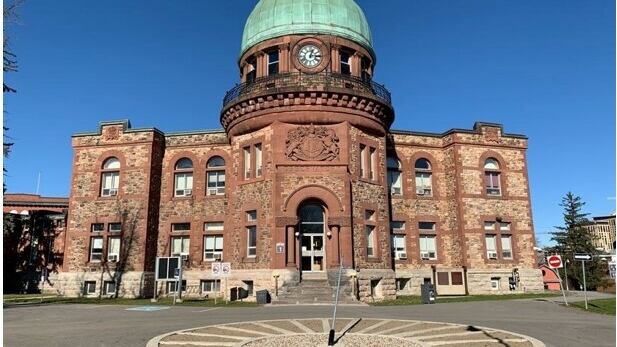
The Dominion Observatory Complex at Ottawa’s Central Experimental Farm has been designated a national historic site. Built between 1902 and 1954, the Dominion Observatory Complex served as a major centre for Canadian scientific research and a gathering spot for stargazers. Last week, Environment and Climate Change Minister Steven Guilbeault announced the complex is now a national historic site under Parks Canada’s National Program of Historical Commemoration. “For 65 years, the Dominion Observatory Complex was an important centre of research and collaboration in the fields of astronomy, geophysics, seismology and gravitational studies,” Guilbeault said in a statement. “The precision of its master clock was also instrumental in setting official time standards across the country. Today’s designation as a national historic site allows us to share important stories about our cultural heritage and stands as a testament to Canada’s ingenuity and dedication in pursuing scientific excellence.” The formerly retractable copper dome, which tops the octagonal tower of the Dominion Observatory, was constructed between 1902 and 1905. The Photo Equatorial Building at the site was built in 1914, the Seismology Building in 1913 and the Geophysical Building in 1954. According to the Parks Canada website, the federal government initially established the national observatory in 1890 in a small building on the current site of the Supreme Court. “In 1901, a new observatory site was selected in the northeastern section of the Central Experimental Farm,” says the Parks Canada website. “Far enough from the city to avoid light pollution, on a height of land suitable for astronomy, and close to a fault line for seismological research, the site could accommodate future expansion.” Parks Canada says in addition to its role as a research centre, the Dominion Observatory Complex hosted the Royal Astronomical Society, public lectures, guided tours and Saturday evening stargazing events. “We are ecstatic that this complex so integral to the furtherance of astronomical and earth sciences in Canada has finally received the heritage designation it deserves,” Stephen Nourse, past president on behalf of the Royal Astronomical Society of Canada, said in a statement. “This site is currently celebrating 120 years and we are delighted that future generations will have access to it to appreciate the wonderful buildings and to learn the rich history of all the dedicated men and women who did groundbreaking work here.”