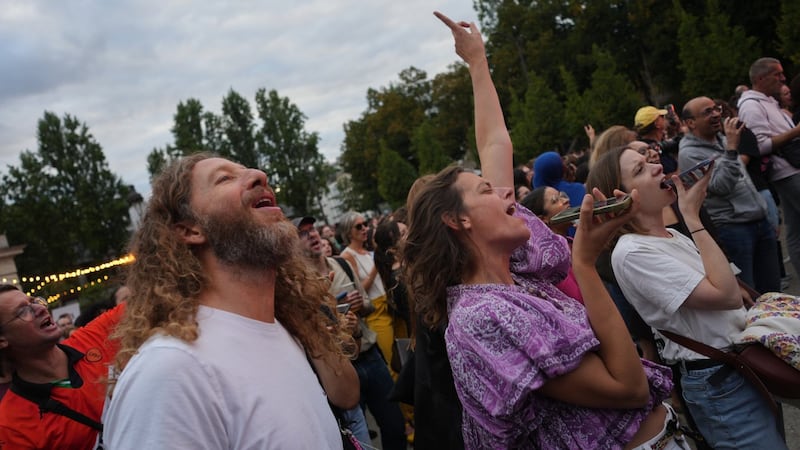
Allies of the LGBTQ+ communities answered the call issued by the Fondation Émergence to show their support and help in the fight. Hundreds of people gathered Sunday afternoon under sunny skies at Place des Festivals in Montreal for the citizen march organized by the Fondation Émergence. The date was no coincidence, as the International Day Against Homophobia and Transphobia is observed on May 17. “What’s most touching is seeing people from outside our communities standing with us to march, to say no to the rollback of rights we’re seeing everywhere,” said Victoria Legault, executive director of Aide aux Trans du Québec. “There are more allies than we think,” said Benoît, who has experienced bullying since coming out 10 years ago, as he watched the crowd gather before the march began. This year, the Fondation Émergence chose to call on allies, whose presence is more than necessary “to halt the setbacks and turn the tide,” argued Laurent Breault, the organization’s executive director. According to a recent survey conducted by the organization and Léger, 61 per cent of Canadians identify as allies of the LGBTQ+ communities. Breault noted, however, that nearly 30 to 40 per cent of those surveyed do not identify as allies because they do not know how to act or lack the necessary knowledge. “That’s part of the problem, of the issue we’re seeing right now: there are many people who support LGBTQ+ rights in Quebec and Canada, but who don’t say so out loud,” said Legault. “There are no small gestures when it comes to being an ally. We don’t want to put too much pressure on allies either, but it’s about realizing that being neutral isn’t enough,” said Breault. For Annie, who came to the rally with her six-year-old daughter, it’s important to do her part and show what it means to be an ally. “I think it’s important, in light of recent events, to raise our children in a more open world,” she said. Caroline, who advocates for LGBTQ+ communities to “no longer be seen as different,” echoed this sentiment. “There are movements taking shape, but they’re still very isolated. It’s important to promote this even more,” she said. An ongoing struggle The fight for the recognition of LGBTQ+ rights is far from over, especially on the international stage, Breault noted. Between Mali, which has criminalized homosexuality, anti-gender bills in the United States, and the ban on Pride parades in Hungary, the setbacks observed sometimes raise fears for civil liberties, even in Canada. “We feel that what’s happening in the United States is slowly making its way here and all over the world,” said Legault. “We really need to stay very vigilant, mobilize, and prepare to face it.” “When you realize just how much homophobia, transphobia, and biphobia still exist today, even among the youngest people, it brings on fears and anxieties, especially when you see everything that’s happening in other countries,” said Gabriel Robichon of ARCG—Seniors and Retirees of the LGBTQ+ Community. According to Robichon, allies can make all the difference because “by raising awareness, there is less fear, and that allows us to move forward.” Legault noted that every daily action matters, “whether within our family circles, on a board of directors, or in our professional settings.” “It’s really important to stay on the lookout for inappropriate comments,” she said. Breault, for his part, emphasized that the fight against homophobia and transphobia does not take place only on May 17, but throughout the year. This report by The Canadian Press was first published in French on May 17, 2026.