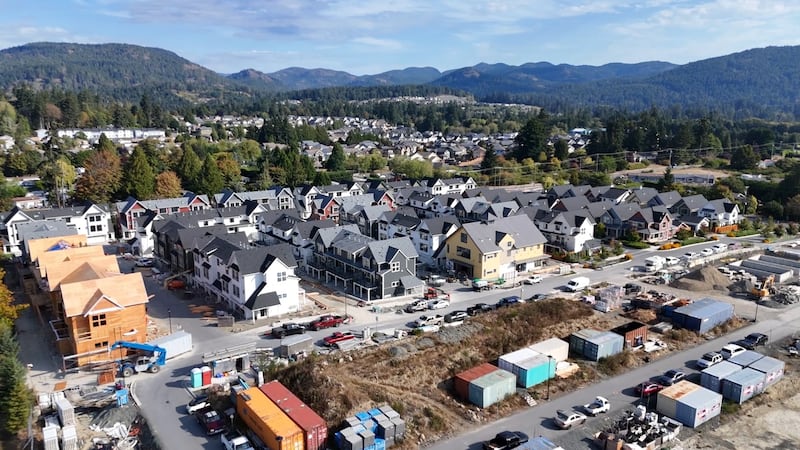
The Region of Waterloo has a new plan to keep the taps flowing and let developers get building again as it works on a water capacity problem. The policy doesn’t add any water capacity to the community, but the new policy creates a plan for when additional capacity sources are found. Regional council approved a Water Supply Capacity Allocation Policy to help with future growth. “It’s going to help the lower tier municipalities get the authority they need to allocate water and get on with development in Waterloo Region,” Joseph Puopolo, co-chair of Build Urban, said. “So, I’m overall supportive of it. Understanding that there’s still more work to do with the lower tiers.” As CTV has reported for several months, there is a water capacity issue in the Manheim Service Area. The region can’t support any new developments in Kitchener, Waterloo, parts of Cambridge and in some townships until capacity is increased. The region said water capacity is adequate for most of Cambridge, Baden, New Hamburg, Wellesley, North Dumfries and other areas outside the integrated urban system. Development permits in those areas will be approved as usual. Under the new policy, if a new water supply is found, or existing capacity is restored, certain amounts will be allocated to municipalities for site-specific developments. Capacity will be allocated based on forecasted population and employment growth on a quarterly basis to start, and less frequently if water supply becomes abundant enough. “I definitely think there’s steps in terms of restoring existing capacity as well as adding new capacity. But I think it’s very, very important that the process of new development gets going because it has a real impact to not only municipal budgets, but also real people’s lives,” Puopolo said. Puopolo said this time of the year is typically busy for construction, but many workers are waiting to build. Puopolo is also the co-CEO of Polocrop. He said his company hasn’t had to lay anyone off, but the uncertainty has been challenging for many developers. “The trades, it impacts their ability to earn a livelihood for their family. It creates economic insecurity for the region. I am heartened that I do feel that it is coming to a resolution in a stepwise way. It’s just a shame that we’ve lost six months of process to get here,” Puopolo said. “But there are other groups and large-scale developments that went to go pull permit this year, and they’re now waiting on the sidelines and can’t go forward. This is why, if it persists, which I don’t believe it will be beyond June, but if it persists, the impacts will be catastrophic.” According to Puopolo, it’s been hard at times for the builders to be heard, but the region seems to be including them in their plans now. “Their future tax base depends upon development happening and developers paying into that and collectively the downstream impact. If this doesn’t get resolved, it’s ultimately going to result in fewer services, higher taxes, because ultimately there’s projects that still need to go ahead. But short of having the funds in order to do that, it’ll impact us,” Puopolo said. “We have to maintain that momentum because the world is watching. Water is liquid, but capital is extremely liquid as well, and it will flow to other places if it feels that it can’t make a safe investment here.” The policy also allows for council to consider reserving water capacity for community projects with a region-wide impact. Schools, childcare and religious institutions can proceed with building, while development permits that don’t need additional water demand will also be approved.