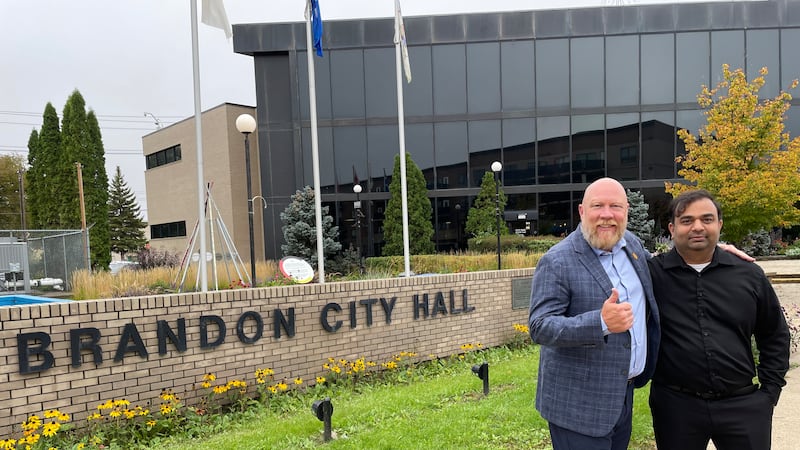
Bernie Funk was in the market for a new cell phone when he received a phone call from someone claiming to be his cell phone provider, Rogers, advertising a deal on an upgraded plan. “I gave them my ... personal information, my SIN number, my driver’s licence, all that. And a couple days later, I received not one, but two phones in the mail,” Funk said. Upon receiving the incorrect order, Funk contacted the caller who had previously advertised the deal to get to the bottom of it as he began growing suspicious of the transaction. “The first red flag was when I got two phones in the mail. As soon as I opened them up, I knew something was wrong. And so when I called them and they said, ‘Yeah, we made a mistake, don’t turn them on, they’re not in your name.’ That was my second red flag,” Funk said. Funk shared that the caller sent him a shipping label for the return that didn’t match the return address on the original package. This address was intended for the United States, which didn’t make sense for a Canadian company. Instead of taking the phones to the mailbox, Funk took them to the Saskatoon Police Service (SPS), where he learned that he hadn’t been communicating with Rogers at all. According to police, this scam has been popping up across Canada and creating problems for cellphone carriers, law enforcement, and those who are targeted. “For the fraudsters, it’s usually very successful. The phones are usually shipped ... to phantom addresses, commercial addresses or empty lots. Most often, those packages will be intercepted before they’re delivered ... or they’ll be delivered and then they’ll be just picked up by a phantom. So, it’s very hard to trace,” Staff Sergeant, Matthew Bradford of SPS Economic Crimes said. How it works According to Bradford, while the cellphone companies and other details vary, the details of the scam typically follow the same format. The victim receives a call from the scammer, claiming to be a telecom company offering a deal or special offer. After taking the victim’s personal information, the scammer then turns around to the legitimate telecom provider and pretends to be the victim ordering a product. This product, however, is never what the victim had ordered. “What the victim doesn’t know is that the phones are always wrong. There’s either the wrong colour or the wrong model, Samsung versus Apple, that kind of thing,” Bradford said. This error then prompts the victim to contact the scammer (believing them to be the legitimate telecom company) to resolve the issue. The scammer then sends a fraudulent shipping label to make the return, which will send the phone to the scammer instead of back to the legitimate telecom company. “The phones are not going back to the carrier. The phone is going to the bad guy. It’s going to the fraudster. So, then the fraudsters end up with the devices and the victim ends up with those phones on their account basically stuck with the bill,” Bradford said. The staff sergeant added that SPS has never identified a suspect in this type of file, and the success rate for the scammer is typically high due to the nature of the crime. “They’re often being sent out of province. So we’ll see most of the packages will end up out east. Some go west, but usually not within the province itself. So that presents its own challenges with the cross jurisdictional getting another police agency to go check out an address, etc. is challenging,” Bradford said. In a statement to CTV News, a Rogers spokesperson shared that the company is aware of the scam. “We are continually updating our processes and sharing information with our customers on how to stay protected as scammers evolve their tactics. We use a variety of ways to warn our customers about return scams, including prominent alerts when shopping online, in customized shipping notifications emails, and in information sheets inside the box when their device arrives.” Meanwhile, Funk is in the process of resolving the issue with Rogers and having the two cellphones removed from his account. “I think more people need to be aware of this. There are so many people out there who fall for these scams, and people need to be aware that this is going on,” he said. Both Bradford and Rogers provided tips for avoiding scammers, which include not providing personal information over the phone, reporting suspicious phone calls and always hanging up on a phone call that feels suspicious.