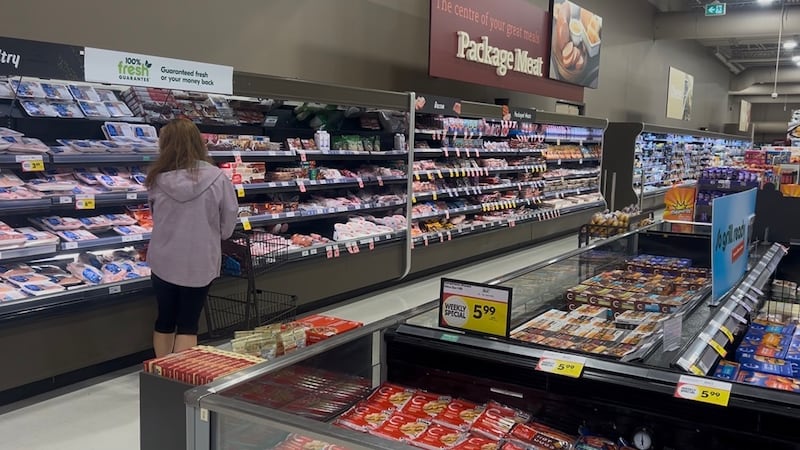
The Gateway Meat Market in Dartmouth, N.S., is busy most days. The line at the discount grocery store tends to slow significantly near the protein section. “I would say chicken is one of our most sought-after items,” says Tamara McKay, social media manager for the store. With beef prices high, more people are deciding to put chicken in their carts. “I’m not a big fan of chicken, so I don’t eat a whole lot of it, but again, for the chicken legs and things like that, I go for them here,” says customer, Leanna Patterson. As customers move toward chicken, availability is becoming a problem. “We have noticed a little bit that the supply is a little bit down. We buy everything locally from Berwick,” McKay says. “A lot of consumers are looking for different sources of protein, and there’s just no Canadian chicken. Supplies are really low, so we’ve been importing way more chicken coming from the U.S. and Chile mostly, but mostly from the U.S.,” said Sylvain Charlebois, head of Dalhousie University’s Agri-Foods Lab. That’s still not enough to meet the demand, according to Charlebois. “Because of supply management you have high tariffs and you need the government to actually allow more products into the market, but there’s been so much lobbying going on to protect our market that a lot of politicians are concerned and not wanting to do anything about it,” Charlebois said. Charlebois noted wholesale prices have already doubled year-over-year and major jumps are expected over the next several months. “It’s likely going to exceed five per cent, we’re expecting probably chicken prices to increase by as much as 20 to 25 per cent,” he said. The goal now for McKay is to try to keep her prices as low as possible. “We’ve always problem solved month-by-month as markets change, but we tend to be able to get creative and be flexible and pull from a budget somewhere else just to help our customers out with the staple we know that they need to feed their families with,” she added. A challenge that’s becoming more and more difficult.