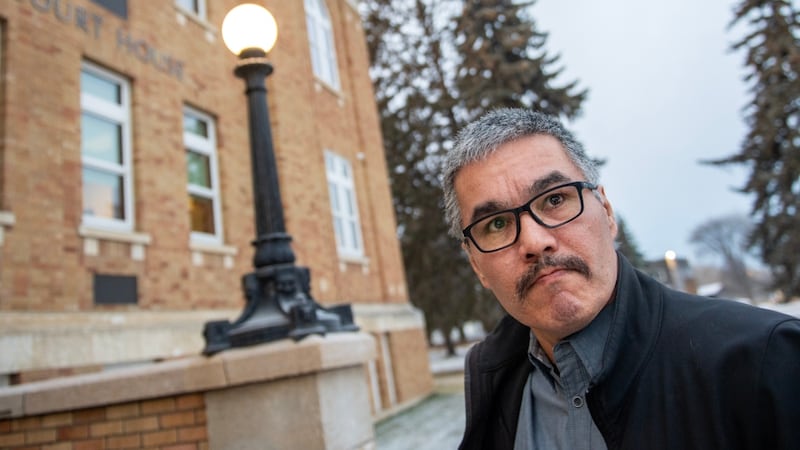
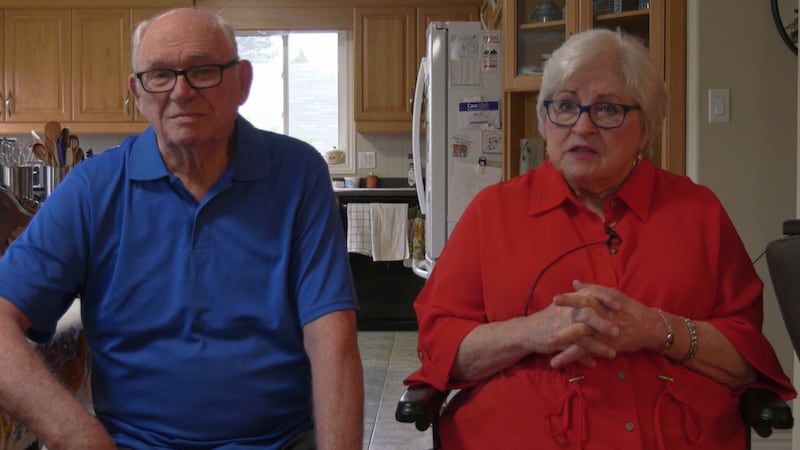
Three siblings separated by the Sixties Scoop have reunited in Winnipeg, including one sister who flew in from Oregon after only recently learning she had a family looking for her. Melody Roberts arrived at Winnipeg Richardson International Airport on Sunday night to meet her brother Joseph Lambert and sister Donna Morin for the first time in person. It was Susanna Tasse, social services and outreach coordinator for Winnipeg-based Hope Centre Health Care, who set the reunion in motion. Tasse said she recognized something in Lambert, one of her clients at the centre, which is designed to help people find healing. “Just dealing with another client in need,” Tasse recalled, “a client that happened to have opened up over this life, being an adoptee, and feeling that he didn’t really have anyone and wasn’t really wanted anywhere he went.” She said she asked him directly whether he thought he might be a Sixties Scoop survivor and that he had no idea what that meant. “He thought I was a conspiracy theorist,” Tasse said. “He said he’s had many workers; no one’s ever explained that to him before, and no one’s ever mentioned that that could be a possibility.” Lambert took time to think, Tasse said, before eventually returning to tell her he didn’t want to die without knowing who he was. Tasse began pulling post-adoption records, working through what she describes as going “through a rabbit hole.” Lambert, now almost 70, turned out to have people who had been searching for him for years. “It’s life-changing,” Lambert said Tuesday, standing next to his sisters. “I didn’t know I had a family. I got papers from the adoption agency telling me I came from a family of nine, and I had no idea that they were out there.” The Sixties Scoop refers to a period stretching from the 1950s through the 1980s, during which Canadian authorities removed thousands of Indigenous children from their communities and placed them with non-Indigenous families—in some cases, sending them to other countries. According to a provincial inquiry, Manitoba had sent more than 3,400 Indigenous children to adoptive homes between 1971 and 1981. Morin, who was raised by her mother, said she had known about her siblings for 40 years and had kept her name in the adoption registry, waiting. “It took that long for them to find me,” she said. “I’ve been looking for them for that long.” For Morin, the family was written all over their faces—Roberts a mirror of another sister and Lambert a reflection of their grandfather. The reunion carried grief alongside joy. The siblings’ parents have since passed, as have some of their siblings. Two surviving brothers were unable to travel, though Morin said they would connect with them by phone. Roberts knew she was adopted, but said learning the truth a few months ago came as a shock. “It was kind of shocking, but at the same time it was like, ‘Wow, you know, I have a family out there,’” she said. “It was nice to find all the information out.” Tasse said she tracked Roberts down in the United States before locating Morin—who, it turned out, lived just blocks away from Lambert in Winnipeg. Arrangements at the airport Sunday night had been carefully made, she said, with a welcoming party that were waiting. “It was a late night, but it was worth it.” For Roberts, the moment was indescribable. “You really don’t have words. You just come in and you just see your brother and your sister, and it’s just wonderful. It’s very heartwarming to see them in person.” Lambert said he struggled to settle on a single emotion. “It was scary; it was beautiful. It was so many different emotions. It’s hard to nail one down. Just really, really happy to see her.” Tasse said the case illustrates how needlessly difficult the system makes these searches, with expensive records, hard-to-reach information, and individuals who are increasingly difficult to locate. “I know how hard it is to navigate the system. I know that they don’t all have funds to walk into Vital Statistics to pull records—everything costs money,” she said. “We need to make it easier to be able to get these records. We need to make it easier to be able to find people.” “This organization, they reached out and they made it happen,” Roberts said. “And that’s what needs to happen to everybody.”