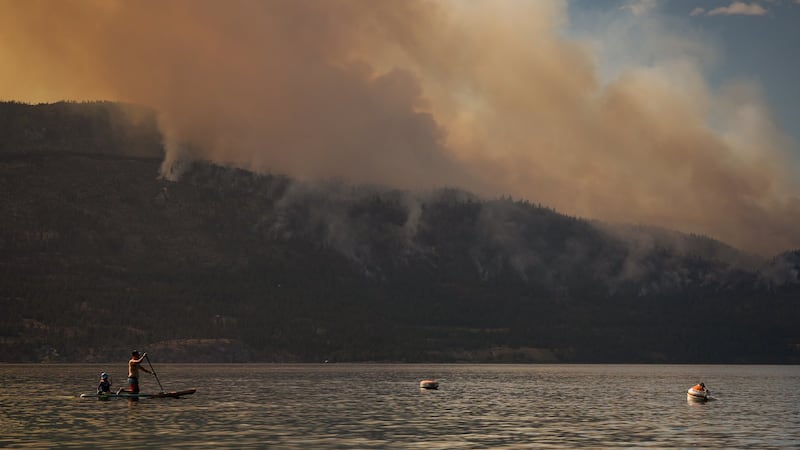
As the wildfire situation went from bad to worse over the B.C. Day long weekend, previously unaffected communities found themselves declaring states of emergency and issuing evacuation orders and alerts. Province-wide, however, there was no such emergency declaration. Why? According to wildfire officials who spoke at a news conference Tuesday morning, declaring a provincial state of emergency would allow the B.C. government to use a set of “tools” that it doesn’t currently need. As examples of measures a provincial state of emergency would enable, Minister of Emergency Management and Climate Readiness Kelly Greene listed travel restrictions, rationing of supplies and commandeering accommodations for wildfire evacuees. “Those tools are not needed right now,” she said. “Right now, every single jurisdiction in B.C. that is fighting a wildfire has a state of local emergency in place. That enables our first responders and firefighters to take the action that they need to fight the wildfire, protect communities and protect lives.” Greene acknowledged that the wildfire situation in the province is evolving, and said the government “won’t hesitate” to declare a provincial state of emergency if one becomes necessary. Tuesday’s news conference followed a long weekend that saw a cold front dramatically shift the landscape of wildfires in the province. The Bradley Creek wildfire, which was discovered July 31, exploded in size, sweeping through Okanagan Indian Band reserve land and along the northwest shore of Okanagan Lake. The band said in its own news conference Tuesday morning that approximately 230 homes had been destroyed by the blaze. As of 9 a.m. Tuesday, there were 37 evacuation orders in place across the province, affecting roughly 8,000 people and 7,300 properties, according to Greene. A further 37 evacuation alerts affected an additional 7,100 people and 3,800 properties. Greene, Forests Minister Ravi Parmar, Water, Land and Resource Stewardship Minister Randene Neill, and B.C. Wildfire Service director Cliff Chapman each began their remarks at Tuesday’s news conference by thanking the public and emergency personnel for their response to the recent “challenging” wildfire conditions. Chapman also warned that dry lightning is possible later in the week, which could cause additional wildfires to spring up across the provincial Interior, which is facing a “drying trend” with the weather pattern this week, on top of existing drought conditions. This is a developing story. Check back for updates