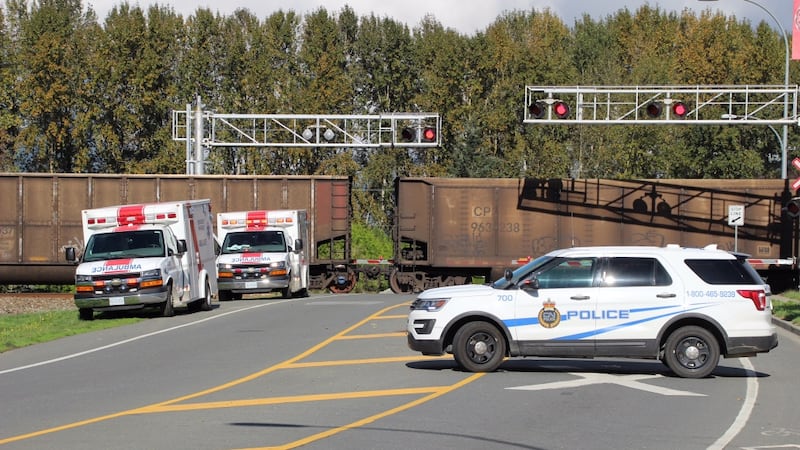
British Columbia’s chief coroner is urging the public to exercise caution around railway tracks after preliminary data showed more than twice as many people have died in accidental train collisions so far this year compared with the same period in 2025. The B.C. Coroners Service says there were 13 unintentional railway deaths between Jan. 1 and Aug. 30, 2026, compared with six during the same period last year. The figures were released as the province marks its annual Rail Safety Week, reminding pedestrians, cyclists and drivers to take safety precautions as rail fatalities rise. “We have seen an alarming increase in unintentional railway deaths so far in 2026,” said Dr. Jatinder Baidwan, the province’s chief coroner, in a statement Monday. “It is more important than ever that we remind everyone to pay attention to their surroundings at railway crossings and that trains move faster and take longer to stop than you think they do.” The B.C. Coroners Service did not immediately respond to questions about what may be contributing to the sharp increase in accidental railway deaths in recent months. Officials are reminding the public to obey all railway crossing signs and signals, look and listen for approaching trains and stay off railway property when possible. “Rail safety is everyone’s responsibility,” said Mike Farnworth, Minister of Transportation and Transit, in a statement. “Whether you’re driving, cycling or walking, take a moment to look, listen and follow instructions at railway crossings.” More than 100 people are seriously injured or killed on railway property in Canada each year, according to Transport Canada and the Railway Association of Canada. CN reported 252 railway crossing incidents in Canada in 2025, resulting in 69 deaths and 60 serious injuries, according to data provided by the coroner’s service. “Every crossing and every set of tracks deserves your full attention,” said Sawn Will, CN police chief, in a statement. “The vast majority of rail incidents are preventable. That’s why every safe choice we make around trains and tracks can save lives. “