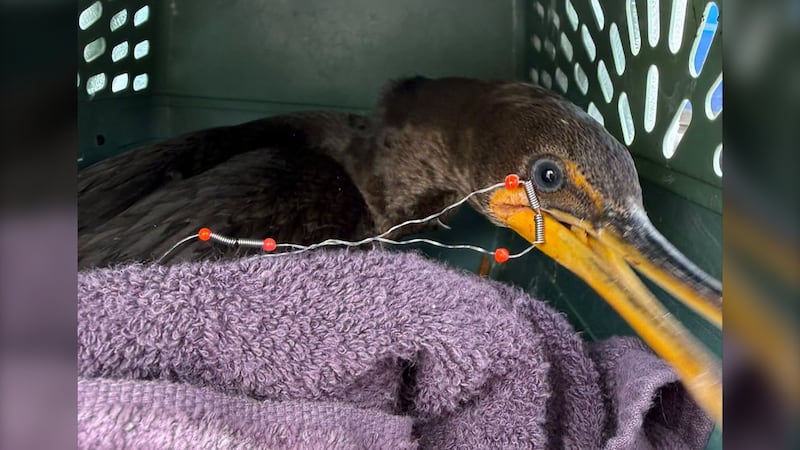
A bird rescue down by Barrie’s waterfront caught the attention of many passersby over the weekend. Simcoe County Emergency Animal Response (SCEAR) says on Saturday around midday, it received at least 10 to 15 calls for a cormorant wrapped up in fishing wire and, stuck in its body, were fishing hooks. The bird was near Centennial Beach. Kurt Vondercrone, executive director of SCEAR, says it was tricky rescuing the cormorant as they are diving birds. “They’re really hard to catch,” Vondercrone tells CTV News. Based on cormorants’ feet, they don’t typically walk on land, but he says they “got lucky” as the cormorant eventually ended up on a rock on its own while the volunteer from the response group was there. The volunteer was able to get behind the cormorant without startling it and managed to contain it in a carrier. SCEAR then transported the bird to a wildlife veterinarian for the removal of wire and hooks. Cormorants are dark-coloured, medium to large aquatic birds often found in and around bodies of water. They often have a bright orange or yellow patch on their face. Native to Ontario, the birds have been a target of controversy over the years. Since cormorants’ primary diet are fish, they can contribute to a lower fish population. Also, their excrement can be damaging to trees. While they do eat fish, some of the species they eat are invasive. “Our focus is the rescue side,” says Vondercrone. He says his organization won’t turn away any wildlife, but in rare cases like a phenomenon known as capture myopathy, they may abort a rescue. Capture myopathy is when an animal is faced with a situation causing them extreme stress, including being captured. In this case, Vondecrone says they would refrain from doing a rescue and that every rescue is “situation-dependent.” “It’s about understanding the animal and what it can suffer from,” he says.