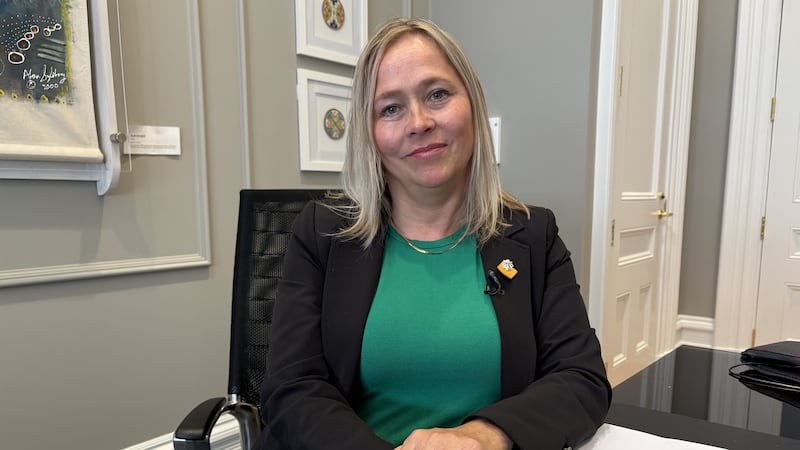
The First Nations Health Ombudsperson Office (FNHOO) says it has found “systemic failure” in the province’s new involuntary treatment legislation. The Compassionate Intervention Act was officially passed last month and allows for forced addictions treatment in certain cases. Specifically, the province says it applies to those who can’t seek help themselves and may present a danger to themselves or others. However, Dianne Lafond, the First Nation Health Ombudsperson, says the act was passed without independent review, while ignoring First Nations protocol processes and governance laws. She added it was also passed before the facility could be built in North Battleford. “They introduced it on the last day of the fall 2025 sitting, and they passed it without serious legislative debate,” she said in a news release this week. “Now, Saskatchewan Hospital North Battleford will house the first, and currently the only, Compassionate Intervention Assessment Centre and in-patient unit in the province. The process may be over, but the oversight will not.” Lafond also says the Legislative Assembly ignored every amendment to the act that might have addressed serious concerns. “First Nations people in Saskatchewan already experience the addiction and overdose crisis at dramatically higher rates than the general population, which is a direct consequence of colonialism, intergenerational trauma, systemic poverty, and a healthcare system that is not adequately equipped or resourced,” the FNHOO wrote. “This legislation does not address any of those root causes; instead, it creates a new coercive system enforced by police and courts, the very institutions where First Nations people face the most entrenched racism and documented discrimination.” The FNHOO said passing the act violated the government’s legal duty to consult as well as the Free, Prior, and Informed Consent principle outlined by the United Nations Declaration on the Rights of Indigenous Peoples. However, Saskatchewan’s Ministry of Health maintains that it had “targeted discussions” with Indigenous leaders from across the province about the needs of their communities. “Extensive engagement was conducted with nearly 400 stakeholders across multiple sectors - including physicians, Indigenous leaders, recovery treatment providers, health and human service professionals, Chiefs of Police, the Bar Association, the Trial Lawyers Association and members of the judiciary – all invited to participate in one of 15 information sessions,” wrote a Wednesday statement from the ministry. “The project team will continue engagement through targeted consultations as implementation progresses.” The ministry further argued concerns raised by the First Nations Health Ombudsperson were already addressed by the current legislation. “For example, Indigenous representation on the board overseeing Compassionate Intervention is mandated under the current legislation: “… at least one member must be a person of Indigenous ancestry,” the statement read. The ministry also pointed to the Act mandating access to a lawyer for anyone ordered into treatment involuntarily, adding that more protections will be built into future policy, regulations and training. “Treatment spaces for patients admitted under The Compassionate Intervention Act will be separate from the existing voluntary treatment spaces,” the ministry said. “The Mental Health and Addictions Action Plan outlines a full continuum of services across the province including withdrawal management, voluntary treatment and involuntary treatment. The Compassionate Intervention Act is simply one more tool for addressing addictions challenges in our communities.” The ministry finished its statement saying it welcomed the opportunity for a meeting between the First Nations Health Ombudsperson and Mental Health and Addictions Minister Lori Carr to further discuss the Act.