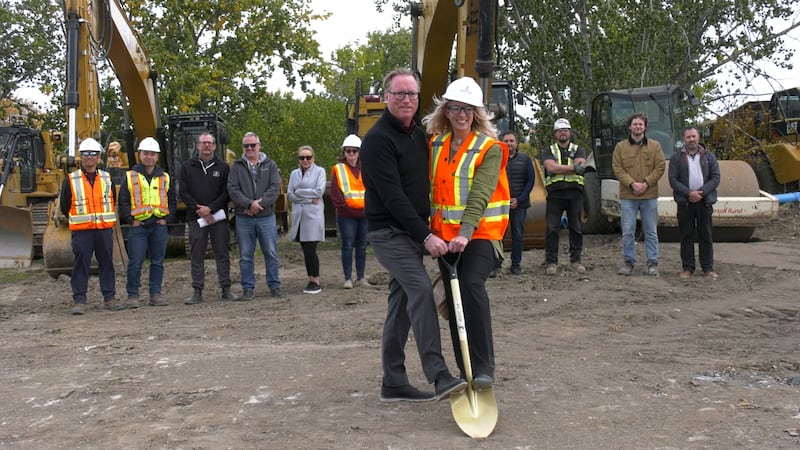
A Vanier Park has officially been renamed in honour of Mary Papatsie, an Inuk woman whose death remains under investigation by Ottawa police. Papatsie, originally from Pangnirtung, Nunavut, was 39 years old when she was reported missing in Ottawa in 2017. Her remains were found in Vanier in 2022, inside an apartment building that was under construction. Police are investigating her death as a homicide. A renaming ceremony took place Tuesday, as Emond Park officially became Mary Papatsie Park. A new park sign was unveiled at the event. Many close to Papatsie paid tribute to her life and brought attention to the epidemic of missing and murdered Indigenous women. “I met her like four times when I was little then she went missing, it was hard on all of us,” said Papatsie’s son Sawyer Forsyth. The event coincides with Red Dress Day, a National Day of Remembrance for missing and murdered Indigenous women, girls and Two-Spirit people. “I think people believe that Red Dress Day is not for them, but it is absolutely for them. It’s for them to learn and for them to do their part. They don’t teach this in school and if they do, a lot of the times they don’t teach it properly,” said Jennifer San with the Ottawa Aboriginal Coalition. “It’s not just for Indigenous people. It’s not just an Indigenous problem. It’s everybody’s issue and everybody needs to be addressing it.” Steve Morris, whose sister adopted two of Papatsie’s sons, said he hopes more conversations on the issue will bring more awareness. “I think having closure for families across Canada who are experiencing the same issues that we have here in Ottawa will hopefully bring justice to and (bring) a lot of closure for families as well,” Morris said. The renaming of the park at the corner of Emond Street and Deschamps Avenue was approved by Ottawa city council in October 2025 and organized with support from Papatsie’s family, Rideau-Vanier Coun. Stéphanie Plante and local Indigenous organizations. “The epidemic of missing and murdered Indigenous women and girls needs to be commemorated and needs to be remembered. It is, sadly, a part of our Canadian history and events like this are what we need to make sure that we never forget who these women are and why this has to stop,” Plante said.