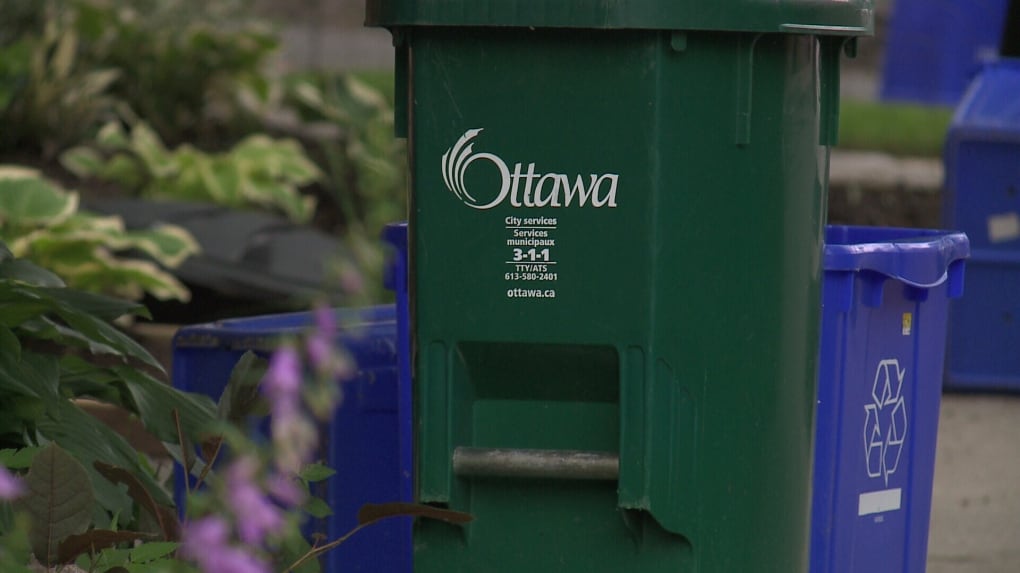
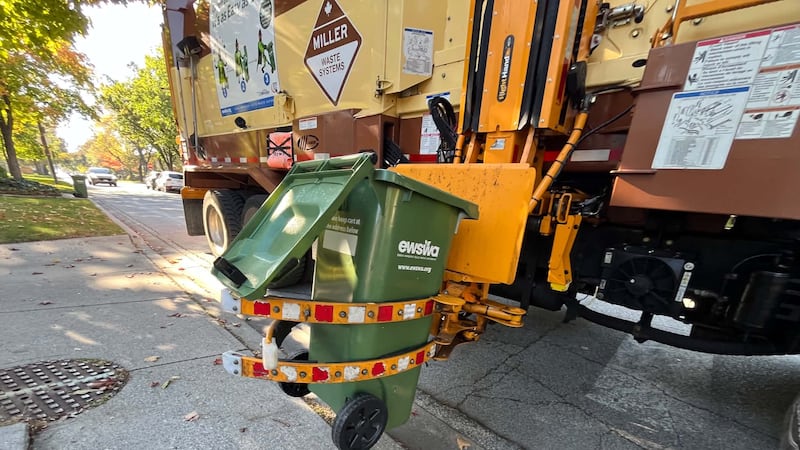
The City of Ottawa is exploring options to process household organic waste in the future, including using an emerging technology that would process organic waste and generate renewable natural gas. The city’s contract with Convertus, formerly known as Orgaworld, to process household food waste, soiled paper products and pet waste from the Green Bin and leaf and yard waste is scheduled to end in March 2030. There are two one-year contract extensions available for the city. A report for the environment and climate change committee meeting on Tuesday recommends the city issue a request for proposals for private companies to handle green bin waste, with proponents allowed to propose a facility using either composting or anaerobic digestion to handle organic waste. The city is looking for a five-year contract, with an option for a five-year extension. The proposed new processing facility in Ottawa would have capacity for 60,000 tonnes of source separated organic waste per year. Ottawa’s Green Bin waste is currently processed by aerobic composting, which is the “decomposition or organics in the presence of oxygen into a nutrient rich product,” according to staff. Aerobic composting is the processing of organic waste using oxygen to break it down into compost, widely. Staff say it’s a widely used method. Anaerobic digestion is processing organic waste without oxygen to produce biogas. The city hopes to issue a request for proposals this year, with the new facility ready to accept waste in 2030. Here is what you need to know about Ottawa’s organic waste. Green bin Ottawa households and many apartment buildings currently have green bins for source separated organics, which includes food waste, soiled paper and other organic materials and leaf and yard waste. In 2018, the contract was amended to include pet waste and plastic bags. The source separated organics is one part of Ottawa’s waste diversion strategy, which is designed to extend the life of municipal landfills. Ottawa’s current contract with Convertus has an annual minimum tonnage guarantee of 75,000. What is aerobic composting? City staff say aerobic composting is the most prevalent method for processing source separated organics. It is currently used by Convertus to process organic waste in Ottawa. “Aerobic composting is the decomposition of organics in the presence of oxygen into a nutrient rich product,” staff said. A feasibility study conducted by GHD Limited for the City of Ottawa says aerobic composting has an “ease of implementation and simple operation both for food waste and leaf and yard waste.” “Although it generates a readily usable and desirable byproduct (compost), there is no energy generating component to the process as no methane is produced from the breakdown of materials through the process,” the report said. “From a capital cost perspective, anaerobic composting solutions are typically less costly to implement and simpler to operate compared to anaerobic digestion.” The composting process operates continuously for 17 to 42 days for active composting and 14 to 21 days for the curing or maturation process. The report notes aerobic composting is a “common practice” around the world due to its “ease of implementation and simple operation both for food waste and leaf and yard waste.” What is anaerobic digestion? Ottawa’s Solid Waste Master Plan directed staff to plan for anaerobic digestion (AD) as the future processing method of the city’s green bin, which would generate biogas that would be upgraded to renewable natural gas. “AD is an emerging technology for processing organics in the absence of oxygen to produce biogas for energy,” staff said. According to the GHD Limited feasibility study, AD is a “natural process that degrades organic matter in the absence of oxygen and produces biogas.” “The generated biogas is comprised of approximately 60 to 70 percent methane and 30 to 40 percent of carbon dioxide and other trace gases,” the report said. “AD is an extensively used technology for the treatment of biodegradable organic waste around the world, especially in the wastewater treatment industry, where it is common practice to use it to digest sewage sludges. The benefits of using AD include renewable natural gas (RNG) generation from biogas, reduction in greenhouse gas emissions, reduced surface and groundwater pollution relative to traditional solid waste handling methods (i.e. landfilling), and a potential revenue stream created from waste and waste byproducts.” The report says AD tanks operate continuously with a minimum hydraulic retention time of 16 days, and biogas generated from the facility will be managed via a management system. Options for the City of Ottawa The feasibility study by GHD Limited concluded both anaerobic digestion and aerobic composting “achieves the city’s primary objective of diverting organics from landfill.” The report says aerobic compositing is cost completive. While AD can provide “additional GHG benefits through renewable natural gas production, the incremental benefit is modest for municipal SSO relative to the GHG benefits through landfill diversion programs that can be utilized by either technology,” according to the study. The feasibility study says the preferred solutions for the City of Ottawa are a new composting facility built and operated by the private sector or a new private facility for anaerobic digestion built within the city. Staff say aerobic composting is cost competitive and anaerobic digestion can provide additional greenhouse gas benefits through renewal natural gas production. “The incremental benefit is modest for municipal source separated organics relative to the GHG benefits through landfill diversion programs that can be utilized by either technology,” the report said. The lowest costs to the city are a private aerobic composting facility and a private anaerobic digestion facility. Three other options the city explored are: