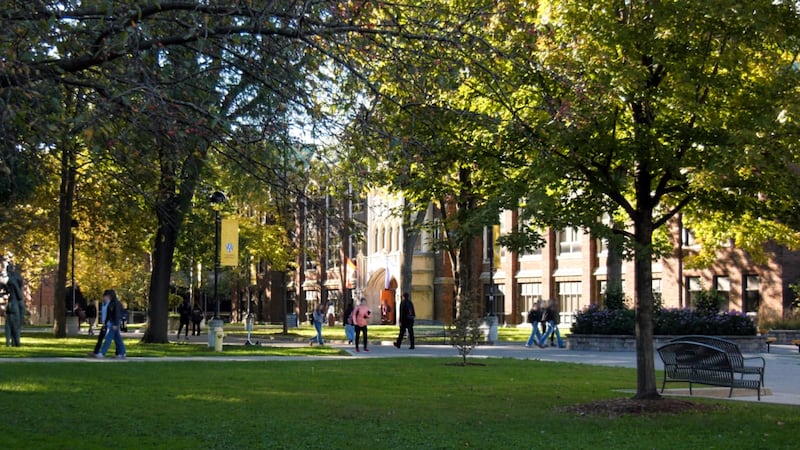
SYDNEY, N.S. - At first glance it may seem hard to believe, but scenic Open Hearth Park in Sydney, Nova Scotia, with its vast green spaces, is located on the same site as the former Sydney tar ponds. The massive toxic hazardous waste site was once filled with slag from steel plants, and local rivers were polluted with run off from the nearby coke ovens. “At one point there were more than 4 million litres of sanitary sewage going into that space each day,” said Donnie Burke, senior director of Build Nova Scotia, who is tasked with monitoring the water quality in the area. The pollution in the industrial Cape Breton started building up in the late 1800s. The long-term environmental impact was devastating, placing a major strain on the wildlife and fish. “The fish were very stressed and they had deformities,” Burke said. But Katherine Jones, a biologist at Cape Breton University, has good news to report. She examined samples of the tiny mummichog fish living in Coke Ovens Brook, Muggah Creek and Wash Brook and discovered their health has dramatically rebounded because water pollution levels have improved in recent years. “The fish don’t show any bone abnormalities, or fin rot or fin erosion and their asymmetry has also improved,” Jones said. “Asymmetry is a sign of developmental stress, so fish that are more symmetrical have experienced less stress while they are developing.” Other species of healthy fish have also returned. “I have witnessed with staff here, trout fry in the Coke Ovens Brook and we saw gaspereau come up,” Burke said. “Recently we were informed that people saw seabass in the channel.” The $400-million tar ponds cleanup was completed in 2014 and featured concrete encapsulation, followed by massive areas being filled in with soil and then topped with lawns. Open Hearth Park now features sports fields, flowing rivers, walking trails and a dog run. “It took a long time and years of remediation and they have done a very good job,” said Melissa Breakwell, who comes to the park often to walk her dog. “This is wonderful.” Burke said a beautiful public park, with cleaner water and a healthier ecosystem, represents a remarkable transformation of the entire area. “I recall people would ask me if they had to wear respirators, coming into Sydney Harbour on a cruise ship because it was coming next to the Tar Ponds,” Burke said. “In the summertime, you now see a lot of kites flying and it is a true paradigm shift, when you think about the environmental side of it.” Burke added that there are more than 2,000 trees planted at the park. The fields are closely monitored for subsidence and the surface and groundwater water are tested on a routine basis “If it is stable or improving, we are then able to convey that to the public, and our trends to date have shown consistent signs of improved water quality,” said Burke, adding that is a big reason why fish are healthier and thriving at the former site of the Sydney tar ponds.