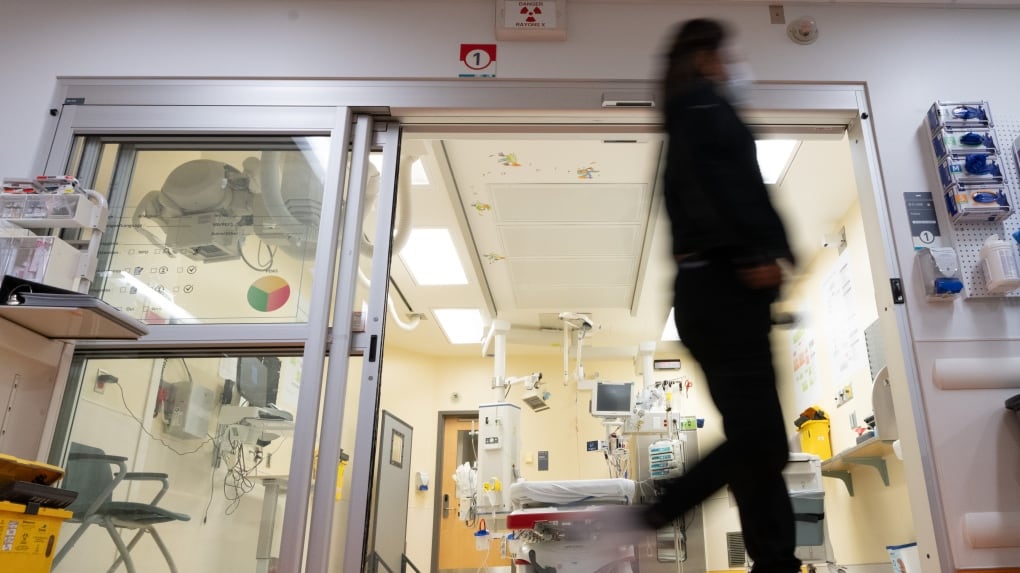
The Jewish General Hospital University Health Centre now offers virtual ER appointments with an emergency doctor for people who need urgent care — a first in Quebec. The Virtual Urgent Care (VUC) program offers adults aged 18 and older living on the Island of Montreal appointments with an emergency doctor from home. The service is available to Montrealers who need urgent medical care, but not critical care that requires immediate in-person emergency treatment. Through the virtual appointment, doctors can write prescriptions, provide referrals for imaging or blood work, and offer medical guidance. “It is an alternative way for ambulatory patients who have an urgent medical need to see a doctor who may not be able to or may not want to come and wait hours in the emergency department to be seen through a video conference call with a physician,” said Dr. Joel Turner, chief of the emergency services department at the JGH. People experiencing medical problems such as back pain, skin irritations or rashes, a swollen eyelid, minor burns or frostbite, or mild flu-like symptoms may be eligible for this service. Those experiencing chest pain, difficulty breathing, a severe allergic reaction, symptoms of a stroke, severe abdominal pain, an acute mental health crisis, or bleeding during pregnancy should call 911 or go to the ER. “But if there’s any situation where you feel you need to be seen immediately, you should go in,” Dr. Turner said. Reduce pressure on hospitals Dr. Turner said the initiative aims to improve access to urgent care and reduce pressure on hospitals by letting them prioritize the most critical cases. Quebec emergency departments record nearly 10,000 visits a day, Santé Québec confirmed to CTV News. The Jewish General Hospital and the Royal Victoria Hospital in Montreal are among the busiest hospitals in Quebec, often operating over 200 per cent capacity. “Despite the high volume of patients, staff are working hard to ensure that people who need emergency care can still access it,” said a Santé Québec spokesperson. The reasons for consultation vary, but they include abdominal pain, minor complaints, difficulty breathing, and musculoskeletal pain. However, Santé Québec said urgent cases are prioritized, such as strokes, heart problems, or breathing difficulties. For non-urgent medical assistance, it said Quebecers should call the Info-Santé 811 line to receive health advice by phone from a nurse. People without a family doctor can also book an appointment with a primary-care provider through Guichet d’accès à la première ligne (GAP) on option three on the 811 line. However, the province’s Info-Santé 811 line handles roughly 6,000 calls each day and often has an estimated wait time of over an hour — sometimes longer. As of Oct. 17, the average wait time to speak with a nurse is almost two hours. Data as of Oct. 17 also shows that approximately 80 per cent of GAP requests are processed within 36 hours. Santé Québec said it understands waiting to speak to a health-care professional can be concerning, but that it has been working since last fall to increase staffing at its call centres while testing measures to shorten wait times and better meet demand. One measure is using artificial intelligence (AI) to improve service. This involves redirecting influenza or gastroenteritis calls to a non-clinical agent who uses an AI-powered app to help patients, allowing nurses to spend more time answering more complex calls. Improve access to urgent care Dr. Turner said this initiative improves access to urgent care by giving Montrealers another option beyond existing services such as 811, without requiring them to go to a hospital. “It’s an extra layer of access that patients may not have access to,” said Dr. Turner. Virtual ER appointments are available Monday to Friday from 9 a.m. to 1 p.m. and can be booked through the hospital’s portal or by a nurse through Info-Santé 811. According to Dr. Turner, similar programs have been successfully implemented in Ontario, Alberta, British Columbia, the U.S., and several other countries. He said the goal is to expand the service to other parts of Quebec. “It’s something that is probably going to be very helpful and useful for the general public to have another option to see someone in the health-care system,” said Dr. Turner.