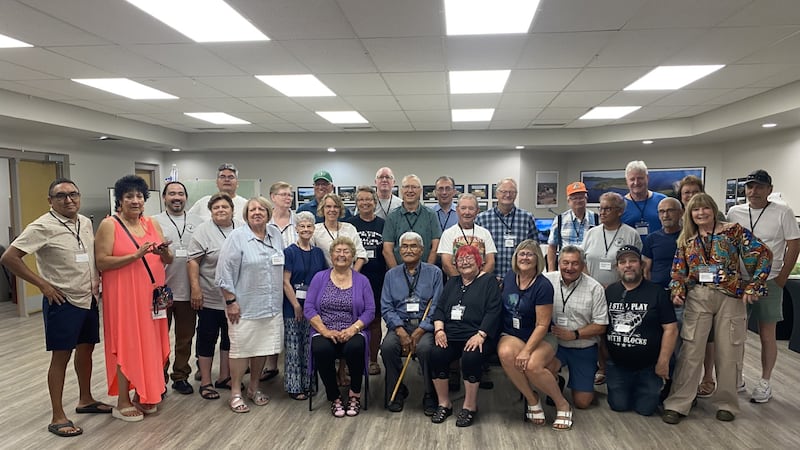
Ottawa Sports and Entertainment Group (OSEG) held a guided tour for invited media to highlight the accessibility challenges at the current Civic Centre arena. The tour comes two days before a crucial debate at city hall that could end with the $419-million Lansdowne 2.0 project getting a green light. Marnie Peters is a Canadian former wheelchair basketball player and accessibility consultant with Accessibility Simplified. Peters says, “This building was built not recognizing that people with disabilities would want or should be able to come to events just like anybody else has. That’s part of the problem with the building… it was built in a time when people with disabilities weren’t out and about.” Peters is working with the city advising on the Lansdowne 2.0 project that includes a new event centre as well as new north-side stands. The project, which will include a new 5,850 seat event centre and a new north-side stands at TD Place Stadium, will cost $418.8 million if approved by council this fall. It will also include two new residential towers next to the north-side stands at TD Place as part of the development. Peters says, “Twenty-seven per cent of the population has some type of disability, and within that group, (about) 10 per cent are wheelchair users or people who use a wheeled mobility device. About five per cent are people with low vision or who are blind, and about five per cent who are deaf, deaf and hard of hearing.” According to OSEG, currently only about half a percent of the seating is accessible. “We’re not able to sort of enjoy whatever’s happening at this facility the same way other people are,” says Peters. Some of the issues and barriers media were shown on Monday included the only elevator that does not go up to the upper level of the north side stands. The elevator is also shared with staff and food services. Some other issues include steep ramps, narrow concourses, as well as uneven stairs without railings. OSEG President Mark Goudie says engineers and consultants have told them that renovating the arena and stands with the necessary changes are structurally not possible, and the overall cost would end up being higher than the cost of a new arena. “Their conclusion to us was you’re better to start from scratch. You’re going to get a better facility that’s going to serve the public for the next 50 years or so. And it’s going to be cheaper if you build a new facility versus trying to fix this old, beautiful building.” Goudie says he wanted the tour ahead of the debate to “counterbalance some of the misinformation that’s been out there,” referring to a push by opponents of Lansdowne 2.0 to halt the project. “We sat in the sidelines for most of the summer as it kind of percolated out there. It’s not good for our business. And it’s wrong.” City staff are recommending council approve a contract with EBC Inc. to build the new event centre and north-side stands at TD Place. A report for the finance and corporate services committee shows their bid was $315.98 million, and the final negotiated fixed price is recommended at $312.82 million. Starting on Wednesday, the committee will hear from dozens of delegates both for and against the project. The meeting is expected to spill into Thursday, and possibly Friday. Some councillors have concerns about the transparency of the final report that was just released last week and say the issue deserves more time. Kichissippi Ward Coun. Jeff Leiper says, “I do share the concerns of those who would argue that the current Civic Center, the arena and the football stadium are past their best by date. There are a lot of challenges around accessibility. There are a lot of challenges around the amenities in the arena. And I think there are probably increasing structural, issues as well.” Leiper says councillors and the public need more time to discuss the issues and financing of the project. “I’m disappointed with the debate thus far, in which the mayor is telling residents that the cost of the stadium is only going to be, I think, $130 million or so. The stadium and the arena are going to cost over $400 million to build. There is the potential that some revenue might come in to offset that cost, but we need to be transparent about what those revenues are, the likelihood that they’re going to come in, and the risks,” says Leiper. “I think until we’ve had that discussion about what the costs actually are and how it’s proposed to pay those costs, I think we can push off a decision to demolish and replace those facilities right now, but not for too much longer.”