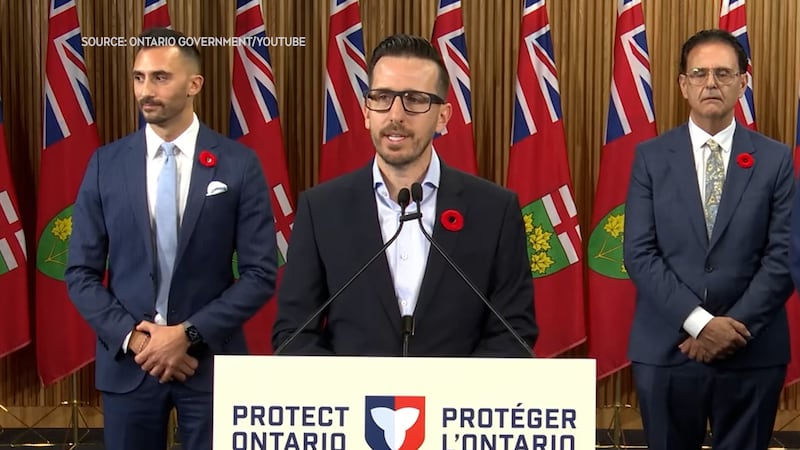
Ontario is considering tougher restrictions on technology in schools, including a full ban on cellphones and new social media limits for children. On Tuesday, Education Minister Paul Calandra said the province is reviewing stronger measures as concerns grow over classroom distraction and the impact of social media on young people. The move would build upon rules established in 2024 that already restrict phone use during class time. High school student Dallyanne Cardinal says some limits could make sense, but warns that full bans could be difficult to enforce. “School isn’t somewhere where, you should be going on your phone,” she says. “Kids have to be careful so if there are some restrictions, I think it would be better. But I don’t think fully restricting it is the way to go because kids will only find other ways to get online.” Ontario is also looking at potential age-based restrictions on social media, as other jurisdictions move in a similar direction. Manitoba Premier Wab Kinew has said the province plans to ban social media use for those under 16-years-old, but details and a timeline have not been released. Countries like Australia have already implemented comparable measures. Technology analyst Carmi Levy says bans can be a positive starting point but they are unlikely to solve the problem on their own. “This is a good thing. It shows momentum at multiple levels of government that recognizes the toxicity of social media and AI, to our young people and it reinforces those governments desire to do something about it,” he says. “But kids are very smart. If you tell them ‘no,’ in their mind, they take that as a ‘yes.’ They’ll figure out ways around the technology.” Levy says children in Australia are already finding ways to bypass the ban. “The danger here is that if you impose a ban, a certain percentage of kids will then use social media but quietly under the radar without their parent’s knowledge. Then when they get into trouble, there’s no support for them,” he said. “The platforms themselves haven’t changed, they’re still as dangerous as they’ve always been. So, this doesn’t fix the problem at all and it can create new ones, in an unintentional manner, that governments and other stakeholders need to be aware of. You have to provide resources to parents and other caregivers, educators in the community so that they can manage the ban. A ban is only one piece of a much larger puzzle” Some parents support tighter rules. Elaina Plaump, who has three children, says school-aged kids do not need social media or cellphones in class, but added responsibility ultimately falls on families. “Kids do not need to be on social media and cell phones in school,” she says. “But it’s a parent’s responsibility to watch over your kids, and then also social media platforms to kind of share some of the responsibility there.” Unplugged Canada, a growing grassroots group, is also pushing to delay smartphone use. The organization says nearly 10,000 families across the country, including about 5000 in Ontario, along with 100 schools in Ottawa, have pledged to hold off on giving children smartphones, citing mental health benefits and reduced exposure to online harms. “Parents are opting to pledge to delay smartphone use, waiting until at least 14 to give their children a personal smartphone for their own individual use and that pledge is just committing to their community, to themselves, to their kids that they are going to stick to that,” says Tara Borowiecki, Ottawa chapter co-chair of Unplugged Canada. Borowiecki says smartphone use can harm mental health, promote addictive tendencies and disrupt sleep. “There’s also just some real harms in terms of cyberbullying and, groups that are targeting youth, and reaching them through these devices,” she said. “It’s really important for families to know that this is an option to delay smartphones, and that they wouldn’t be the only parents with only families to make that decision.” Unions representing teachers say limits can help, but argue broader issues remain. “When they [teachers] call us or they they seek assistance from us, it’s not about I want cell phone bans in the schools,” says Stephanie Kirkey, president of the Ontario Secondary School Teachers’ Association. “They say my class size is large, I’m having trouble meeting all of the needs of my students with so much complexity in my classroom, I don’t have enough resources and supports, there’s more violence in schools.” There is no timeline for any changes in Ontario and Manitoba’s plan is still being developed. Any broader social media restrictions would likely require federal involvement and face challenges around enforcement.