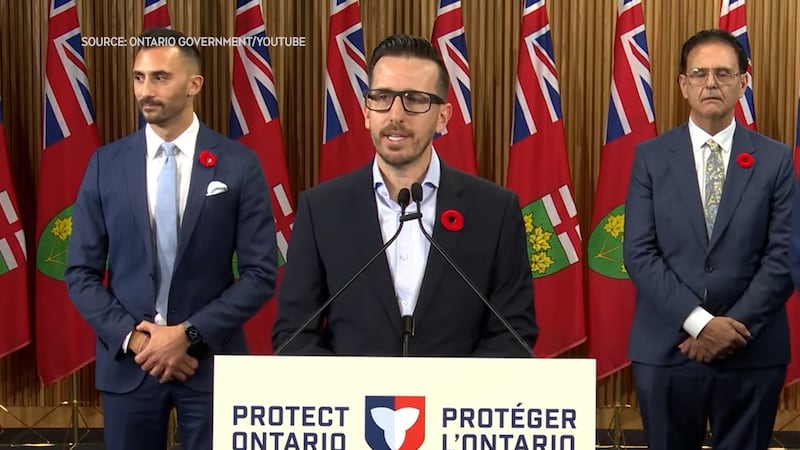
The Ontario government is rolling out significant changes aimed at strengthening the province’s hydro utilities, improving competitiveness, protecting consumers, and bolstering the economy. Citing the need to meet escalating energy demands and modernize aging infrastructure, the province is looking to models like London Hydro for effective leadership. During a news conference at Queen’s Park on Tuesday morning, Minister of Energy and Mines Stephen Lecce announced a suite of legislative and regulatory reforms designed to prepare Ontario’s electricity distribution sector for future challenges. The province projects that energy demand will increase by the equivalent of the City of Toronto’s entire consumption every six years. A key focus of the proposed reforms is strengthening the governance of municipally owned Local Distribution Companies (LDCs). The province intends to elevate standards, following the precedent set by municipalities including London, Oakville, and Oshawa, by encouraging the adoption of skills-based boards to enhance transparency, expertise, and good governance practices. London Hydro was specifically highlighted for its proactive approach. Minister Lecce pointed to the utility’s adoption of a skills-based board as an example of effective leadership, with Lecce stating, “London Hydro. They’ve taken action. They’ve led the way. They’ve been able to move to embrace this concept of a skills-based board.” Lecce also noted London Hydro’s instrumental role in attracting a $500 million Hitachi transformer insulation plant announced earlier this month. Ysni Semsedini, CEO of London Hydro, emphasized the critical role utilities play in economic development. “We have never faced a greater challenge in building our system to meet the demands of a growing community,” Semsedini said. “Over the next decade, we plan to invest more in our infrastructure than we have in the last century. It’s a remarkable undertaking and reinforces why utilities need the right tools to plan for and finance the grid of tomorrow.” The government’s plan also includes new authorities to drive joint and local procurement initiatives, promoting “Buy Ontario” and “Buy Canada” policies to improve efficiency and scale. Enabling greater use of shared services is also a strategy to help utilities reduce costs. To ensure long-term planning, utilities will be required to develop 10-year plans that encompass condition assessments, financing strategies, and workforce development. These measures come as the Electricity Distributors Association forecasts up to $120 billion in distribution investments over the next two decades to meet growing demand and replace aging infrastructure. The reforms also aim to enhance consumer protection, particularly for residents in condominiums, apartments, and multi-unit residential buildings served by unit sub-metre providers. This includes a ban on winter disconnections and increased transparency for ratepayers.