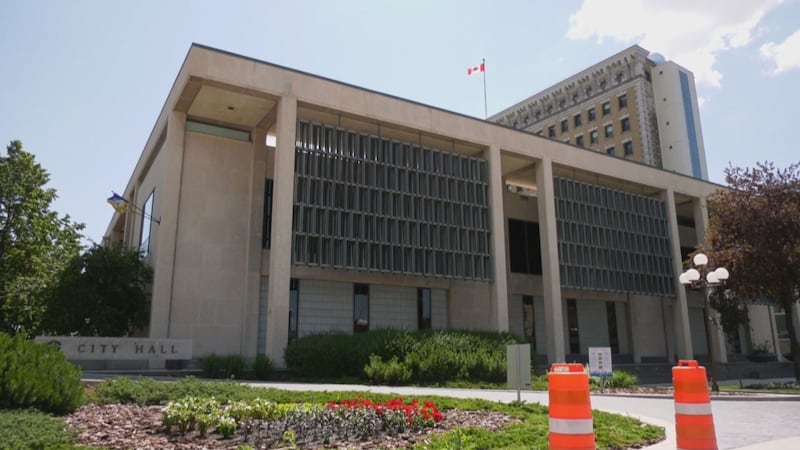
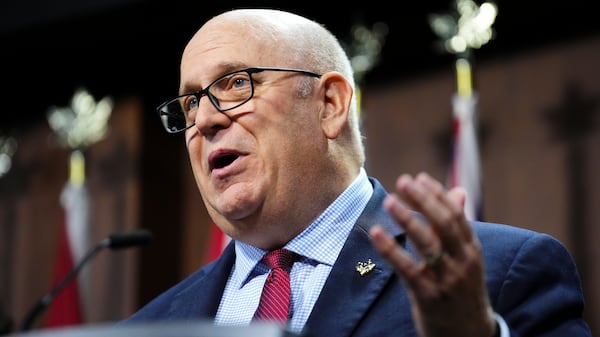
The City of Ottawa will waive development charges, fees and property taxes on hundreds of affordable homes to be built on federal lands in the capital, as part of a $250 million contribution to a federal-municipal deal to build new mixed-income and affordable homes. In December, Prime Minister Mark Carney announced a $400 million partnership between the city and the federal government to build up to 3,000 affordable homes in Ottawa. On Friday, councillors approved the city’s $200 million to $250 million contribution to the partnership during a special meeting of the finance and corporate services committee and the planning and housing committee at City Hall. The plan calls for 2,000 mixed-income and affordable units to be built on surplus federal lands, while Build Canada Homes will provide financing to “unlock an additional 1,000 non-market housing units” in the City of Ottawa’s housing portfolio. According to the City of Ottawa, 1,200 to 1,400 of the 2,000 new units to be built on surplus federal lands would be considered market units, while 600 to 800 units will be considered affordable housing. As part of the plan, the city will waive property taxes for the 600 to 800 affordable units built on surplus federal lands over a 75-year period, which would see the city miss out on between $135 million and $180 million. In revenue. The city would also contribute $65 million to the construction of the 2,000 units by exempting development charges and community benefit charges, waiving Cash-in-Lieu of Parkland and Building Permit Fees and eliminating planning fees. Mayor Mark Sutcliffe kicked off the meeting by noting Ottawa is the first municipality in Canada to reach an agreement with Build Canada Homes to build more affordable housing. “We are leading by example,” Sutcliffe said, adding municipalities have reached out to City of Ottawa staff for advice. “The agreement before us today is historic. It is a game changer. We will build 3,000 new homes in Ottawa. These will be truly mixed-income communities, with the emphasis being on providing affordable and supportive housing. Well over half of these units will be lower, or significantly lower than what the market can typically provide.” The mayor insists the city is “not putting any cash” into the agreement and is “simply foregoing future revenue.” Before the meeting, the chair of the planning committee suggested Council should send Sutcliffe “back to the table for a better deal.” “We need to ensure either no loss of development charges on market-priced units or that there is an offsetting payment to the city,” Coun. Jeff Leiper said in a post on his website. “If a blanket development charge exemption is offered, that should be only where the housing is owned by a not-for-profit provider. Eliminating development charges, as proposed, will result in a $50-million shortfall at the City. That’s money that’s intended to build infrastructure that we need to support growth. Without it, we’ll need to delay projects or borrow more to build them.” Leiper suggested only the units that meet the City of Ottawa’s “strict definition of affordability” should get the property tax relief. According to staff, only 300 to 400 of the affordable housing units would be affordable under the city’s definition of affordability. Staff say the Build Canada Homes definition of affordability sets higher maximum rents, especially for three and four bedroom units at a moderate-income level and for small units at the lowest income level. The total cost to build the 2,000 mixed-income and affordable units will be $1 billion to $1.2 billion. According to the city, Build Canada Homes will make a “significant contribution” through providing the surplus federal lands, offering low-cost financing and capital. City staff told the committee that the city would see between $234 million and $273 million in new property tax uplift from the 1,200 to 1,400 market rental units to be built. Build Canada Homes has identified 1495 Heron Road and Phase 7 of Wateridge Village as initial sites for development under the partnership. 1,000 units in Ottawa’s affordable housing pipeline The second part of the federal-Ottawa deal would see Build Canada Homes (BCH) contribute up to $150 million in capital contributions and low-interest financing to enable a further 1,000 affordable and supportive housing units in Ottawa’s affordable housing pipeline. “In addition to what the City already contributes towards projects in the pipeline, City staff will support the identification, assessment and allocation of BCH funding based on what the project needs to reach viability and sustainability over the long term and work collaboratively with BCH to move these projects forward,” staff said in the report. According to staff, the city would contribute approximately $80 million to that project, which includes waiving planning fees, charges, taxes and permit fees.