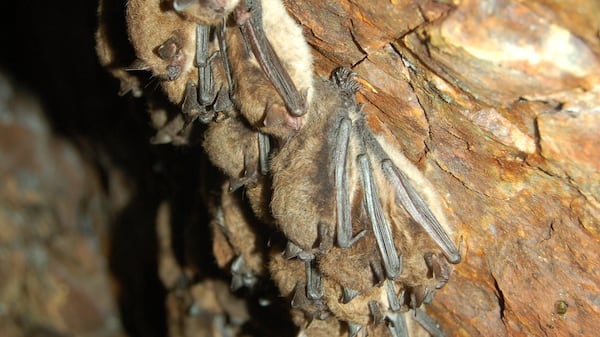
Several species of bats in North America are in danger of going extinct. CTV Science and Technology Expert Dan Riskin said the crisis dates to a grim discovery 20 years ago. “Around 2006, a biologist in upstate New York walked into a cave where he counted tens of thousands of bats in that cave every year leading up to that point,” said Riskin. “And all of a sudden there were just a few left, and most bats were on the ground dead.” It was the beginning of the spread of fungal disease called White-nose syndrome which wiped a massive portion of the bat population across Canada and elsewhere in North America. Nova Scotia is home to seven types of bats. The northern long-eared, tri-coloured and little brown bat live in Nova Scotia year-round and are listed as a species at risk by the Canadian government. “And they have been absolutely decimated by this disease,” said Riskin. Now the bat population in Nova Scotia is slowly rebounding. The province’s Department of Natural Resources said in a statement, “after years with few bat sightings, we are now receiving more public reports of little brown bats on people’s properties.” That is promising news, said Mount Allison University biology professor Lucas Greville, who pointed to the crucial role healthy bats play in our ecosystem. “Bats are incredible source of pest control even in local gardens they are eating a lot of moths, beetles and pests,” said Greville, who added bats also help farmers preserve their crops. “Bats are saving billions of dollars to farmers across Canada and North America every year, by preventing and eating different pests and hat prevents the use of pesticides.” Riskin said the bat population slightly increasing is clearly a positive development, but it will be a slow recovery for the species impacted. “This disease wipes out 99 per cent of the bats when it gets into a cave and they just don’t bounce back the next year,” said Riskin. “Bats are slow to reproduce, they only have one pup a year and when their population crashes, it doesn’t bounce back for a very long time.” Both Riskin and Greville believe it could take hundreds, maybe even a thousand years for Canada’s endangered bat population to fully recover.