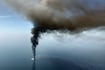
Federal government assistance is being mobilized in Newfoundland and Labrador to help the province deal with out-of-control wildfires that are forcing hundreds from their homes. Personnel from the Canadian Armed Forces, the Coast Guard and other agencies will deploy in the province, according to a statement Thursday from Federal Emergency Management Minister Eleanor Olszewski. N.L. officials say help will likely be concentrated in Conception Bay North, where two more communities were forced to evacuate Thursday, and a third was put on notice. “The Canadian Armed Forces will now be deploying a reconnaissance element to assist and assess the wildfire situation, to determine how the armed forces can best support our requirements right now,” said N.L. Premier John Hogan during a briefing on Thursday. Those requirements include specialized wildland firefighters, as well as helicopters from the Canadian Coast Guard, planning specialists and trailers for other firefighting crews. Three forest fires forced evacuation orders and warnings throughout Newfoundland in the last five days. The largest in size is in the Conception Bay North area of the province, on the Avalon Peninsula. The fire grew to about 2,200 hectares on Thursday, fuelled by dry conditions. Aircraft from New Brunswick, assigned by the Canadian Interagency Forest Fire Centre, arrived in the province Wednesday. Provincial officials say the scores of wildfire evacuees are becoming a challenge for the Canadian Red Cross, which is mostly responsible for finding accommodations. According to N.L. Justice Minister John Haggie, AirBNB will soon begin to offer evacuees vouchers for use on its platform to help ease some of the burden. Residents on the south coast of Newfoundland are also anxiously waiting for news on wildfire suppression efforts. Although a fire in central Newfoundland is burning some distance from their homes, it’s threatening the only road linking the Bay d’Espoir and Connaigre Peninsula with the rest of the province. “It would affect our ambulance service and people going to Grand Falls-Windsor for medical appointments,” said Harbour Breton Mayor Lloyd Blake. “Our food supply is coming up over that highway.” He added a highway shutdown would also force the closure of a fish processing plant in the region, a large-scale employer in the area. With resources stretched thin, provincial officials have been urging residents to be extra cautious. “It’s obvious to say, but the fewer fires that we have, it means the resources can focus on the fires that we do have,” Hogan said. “I am asking every single Newfoundlander and Labradorian to just think about it, to help and to pitch in over the next few weeks.” The province has implemented a month-long fire ban, which is set to remain in effect until at least Sept. 7. Spurred by reports that some have defied the ban, and proceeded with backyard bonfires or beach bonfires, provincial officials have also indicated they’re planning to hike fines for some breaches to amounts that can reach $50,000. “For people who are disobeying the laws, not paying attention, doing this recklessly or selfishly, those are the people that we want to look at and to punish,” Hogan explained. “For essentially violating the law and putting other people’s lives at risk. He said his government wasn’t planning to follow the footsteps of counterparts in Nova Scotia and further restrict activities, like offroad vehicle use, on trail systems. “I think at this time, the right thing to do is to protect the innocent people and the families and the communities who safely enjoy the outdoors here in Newfoundland and Labrador,” he said. “It’s a big part of our culture.”