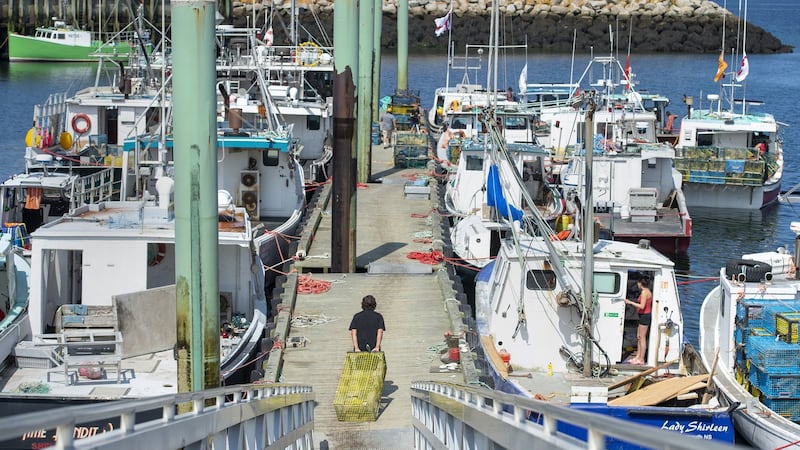
The changing ocean temperatures in the last few decades have greatly impacted the Maritime fishery industry, and according to one marine scientist, those effects are going to continue for a long time to come. “Year after year we’re seeing a lot of different things,” said Jack Daly, a Halifax-based marine scientist with Oceana, told CTV News Atlantic’s Todd Battis in an interview on Wednesday. “Last year off the Maritimes we saw, actually, water temperatures be a bit cooler while two years ago we had a marine heat wave off Newfoundland. “These impacts are…being felt every year in different ways, but with long-term impacts on our fisheries.” Daly said the warming waters are impacting sea life from creatures as big as whales to as small as mackerel. “It’s really easy to see the impact of something as large as a whale; it’s a little bit harder to see the impact with something as small as mackerel, herring, capelin, other forage fish like that,” Daly said. “Those fish are really short lived and they tend to be the canary in the coal mine of climate change. “Warming waters, for example, can impact where they spawn. Capelin in Newfoundland are famous for spawning on the beaches. As those beaches get hotter, capelin are spawning more and more in deeper waters, which creates their larvae, their babies, to grow much slower and have much less success.” Daly said mackerel populations have been mismanaged in the last decade, which impacts lobster fishing as mackerel is used as bait. “That’s a real example of climate change impacting mackerel productivity, but also our actions as fisheries managers, as fishermen, allowing the stock to not rebuild to abundance,” he said. “It drives the price, the bait, up. “And if they don’t have bait to use here in Atlantic Canada, that means we have to buy it from somewhere else. We can see with tariffs going up around the world, it’s much more affordable to have your bait sourced locally.” Daly notes climate change can cause new fish to move into the Atlantic Ocean, which could create opportunities for the industry. “It’s not all a good news story, it’s also not all bad story,” he said. “It’s very complicated.”