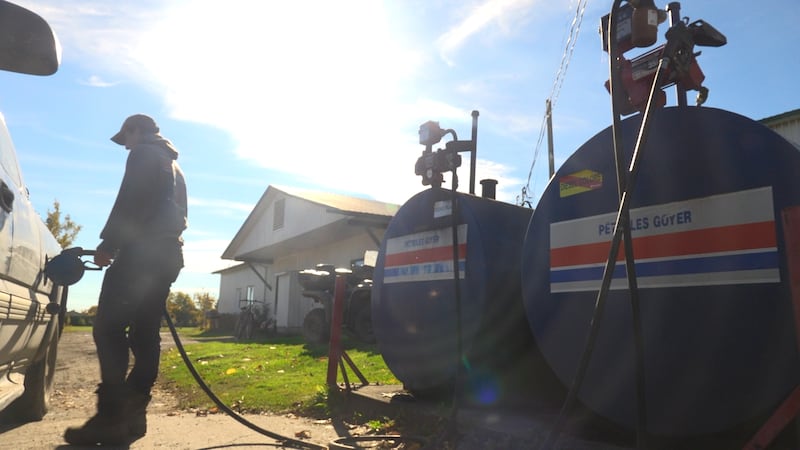
The provincial government is sharing how it hopes to achieve net-zero greenhouse gas emissions by 2050. The 32-page document, Manitoba’s Path to Net Zero, features province-wide strategies, sector-based opportunities, as well as guiding principles on the plan to achieve no net increase in greenhouse gas emissions. “The real strength of this plan is the partnership,” said Manitoba’s Environment Minister Mike Moyes on Monday at FortWhyte Alive. “By working with business, labour, Indigenous communities, municipalities, civil society and everyday Manitobans, we’re going to build a province that is strong, sustainable an affordable for everyone.” The 43-point plan includes changes to government, such as establishing a Climate Change Committee of Cabinet and strengthening provincial climate change legislation. “We’re modernizing how government operates, from updating our green building policy and transitioning vehicle fleets where possible to ensure that government procurement supports sustainability,” Moyes said. Other points laid out include transitioning Manitoba’s electricity grid to net zero by 2035, through modernizing and expanding the province’s hydroelectric system while adding new renewable electricity generation. The report also mentions building electric vehicle charging infrastructure across the province, planting 1 million trees in Manitoba each year to 2031 and advancing sustainable agriculture programs. As of 2023, agriculture was the single largest source of greenhouse gas emissions in the province at 33 per cent, followed by transportation at 31 per cent, according to the document. The report notes that Manitoba’s path to net-zero emissions will include action plans that will be developed on a three-year cycle, “that will identify concrete, time-bound measures.” Moyes said the first three-year action plan is already being developed. Climate Action Team Manitoba, a non-profit and coalition of environmental organizations in the province, said the provincial government’s net-zero roadmap “points in the right direction,” but that investments are needed. “Manitoba will not make significant emissions reductions without significant public investments,” said Laura Cameron, director of Climate Action Team Manitoba in a news release. “It must be followed swiftly by specific action plans and substantial public investment in Budget 2026 if it’s going to have any impact.” Moyes said the province will also work with the federal government to support a feasibility study on a national marine conservation area in western Hudson Bay — one of several points outlined in the report to prioritize nature-based carbon sequestration. The provincial said the report was shaped following more than 500 survey responses, 50 stakeholder submissions and dozens of meetings, according to a news release. The full report can be found online.