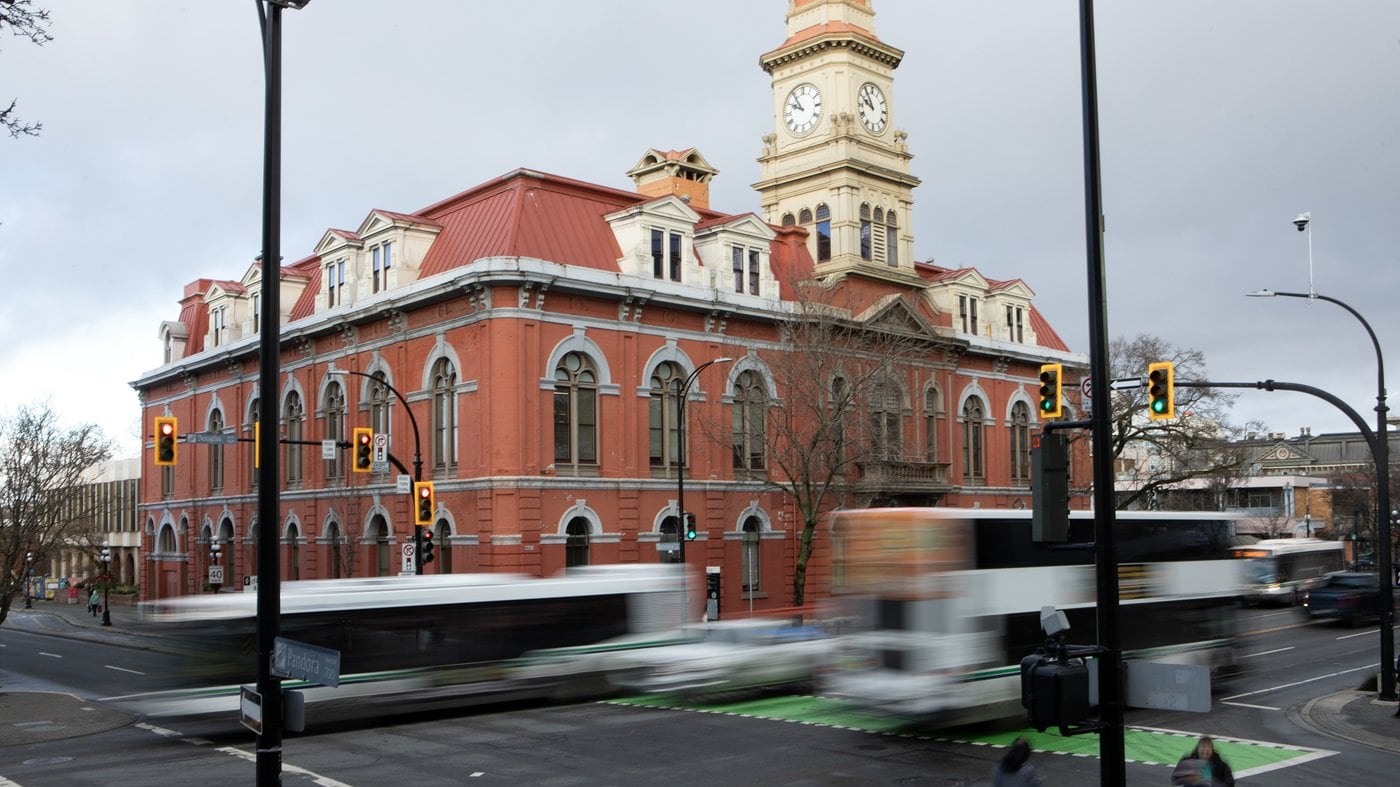
Greater Victoria is not short on transportation plans. BC Transit’s draft Victoria Regional Transit Plan is only the latest vision for how people could move around the region in the decades ahead. However, unlike many of the plans that came before it, regional leaders believe the conditions may finally be in place to move this one from planning to implementation. The bigger question is no longer what the future should look like, but how does the region intend to get there? Regional vs. local travel Transportation does not stop at municipal boundaries. Residents often live in one place, work in another, shop in a third and travel through several more during the course of a day. Congestion, especially along Douglas Street and Highway 1, affects people far beyond Victoria. The Victoria Regional Transit Plan repeatedly identifies regional travel patterns as a defining challenge for the decades ahead. Greater Victoria is no longer deciding where people need to go but must now co-ordinate the many governments and organizations responsible for getting them there. Finding a regional voice For years, responsibility for transportation planning was spread across multiple municipalities, agencies and levels of government. Various reviews explored stronger regional transportation governance, but those discussions ultimately stalled. One of the recurring messages from the Province was that before governance changes could be seriously considered, the Capital Region needed to demonstrate greater consensus and speak with a more unified voice. The creation of the RTS in 2025 was Greater Victoria’s response to that challenge. Rather than thirteen municipalities working independently, the RTS was established to help identify the region’s priorities, coordinate its planning efforts and present them to senior governments with a single voice. During a recent interview with CFAX 1070, CRD Transportation Committee Chair Dean Murdock said the region has finally “gotten its regional act together,” which he believes will better position it to pursue major transportation priorities. Victoria councillor and regional transit commissioner Jeremy Caradonna echoed that sentiment, saying Greater Victoria is increasingly approaching transportation as a regional issue rather than a collection of local ones. “It’s getting a bit complex and a bit absurd, to be honest with you,” Caradonna said during an interview with CFAX 1070. Planning for region’s needs If the RTS provides the region with a voice, the Regional Transportation Plan (RTP) helps define what it wants to achieve. The Victoria Regional Transit Plan focuses on transit. The RTP takes a broader view, looking at how people and goods move around the region. Together, the two plans provide a roadmap for how the Capital Region wants to move in the decades ahead. Caradonna said Greater Victoria still has work to do in simplifying how transportation decisions are made. “The Lower Mainland, if you look at TransLink, they just have one transportation plan,” he said, adding that Greater Victoria may eventually need to revisit how transportation planning is governed, including the relationship between the RTS and the Victoria Regional Transit Commission. Turning plans into projects Identifying transportation priorities is only part of the challenge. Paying for them is another, and doing so will require senior government support. Caradonna said the immediate next step is finalizing the Victoria Regional Transit Plan and beginning discussions with the Province about how its recommendations could be implemented. “Most of it’s not going to happen unless we really have the province at the table,” he said. While much of the public discussion has focused on higher-capacity transit planned decades into the future, Caradonna pointed to several shorter-term priorities that must happen first. Among them is the need for a new transit operations and maintenance centre in Saanich, which will be required to support future service expansion. “If we want to go from three or four hundred buses up to six or seven hundred buses, that’s a lot of space,” he said. Caradonna also pointed to continued investment in transit-priority infrastructure between Victoria and the West Shore, describing it as important groundwork for whatever form of higher-capacity transit the region ultimately pursues. “We have most of it done now. Most of it’s completed,” he said, referring to the transit-priority network that now supports much of the RapidBus corridor. Planning also continues on the next phase of transit-priority improvements along Douglas Street and a proposed transit exchange near Crystal Garden. Caradonna said both projects remain under development by the City of Victoria and BC Transit. He also confirmed that a previous proposal to convert Douglas Street between Belleville and Humboldt to one-way traffic is no longer being considered. Meanwhile, major long-term decisions remain unresolved. The region is currently examining two potential higher-capacity transit corridors: the Highway 1 corridor identified in the Victoria Regional Transit Plan and the former E&N corridor being studied through the Reconciliation Corridor Initiative. Although both processes continue independently, Caradonna suggested the region will eventually need to determine which corridor becomes its primary focus. “It’s probably going to be one or the other,” he said. Funding remains central to all of those discussions. Caradonna argued that speaking with a unified regional voice strengthens Greater Victoria’s ability to advocate for major transportation investments and make the case for future funding. “You’ve got thirteen different jurisdictions plus three electoral areas and they have tiny voices,” he said. “But when we unify our voices we’re louder.” A different road Greater Victoria has spent decades studying its transportation needs and developing plans to address them. The challenge has rarely been identifying what the region wants to do. It has been making those plans a reality. The difference today is that the region may finally have the capacity to agree on its priorities, speak with a unified voice and work together to advance them. Whether that will be enough to turn long-discussed transportation ideas into tangible results remains to be seen. What is clear is that the next chapter in Greater Victoria’s transportation story will depend less on new plans and more on delivering the ones it already has.