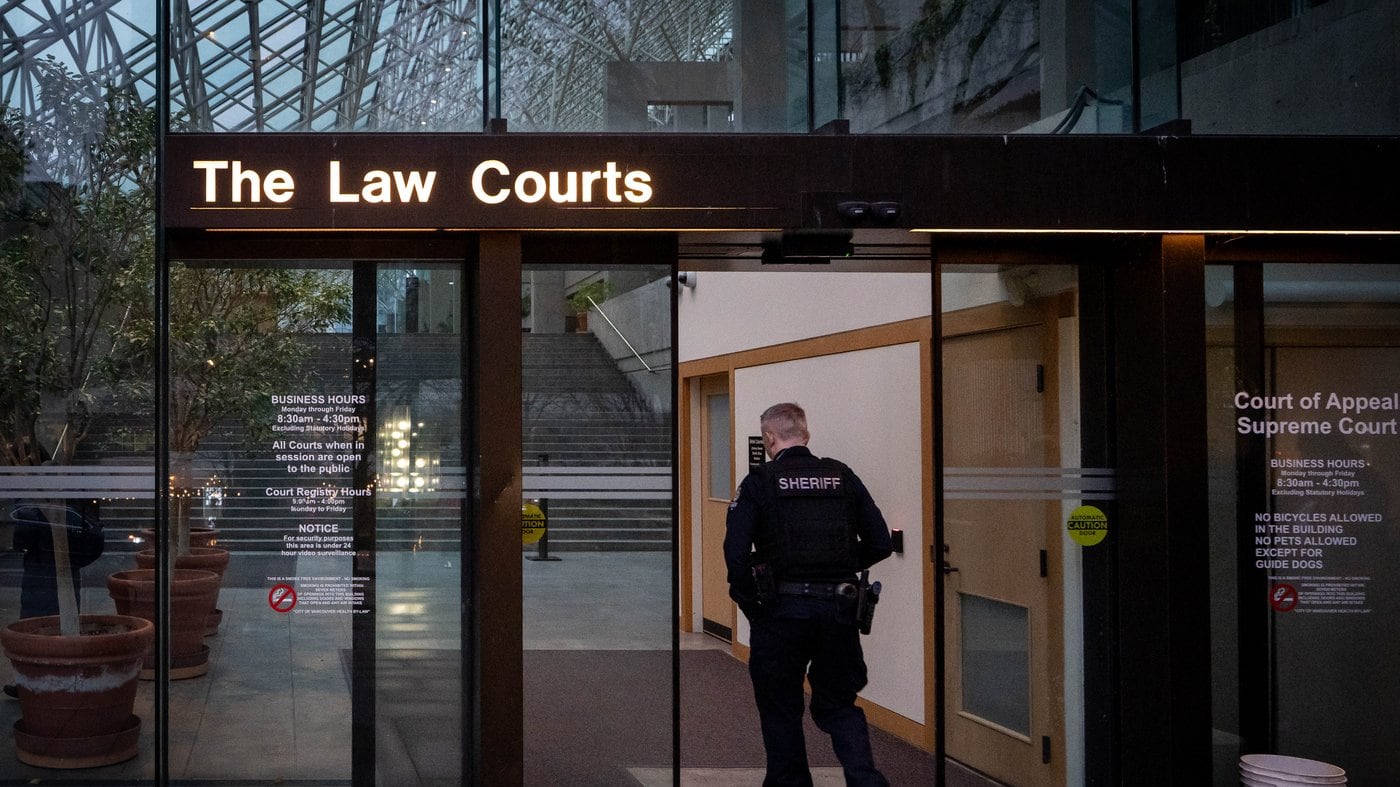
British Columbia’s highest court has upheld a three-and-a-half-year prison sentence for a convicted cocaine trafficker who argued on appeal that the punishment would cause undue harm to his family. Sukhvir Singh, a 38-year-old trucking business owner, asked the British Columbia Court of Appeal to overturn the prison term imposed by the provincial court and instead let him serve a shorter sentence under house arrest. However, the Appeal Court found no error on the part of the sentencing judge, ruling the offender’s decision to traffic in kilogram-quantities of hard drugs dealt significant harms to other families and to society at large. “The appellant chose to involve himself in a sophisticated drug operation with both international and interprovincial components,” wrote Justice Joyce DeWitt-Van Oosten on behalf of the three-judge court. “The judge found he was a trusted lieutenant in that operation and played a central role in brokering deals and delivering product.” Singh pleaded guilty in May 2024 to trafficking cocaine and possession for the purpose of trafficking and was sentenced the following year. Kilograms of cocaine sold The court heard he was involved in large-scale drug deals starting in 2021, when an undercover police officer communicated with someone in California about buying an ounce of cocaine in Vancouver for $2,000. The officer arranged to pick up the drugs in Coquitlam, where he met with Singh, who also gave him a sample bag of heroin. A few weeks later, the same officer contacted Singh about buying two kilograms of cocaine for $56,000 per kilo. They met again, but this time a second undercover officer handed the bag containing $112,000 in cash to Singh, who inspected it and then called an accomplice who arrived with two vacuum-sealed bricks of cocaine, according to the ruling. Three days later, Singh messaged the undercover officer offering two more kilograms, but the officer declined. The largest transaction was planned for later that month, when Singh arranged a five-kilogram deal worth $265,000. ‘Not a mere courier’ The meeting was scheduled at a Coquitlam hotel, where Singh and an accomplice checked in carrying a Louis Vuitton bag. Later that evening, he and his associate were arrested in the hotel parkade, where police seized the luxury bag containing the cocaine. The trial judge found Singh was “not a mere courier” in the drug operation, but rather a “trusted lieutenant of the operating mind behind the cocaine sales,” the Appeal Court decision said. “This was a sophisticated drug operation with both international and interprovincial components,” it said. “He played a central role in brokering the deals and delivering product to the buyer. The appellant had a significant degree of moral blameworthiness.” On appeal, Singh argued that the judge failed to properly consider the impact of his incarceration on his family—particularly his young daughter, who has a rare neurological syndrome and requires constant care. The offender asked the court to reduce his sentence to less than two years and allow him to serve it at home. While the court acknowledged the “significant” hardship Singh’s imprisonment would cause, it found the sentencing judge did properly weigh that hardship against the offender’s “significant moral blameworthiness” for the crimes. “The judge was alive to the daughter’s condition and to the potential she would be significantly impacted if the appellant was incarcerated,” DeWitt-Van Oosten wrote, adding that such consequences must be balanced against the need for denunciation and deterrence in serious drug offences. ‘Significant moral blameworthiness’ Singh is not a Canadian citizen and is therefore subject to potential removal from the country under the Immigration and Refugee Protection Act, the ruling said. “With a sentence of more than six months’ conventional imprisonment, he loses the right to appeal any deportation order,” DeWitt-Van Oosten wrote, noting the trial judge also recognized this fact as a collateral consequence of the sentence. While the court recognized mitigating factors in the case—including Singh’s guilty plea, lack of criminal history and efforts to support his family—it ultimately concluded that a prison sentence was appropriate given the scale and sophistication of the drug operation. The ruling emphasized that conditional sentences are generally not suitable for serious drug trafficking cases involving large quantities, even where offenders face compelling personal circumstances. “He trafficked in kilograms of hard drugs, an offence that carries significant foreseeable harms to individuals, to families, and to society at large,” DeWitt-Van Oosten wrote, dismissing the appeal on behalf of the tribunal. “The fact that he did not reoffend after his arrest and worked to lawfully re-establish his business is commendable; however, it does not detract from the gravity of his offences and his significant moral blameworthiness.”