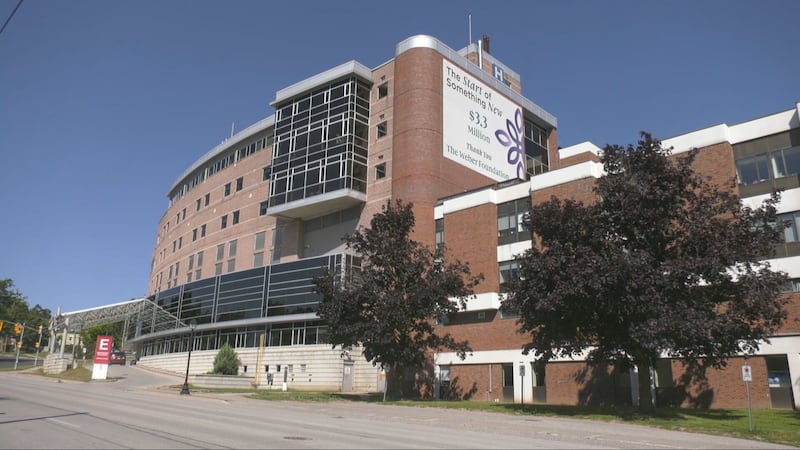
Amid a provincial bid to recruit health-care professionals from the U.S., a Texas nurse who was asked by recruiters to tour a Vancouver Island hospital says she’s moving forward in the process to get her Canadian license to practice. “Oh my gosh, it has spiralled into amazing opportunities,” says Rachael Smith-Taylor from her home in Texas. “Things have just fallen into my lap since my visit to Nanaimo.” Smith-Taylor joined roughly 500 Americans who answered a viral post welcoming their visit to Nanaimo on April 29 as a way of showing that Canada and the U.S. don’t have to be divided by politics. Smith-Taylor brought her partner, who’s also a nurse. The same-sex couple has been concerned about LGBTQ2S+ rights under the Trump administration. “The political upheaval that’s going on… You don’t have to say much about it. Everyone is aware and it just feels safer than where I am currently,” she said about her potential move to Canada. B.C.’s NDP government has been working on efficiencies to fast-track applications from U.S. nurses to work in Canada, where more health-care professionals are needed. “The uncertainty that’s currently present in the United States related to the Trump administration presents a significant opportunity for British Columbia,” said B.C. Premier David Eby on Monday. “We believe that by recruiting American health-care workers into our system, they’re able to hit the ground running with their experience in a system that’s very similar to ours.” Since the streamlined process launched in early April, the province says applications from U.S.-trained nurses are up 127 per cent. So far, 177 nurses have applied to the B.C. College of Nurses and Midwives and 113 have the greenlight to practise in B.C. “Before this, we needed other nursing regulators and credentialing agencies to confirm a U.S. nurse’s registration history and education, which often resulted in delays. But through collaboration with our U.S. counterparts, we can now confirm this information through nurses, a licensure database that gives us the information we need when we need it,” says B.C. College of Nurses and Midwives acting registrar and CEO Louise Aerts. “This change has expedited registration decisions, as has been shared, but maintains the safeguards to ensure that a nurse can practice safely and competently in B.C.” The province says it’s taking a ‘Team B.C. approach’ to recruit health-care workers from the U.S., which they hope will include physicians and other professionals too. “We haven’t even put an ad out in the market yet and we’ve already had over 1,200 inquiries,” said B.C. Health Minister Josie Osborne. An ad campaign is being planned to target health-care workers in Democratic states such as Washington, Oregon and California. The health minister says the cost of the campaign isn’t yet known. “We’ve had hospital and health foundations, conversations with unions about sharing the cost of this, and that every dollar will be worth it because of the number of physicians and nurses that we’re going to be able to bring here and attract to British Columbia,” said Osborne. Of the nurses who’ve applied to practise in B.C., it’s unknown how many will actually accept a job offer. Smith-Taylor says that while she’s motivated, the timing may not be right just yet. “We still have children in school here. So we’re just trying to figure it out as we go,” she said.