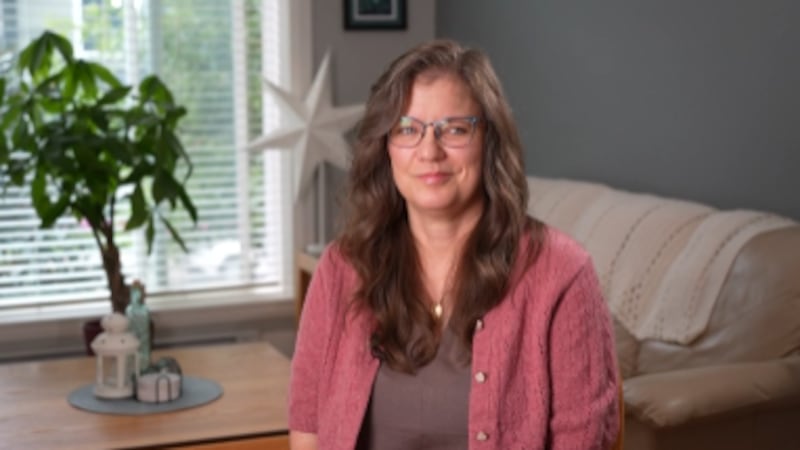
When Tia Voth called 911 last month, her hope was that her mom Cindy Mulrooney would be taken to hospital for emergency psychiatric treatment. Voth said she met two RCMP officers down the block from Mulrooney’s home in Burnaby, B.C., on the night of Jan. 13 and explained that she believed her mother was experiencing a bipolar episode and needed care. Voth, who is a psychiatric nurse, then got into her car with her fiancé and waited as the officers walked toward the property. She told CTV News she was startled by how quickly shots rang out in the neighbourhood. “It couldn’t have been more than a minute or two,” Voth said. “I heard ‘bang, bang,’ and I knew what those sounds were.” She’s now left wondering how a call for help ended with her mother dying at 53 years old. “Why were they not using rubber bullets? Why were they not using Tasers?” Voth said. “If they felt like they were unsafe, why didn’t they call for backup?” She also wants to know whether the officers involved had any training in dealing with people suffering through a mental health crisis. Confusion over RCMP statement The B.C. RCMP declined to comment on the incident, citing an ongoing investigation by a provincial police watchdog. In a news release the day after the shooting, the RCMP said responding officers encountered a woman who was “reportedly in possession of weapons” at the home. Voth told CTV News her mother did not own a gun and wasn’t carrying a weapon of any kind the last time she saw her alive, shortly before police arrived. She stressed that she did not tell the 911 call-taker or the officers on scene that Mulrooney was armed. “We weren’t concerned about that at all,” Voth said. The RCMP would not confirm whether “reportedly” might refer to the accounts of the officers themselves, or whether any weapons were ultimately recovered from the scene. Staff Sgt. Kris Clark directed questions to the Independent Investigations Office, which also declined to comment. “This investigation is still in the early stages, and it is essential that the IIO avoid releasing information such a short time after an incident occurs that may prejudice an IIO investigation,” spokesperson Simon Druker told CTV News in an email. Apart from potentially contaminating witnesses, providing more detailed information on the reported weapon during an investigation “might be seen by some to suggest a conclusion to the question surrounding whether the police action was justified,” Druker added. Voth acknowledged she didn’t see how the police confrontation unfolded, and that her mother had pushed her fiancé before officers arrived—but also described Mulrooney as “small,” standing around 5’6” tall. “I wouldn’t say she was physically imposing,” she said. An unsettling sight The IIO—which is tasked with investigating all officer-involved incidents that result in death or serious harm, regardless of whether there’s an allegation of wrongdoing against police—can take years to deliver a report into a fatal shooting. As Mulrooney’s family prepares for a potentially long wait for answers, they already have apprehensions about the integrity of the process. Toby Voth, the deceased’s ex-husband, believes he saw someone in an IIO vest hugging an RCMP officer at the scene hours after Mulrooney’s death. “It doesn’t look right,” he said. “This is supposed to be an independent investigation and it doesn’t really look all that independent.” In response to those concerns, Druker told CTV News the watchdog places “the highest importance on ensuring an unbiased and thorough investigation.” Druker wouldn’t say whether such an embrace at a shooting scene would be inappropriate. “We have not been made aware of any such concerns and it would not be appropriate to comment on a hypothetical situation or without a full understanding of the facts,” Druker said. The IIO declined to follow up with the investigators who responded to the incident to provide either a denial or confirmation of the family’s account, but said anyone with a complaint about a member’s conduct can contact the watchdog directly. Approximately 50 per cent of the IIO’s investigators are former police officers themselves, according to its website. Remembering a life lost Tia Voth described her mother as someone who loved life, and whose world revolved around her four adult children. “We went on a fun karaoke cruise in December,” she said. “She had plans to travel. That was always her goal once the kids were old enough.” Mulrooney had been managing her bipolar disorder without medication for a few years prior to last month’s incident, according to the family, but her symptoms had started worsening. Voth said when she visited her mother on the night of Jan. 13 to check on her, Mulrooney started yelling at her to leave. She eventually agreed to give Mulrooney space after it seemed her presence was exacerbating the situation, she said. While Voth said her mother’s manic behaviour that night was concerning, she never imagined a police response would turn deadly. For over an hour after the shooting, Voth recalled sitting on the curb while the officers on scene said they couldn’t confirm what she already knew was true. “I saw the ambulance coming without a siren on,” she said. The grieving daughter told CTV News she decided to speak out in the hopes that B.C. can do more to ensure health-care professionals attend these types of calls alongside law enforcement, as they do in programs like Car 67. That could spare families like hers from the pain of wondering whether they set a loved one’s death in motion by dialling 911, she said. “People shouldn’t be afraid to call the police for help.”