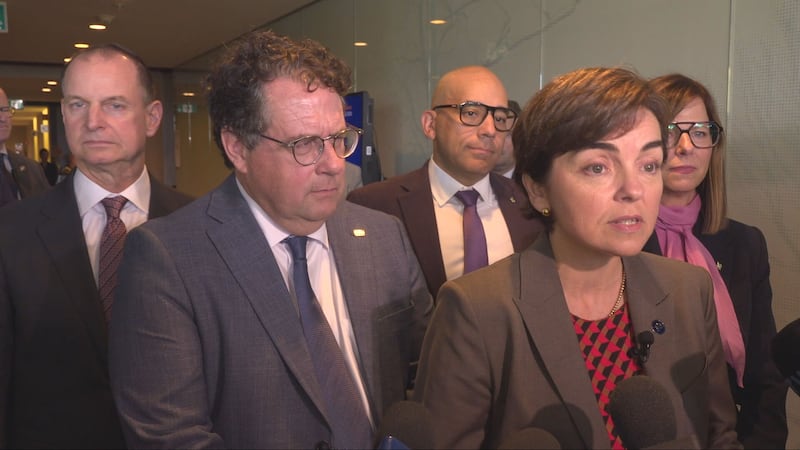
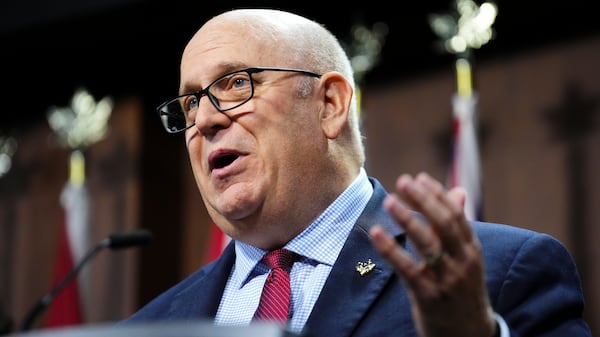
The B.C. government says political turmoil south of the border is helping lure health-care workers from the U.S. to Canada, adding much-needed numbers to the struggling medical system. In April, the province launched a streamlined credential recognition process for American nurses, and says since then 177 nurses have applied to work in B.C., 113 of whom have already been given registration with the B.C. College of Nurses and Midwives. Officials did not provide an answer when asked exactly how many of the nurses who applied to practise have been hired in B.C. The Trump administration has given B.C. a “significant opportunity” to attract doctors and nurses who already have experience working in a health-care system similar to our own, said Premier David Eby at a news conference Monday. “Some of the factors that are driving increased interest in British Columbia that we’re seeing include, we believe, our commitment and our support for science,” he said. “That we are a jurisdiction that respects reproductive rights…and that we take care of people regardless of how much money they have.” Since launching a cross-border recruiting campaign in March, the province says almost 1,200 American nurses, doctors, and allied health professionals have “expressed interest” in moving to B.C. Specifically, those numbers account for people who attended webinars about working in the province or accessed information on how to apply. “My message to Americans who are watching this is very straightforward: in British Columbia, you will be valued, your principals will be respected,” Eby said. “President Trump’s loss is British Columbia’s gain.” In March, the province announced it was working with the College of Physicians and Surgeons of B.C. on a direct process to enable U.S.-trained doctors to become fully licensed in B.C. without the need for further assessment, examination or training—but did not provide an update on its progress Monday. Removing those barriers would reduce the time it takes for American doctors to begin practising in B.C. from five to eight months down to just six weeks. The government is also set to begin recruiting doctors and nurses in the states to come work here using targeted ad campaigns in June. Emergency room closures and patient redirections due to staff shortages have been a common occurrence in rural B.C. for years, but are now happening in the Lower Mainland too. While the NDP has touted their efforts to recruit and retain health-care workers, the net gains in physicians practising in the province has not kept pace with a booming population that has stressed the system. There are more than 1,000 new family doctors in B.C. since the launch of the current physician payment model in 2023. The province says about 675,000 people have been matched with a family doctor or nurse practitioner since the launch of its primary care strategy in 2018, including a record number of 250,000 people attached to a primary care provider last year. There are currently 400,000 British Columbians looking for a GP on the province’s family doctor matching registry alone. With files from CTV News Vancouver’s Robert Buffam, Ian Holliday and Penny Daflos