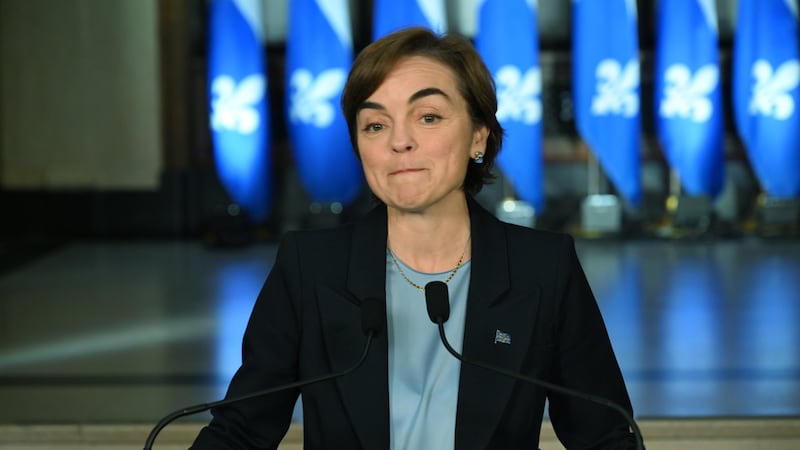
Saskatchewan premier Scott Moe says the new deal between Canada and China will help the two countries resolve trade disputes early, before they escalate. “When you are under trade duress or things aren’t going well with a country like China, you have no dispute mechanisms. You have no dispute mechanisms when there are boats that are waiting in port and are unable to unload,” Moe told assembled reporters and industry leaders at the University of Saskatchewan Tuesday afternoon. “What this agreement does is reenacts all of those dispute mechanisms that were in place before.” Moe called the press conference after a high-level trade mission to China last week, where he joined Prime Minister Mark Carney’s delegation, returning home with a new trade deal that will help reopen one of the world’s largest markets for Saskatchewan’s agricultural exports. “When you show your face in markets like that, they most certainly are going to take note of that. So that was a credit to the federal government. You haven’t heard me saying that a lot in the last decade, but I will say it here today,” he said. Moe chalked up their progress to officials making decisions based on trade, not politics. “The reason that those tariffs were on in the first place were maybe not trade-based decisions,” said Moe. “I mean, Canada had put on 100 per cent tariff on EVs, which is not WTO compliant, and then it was responded [to] politically by the government of China with … 85 per cent tariff on seed, as well as the 76 per cent on meal and pulses.” The new deal will see tariffs completely removed from canola meal and pulse crops and reduced to 15 per cent for canola seed. A 100 per cent tariff remains in place on Canola oil, but Moe told reporters exports of the seed and meal to China represent billions of dollars for Saskatchewan farmers annually, while sales of canola oil to China were just under $20 million last year. “However, canola oil will move to many other markets around the world,” he said. Too dependent on the U.S. and China? Since the eruption of trade disputes with the U.S. and China over the last year, Moe has opted for a uniquely cautious tone, preferring to cool simmering tensions where some premiers have played their hands more aggressively. That’s not by accident. Saskatchewan exporters have spent years developing relationships with the two massive global markets for a reason, Moe said. “Some folks will say from time to time that we are too dependent on whether it be the American market or the Chinese market when it comes to selling our agricultural goods. That may be true,” he said. “[But] we are in the Chinese marketplace for a reason. It’s one of the largest markets in the world, and they pay more. It’s a premium market, and we’re going to continue to make efforts to access that market." Now, with tariffs slashed and trade dispute mechanisms back in place under this new framework, Moe says Saskatchewan agricultural exporters should have a boost of confidence as they plan for seeding this spring.