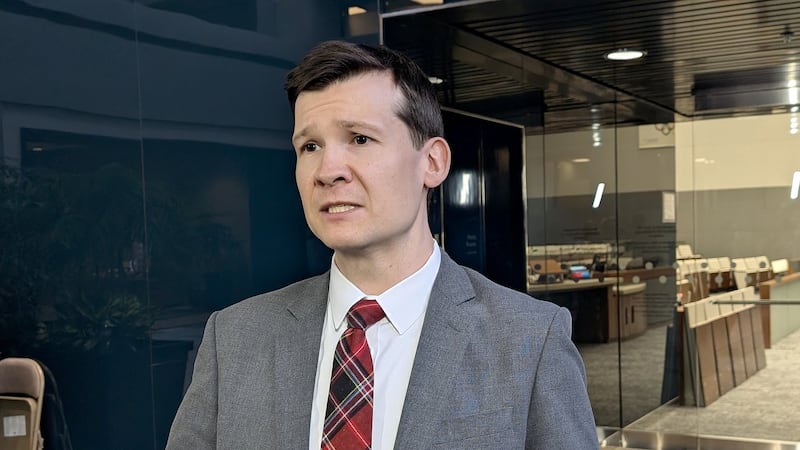
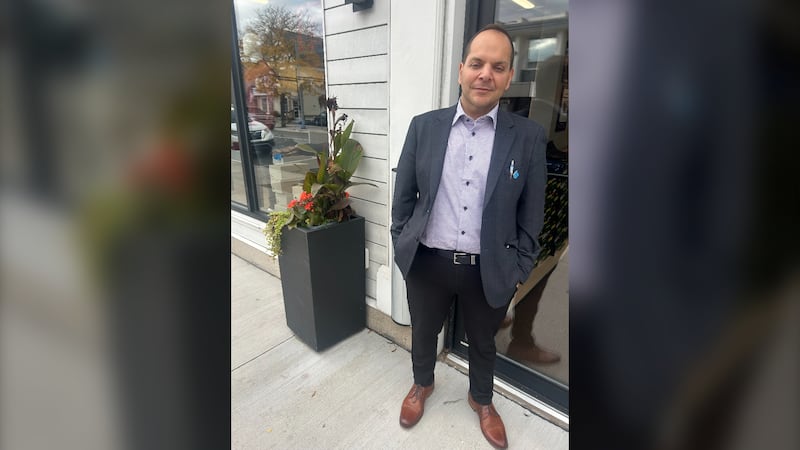
It was a very trying time for Mick Panko when his son Eli was diagnosed with type-1 diabetes. It came as a major shock to the family and forced 10-year-old-Eli to change his daily routine. Still, the family has been managing as best as they can, but recent changes to the Regina youth diabetes program have caused Mick to worry about other families and their ability to access it. In late August, the Saskatchewan Health Authority informed patients that staffing shortages have caused adjustments to the Regina Pediatric Diabetes Program, forcing some patients to travel to Saskatoon to receive care. Panko said he was grateful for the care and education his family was able to receive through the program but now worries others may not be able to access the same level of care. “We are just so fortunate that when we needed something, there was a phone call available, there was an email available … there was a face,” he said at an NDP media event Wednesday. “There [were] people that were accessible to us when we needed them at the drop of a call, or if we just said we needed to get face-to-face with a doctor, with an educator, it was accessible for us.” Panko said the family dealt with a lot of unknowns upon Eli being diagnosed but were lucky to have a good support system. “We know with the potential to have to travel on an ongoing basis it just, it puts pressure on resources that families may or may not have,” Panko shared. He said they received a notification this week that Eli’s next appointment had been moved to Saskatoon at the beginning of next month. “We’re very fortunate in that we have the resources. That’s something that we can manage and navigate as a family, but we know that not every family has those resources and Regina to Saskatoon with an appointment can very easily turn into a five or six-hour day.” Panko added that it would be especially difficult for families in southern Saskatchewan who rely on Regina’s program, as they’d have to drive even further. “That’s certainly something that concerns us as part of the diabetes community, and we know that community is important,” Panko said. “A community is something that our province was built upon, and when we think about what it looks like for us to be a people that support one another and grow in community —this decision feels like it pushes against that.” Speaking at Wednesday’s media event, NDP MLA Meara Conway called for the Government of Saskatchewan to listen to families like Panko’s and restore reliable access to pediatric diabetic services in Regina. Travel measures only temporary: SHA In a statement to CTV News, Dr. Alan Beggs, deputy chief medical officer of Integrated Regina Health maintained that there were no plans to discontinue pediatric diabetic services in Regina. He added the SHA was looking forward to the program returning to full service soon. “To strengthen this program’s long-term sustainability and continue to serve the numerous patients in southern Saskatchewan, the SHA is working closely with system partners on recruitment and staffing to fill gaps in Regina’s team,” Beggs wrote. Additionally, Beggs said the SHA was strengthening the clinical teams supporting the pediatric diabetes program with the funding of an extra 2.33 full-time-equivalent positions in Regina. Beggs said the SHA is communicating directly with affected families and assured that patients being asked to travel to Saskatoon was a temporary measure. Impact on Eli Mick described his son as a “super active” young boy, full of life and personality. The family immediately recognized the impact a lifelong condition like type 1 diabetes would have on their son. “Eli is at an age as a 10-year-old, where his body is going through all kinds of changes on its own. So then, when you factor in or add type-1 diabetes as a diagnosis, there’s just a lot of moving parts that as parents we’ve wrestled with,” he said. Mick said Eli has taken ownership and responsibility over his condition, even administering his own dosages just four days after his diagnosis. “When you think about a 10-year-old having to give himself a needle a minimum of four times a day, that’s a big ask, and it’s a bit heartbreaking as a parent to see your child have to go through that,” he said. “I think the other part that goes with that, and one of the things that’s been so encouraging for us, is the ability that Eli’s had to take responsibility, but also just the confidence he’s been able to have in doing that because he’s had people in his corner outside of just his mom and I.”