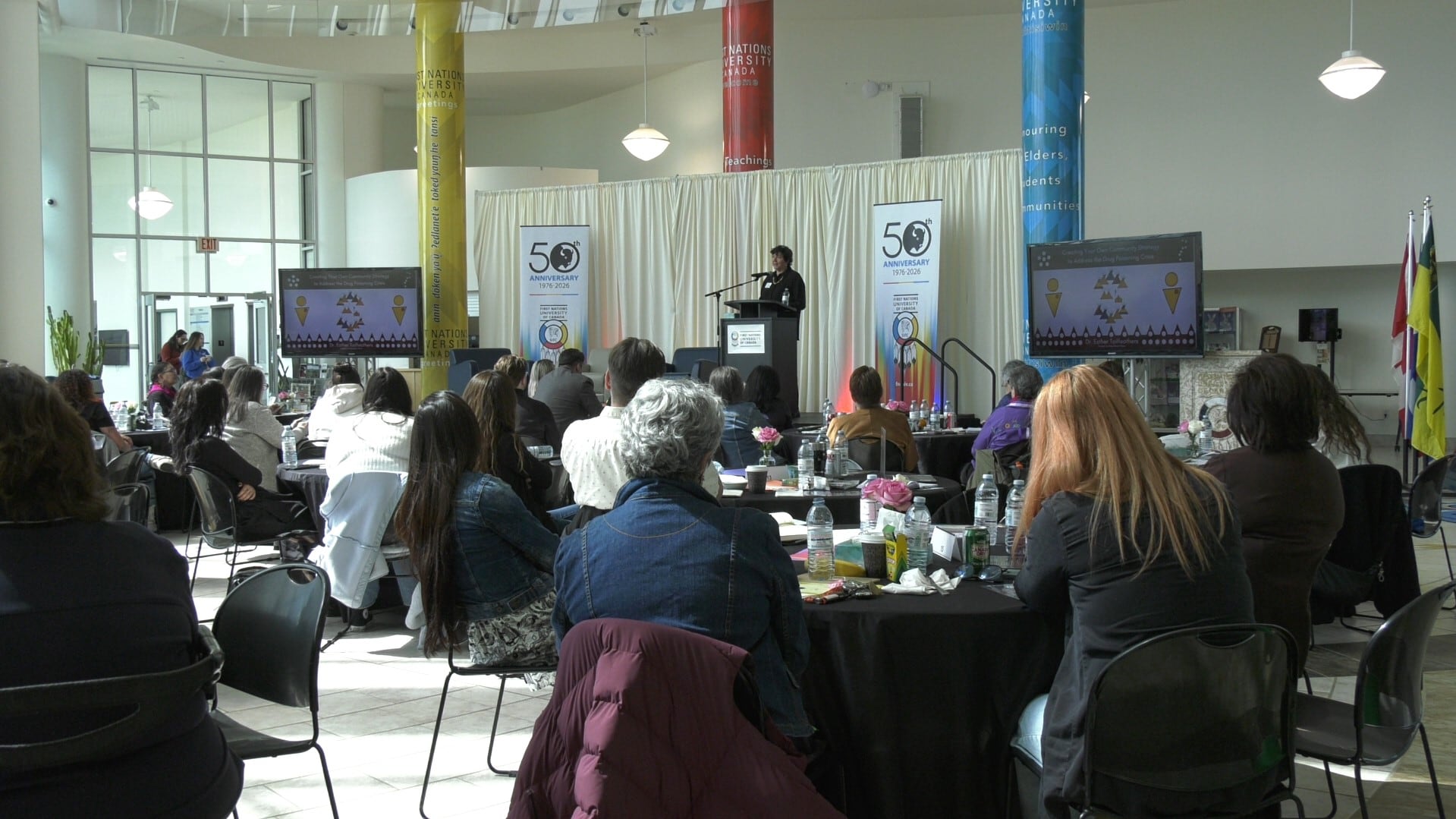
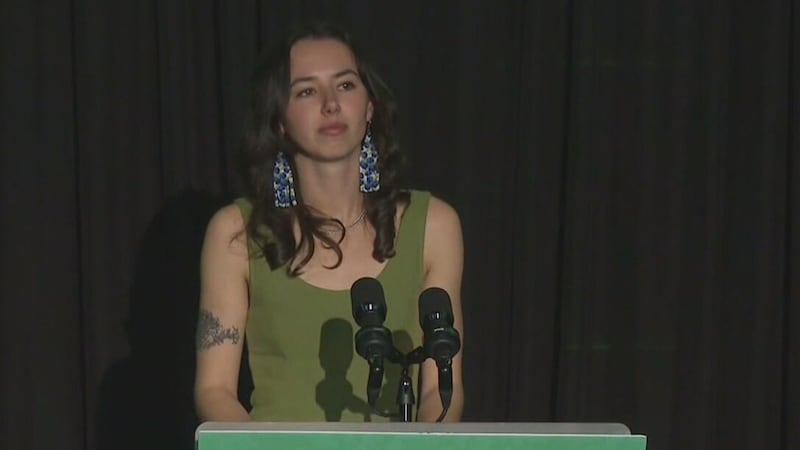
The First Nations University of Canada is hosting a two-day summit that uses an Indigenous perspective to discuss high-risk substance abuse. The summit, called Transforming Pain into Power with sâkihitowin & âhkamêyimowin, invites knowledge keepers, academics, students and community leaders from across the continent to explore possible solutions. Attendees shared input on community strategies, treatment programming and other health ideas. Dr. Esther Tailfeathers is a physician from the Kainai Nation in Alberta and one of the conference’s keynote speakers. She highlighted strategies used to limit overdose deaths on Kanai, which has roughly 5,000 reserve members. “We’ve developed a continuum of care in addictions. That is everything from prevention, resurrecting recreation, and harm reduction,” said Tailfeathers. Primary care, addictions clinics, and detox centres with supports were all essential, she added. Those with lived experience also had the opportunity to share what they know and add to the discussion. Chantel Huel presented on the harm caused by the toxic drug supply as well as the importance of having conversations with those using substances. “What are we doing to create awareness. How are we spending time with the people. Are we shaming and judging them? Or are we facing it with compassion, care and meeting people where they are at,” Huel said. The Government of Saskatchewan is developing a compassionate intervention act. A similar act from Alberta is now being created. Researchers looking at the Alberta legislation are scheduled to speak on their findings. “It’s polarized and people have different opinions. Part of that is because we’re all touched in different ways by addiction or substance use, so it is very personal,” said Jessica Kolopenuk, the chair of Indigenous health at Alberta Health Services. April has been a deadly month for overdoses in Saskatchewan, with over 300 reported in Regina and Saskatoon. Advocates the summit say these conversations are happening at a critical time and are a good starting point for the future. “This is really intended to be the first step. It’s not meant to provide all the solutions. It is a starting point in a conversation,” said Kolopenuk. The summit will conclude Wednesday.