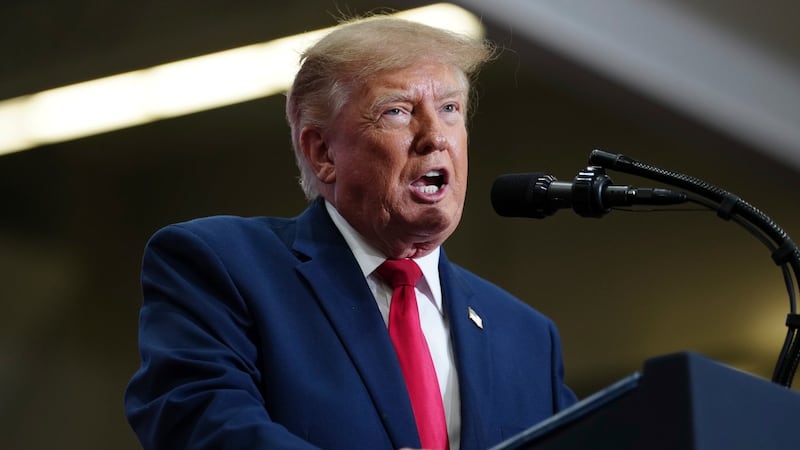
OTTAWA – Multiple government and industry sources close to trade discussions between Canada and the United States tell CTV News the momentum of the talks, just recently re-started in earnest, combined with U.S. President Donald Trump’s political vulnerabilities ahead of the midterms leads them to believe there is considerable appetite from the White House to strike a deal with Canada. All the sources cautioned an agreement of any sort was far from certain given the past behaviour of Trump and his trade delegates including U.S. Commerce Secretary Howard Lutnick. But, over the last week the White House has shown much more interest in arriving at an agreement “than in all the weeks prior,” according to one of the sources, who also intimated progress on auto tariffs looked possible relative to where things were at when talks broke down in August. At a rally in Michigan Sunday, Trump referenced the closure of car plants in Canada and Mexico, insisting without providing evidence, that “Canada has been ripping off the United States for years. We’ll have that settled really soon; they’re willing to give us anything at this moment.” Asked late last week while in Turkiye whether a deal with the U.S. was suddenly possible, based on what sources were telling CTV News, Prime Minister Mark Carney said it would be up to the U.S. “They’re a little hard to predict,” Carney said Friday. “We’re ready to drop everything, sit down, and negotiate this afternoon if the Americans are ready in good faith.” Canada-U.S. Trade Minister Dominic LeBlanc was supposed to be in his New Brunswick riding on Friday for an announcement but cancelled to stay in Ottawa. Approached by a CTV News reporter in the downtown core, the minister would not explain why he remained in Ottawa. Two sources described intense talks over the weekend, that were “all consuming.” Another source with knowledge of talks on both sides of the border said things are moving. Reached for comment Sunday, LeBlanc’s spokesperson Eve Giroux-Loignon wrote in a statement, “Canada remains in constructive dialogue with our U.S. counterparts on a range of priorities,” adding “we stand ready to work constructively and in good faith towards a more mutually beneficial trading relationship that respects Canada’s interests.” White House economic adviser Kevin Hassett told Fox News Sunday morning the U.S. was close to a deal with Canada and that talks are “gathering steam.” Trump’s U.S. Trade Representative Jamieson Greer last month insisted Trump felt “no urgency” to make a deal with Canada. The president is facing lagging polls just 10 days out from U.S. midterm elections, which put his party in a position to lose the House and potentially the Senate as well. The escalating cost of living has become a defining issue in the elections. There are two factors driving up prices: the war in Iran and Trump’s tariff policy. In some senate races - Michigan and Maine are two examples - tariffs on Canada are the core election issue. Evidence of that materialized Friday, when the White House announced it would remove some tariffs on Canada, adding less consequential ones, in a bid to boost embattled Republican Senator Susan Collins’ campaign for re-election. Collins took credit for the tariff changes, writing in a statement, “I will continue working directly with administration officials to seek additional relief and encourage a broader trade agreement with Canada, our neighbor, ally, and largest trading partner.” Democrats slammed the president’s abrupt tariff about-face. The top Democrat on the Senate Finance Committee, Ron Wyden, said in a statement, “Trump’s desperate, 11th hour attempt to save Susan Collins’ political career is an admission that American voters are rejecting his toxic tariff policies.” Hours before making those changes, Trump claimed that Canada “very much wants to make a deal” with the U.S. to restore trade peace, while insisting “we have all the cards.” In August, Canadian and U.S. trade officials came very close to striking a deal, but the talks fell apart in the final hours. At the time Carney contended the Americans made last minute demands around French language and culture, critical minerals, autos and sovereignty that were untenable. “In short, they asked too much and offered too little,” Carney insisted at the time. The U.S. midterms are set to take place Nov. 3. With files from CTV News’ Stephanie Ha and Jeremie Charron