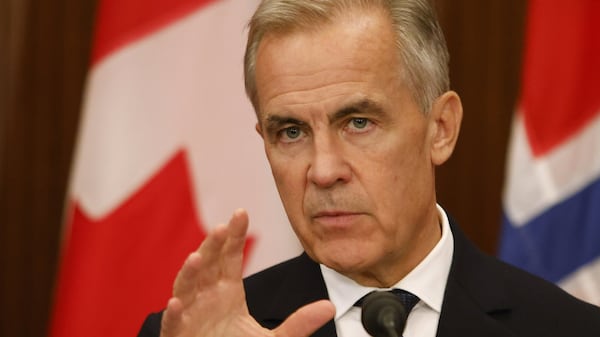
Ahead of the First Nations summit to discuss the federal government’s controversial major projects bill getting underway, Assembly of First Nations Chief Cindy Woodhouse Nepinak is calling for “more listening” from Prime Minister Mark Carney. “We’re going to give him the benefit of the doubt that he produces tomorrow,” Woodhouse Nepinak told reporters in Ottawa on Wednesday. “I think that he has to also listen to First Nations leadership. More listening rather than talking about how they want to proceed forward.” The summit, at the Canadian Museum of History in Gatineau, Que., started Wednesday, with Carney scheduled to attend tomorrow’s full day of sessions. The prime minister promised the meeting after the federal government faced criticism from Indigenous leaders for fast-tracking Bill C-5 through Parliament last month. The bill, also known as the Building Canada Act, allows cabinet to quickly grant federal approvals for big projects deemed to be in the national interest like mines and pipelines. Woodhouse Nepinak says conversations with First Nations communities should have happened before the bill was passed. “I think when you rush things like this, you cause further friction and division and unknowns. I don’t think that we have to do that to each other as a country,” she said. Response, expectations mixed The AFN chief also acknowledged response to the bill has been mixed amongst Indigenous communities. “I’ve had some chiefs call that they support this bill. Others that called that said that they don’t support it,” she said, adding some communities “don’t know one way or another.” Asked about how the federal government can ensure the summit is meaningful, AFN Regional Chief Joanna Bernard, who presents New Brunswick, said the conversations should not be described as consultation. “They’re coming in. They’re putting up the agenda. They’re deciding how this is going to proceed. But definitely it is not consultation,” Bernard said. It’s for this reason, British Columbia Assembly of First Nations Regional Chief Terry Teegee said he’s “a bit more cynical” about tomorrow’s meeting. “I mean, just look at the process … last minute agendas and everything that has come about,” he said. “I think, you know, if this is a success, I think it’s getting a solid commitment from the prime minister of discussions of how free, prior and informed consent will be implemented.” At a separate press conference for the Assembly of Manitoba Chiefs on Wednesday, Grand Chief Kyra Wilson said the summit “is a first meeting of many.” “This is not consultation. This is a first meeting of many. That is the expectation,” Wilson said. “Canada must recognize that we are the first peoples of this land. We have inherent rights, and this discussion will be led by us.” The federal government is currently in the process of putting together a list of potential nation-building projects. First Nations in Ontario launch legal challenge against C-5 In Ontario, Bill C-5 is facing a legal challenge from nine First Nations, who are seeking a court injunction – filed in the Ontario Superior Court of Justice – to prevent the federal government from using the bill to name national interest projects. They are also fighting Ontario’s law known as Bill 5, which allows its cabinet to suspend provincial and municipal laws through the creation of so-called “special economic zones.” Speaking to reporters at Queen’s Park on Wednesday about the legal challenge, Apitipi Anicinapek Nation Chief June Black, who teared up during her remarks, said: “what’s about to happen is going to be very harmful.” “We have a right to a way of life on our lands, and that way of life includes decision making and governance authority,” Black added. Appearing alongside her, Alderville First Nations Chief Taynar Simpson said that it’s not that First Nations are against resource development, but that approvals need to happen in the right way. “Duty to consult and free, prior, and informed consent exist because these are our territories,” Simpson said. “We are still the stewards of this land.” Carney was questioned about the court injunction at a steel announcement in Hamilton, Ont., on Wednesday. When asked if delayed discussions with Indigenous communities could jeopardize the goal of getting new projects built, Carney said “no,” adding the summit will be about engagement. “It’s not a consultation tomorrow, but the first part of that, in fact it starts this afternoon in Ottawa with a series of First Nations rights holders, other interested First Nations groups, including the AFN, is that engagement about the modalities, how this can work, how we work together, what are the priorities,” he said.