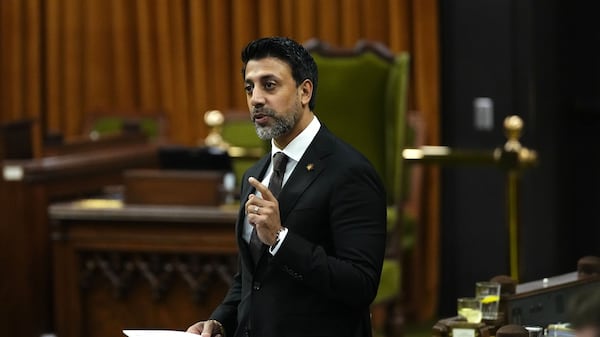
The City of Ottawa will soon be required to turn off photo radar cameras on all municipal roads, after the speed camera caught more than one million drivers speeding over the past five years. Premier Doug Ford announced the Progressive Conservative government will introduce legislation next month that will ban the use of municipal automated speed enforcement cameras. “Over the last few years, we’ve seen municipalities across the province use municipal speed cameras as nothing more than a cash grab,” Ford said while speaking to reporters in Vaughan. “To protect taxpayers and drivers and stop them from being gouged. Instead of punishing people retroactively with speeding tickets days or weeks after the fact, we’re supporting practical, proactive traffic calming measures that stop people from speeding in the first place.” Under the legislation, the use of municipal speed cameras will be banned immediately once the bill receives Royal Assent. Ontario will require municipalities with existing speed cameras in school zones to install large new signs to slow down drivers by mid-November 2025, with permanent, large signs with flashing lights to be in place by September 2026. Ford says Ontario will launch a new fund to help municipalities “make the switch” to install road safety measures. The government will also encourage municipalities to implement alternative traffic-calming measures, including speed bumps, speed cushions, raised crosswalks, curb extensions and roundabouts. Mayor disappointed Ottawa Mayor Mark Sutcliffe told CTV News Ottawa he was disappointed to hear the premier wants to scrap the program all together. “I thought there was a way forward where we could improve the program rather than scrap the program. I spoke to the premier about it the other day, but I understand that’s not the direction he wants to go in, so, we’ll work with the province and try and find another way,” he said. “But I think it is a disappointment for many mayors and city councillors across the province who had been focused on using these cameras as a way to get people to slow down in particular neighbourhoods, particularly around schools.” Sutcliffe said the city needs time to learn more about the legislation before deciding on next steps, and said he’s prepared to work with the province on future road safety plans. “We’ll use whatever measures are at our disposal, but I think there was evidence that showed the speed cameras were effective at getting people to slow down. If you knew there was a speed camera in that area, you’d slow down. If you got a ticket, the next time you drove through that area, you’d slow down. There’s data that shows that,” he said. “If those options are not available to us anymore, we’ll have to use other measures and we’re prepared to take a look at that and work with the province on whatever solutions we need to consider.” City says cameras have been effective Ottawa launched the automated speed enforcement camera program in July 2020, with eight photo radar cameras. “Since launching the City of Ottawa’s automated speed enforcement pilot in 2020, compliance with speed limits has increased significantly and contributed to safer streets for our communities. Revenues generated through the ASE program cover program costs, with any surplus directed to the Road Safety Reserve Fund to support initiatives outlined in the City’s Road Safety Action Plan and its Implementation Plan,” said the City of Ottawa’s general manager of Public Works Alain Gonthier in a statement to CTV News Ottawa. Sixty photo radar cameras are currently installed in school zones, community safety zones and high-speed areas across Ottawa. The city is currently spending $1.7 million to install 24 new photo radar cameras this fall. The Ontario government says it will not give municipalities funding to take down the photo radar cameras. Gonthier said the city would review details from the provincial government. “The City of Ottawa is aware of the Ontario government’s intention to introduce legislation that would ban the use of municipal automated speed enforcement cameras. City staff will carefully review any available details from the Government of Ontario and assess the potential impact of this announcement on our road safety initiatives. Following further review, staff will provide an update to Members of Council,” he said. “The City remains committed to improving road safety in Ottawa and will continue to work with the Province to identify and implement effective tools that protect all road users.” Statistics available on the City of Ottawa’s website show 1,054,055 speeding tickets have been issued through the automated speed enforcement program since the program was launched in July 2020. A total of 190,439 speeding tickets were issued between January and July 2025. The photo radar cameras generated $60 million in revenue for the City of Ottawa between 2020 and 2024, with another $20 million in revenue generated between January and August this year. The Ontario government approved changes to the Highway Traffic Act to allow for the use of automated speed enforcement cameras in community safety zones, where the speed limit is below 80 kilometres an hour. Ottawa’s police chief said photo radar cameras are one tool in the toolbox to slow down drivers. “We’ve seen cameras working here now for a number of years. I think we’ve all driven through them. I have as well, too. This is about changing behaviour. I can tell you, when I drive through an area where there’s cameras, everyone’s slowing down around me and that’s a good thing. That means they’re working,” Chief Eric Stubbs told CTV News Ottawa. Councillors supportive of cameras Several Ottawa councillors expressed support for the photo radar cameras on Thursday. “Residents are vocal in demanding speed enforcement cameras in their neighbourhoods because cameras work to reduce speeds, increase safety, and contribute to a sense of security for everyone using roads and sidewalks,” Coun. Jeff Leiper said in a post on Bluesky. “Removing them will make cities more dangerous places.” Coun. Laine Johnson says all taxpayers will pay for traffic calming measures instead of just drivers that are caught speeding. “We like this for a policy change? Are we so afraid of going after the actual rule breakers that we would rather put it on the back of everybody?” Johnson said on social media. “Never mind the administrative and capital costs that municipalities have taken to onboard this provincial program, now we dismantle it and call that good value for taxpayers money as well? It’s not a tax grab. It’s a fine. Now we’re all gonna pay financially and with our neighbourhood security.” The city says revenues generated from the automated speed enforcement program cover the cost of photo radar cameras, and support initiatives in the Road Safety Action Plan, including engineering and enforcement to promote road safety for all road users. Ottawa’s current photo radar camera locations Here’s where 60 active photo radar cameras are located: Locations for new automated speed enforcement cameras this fall