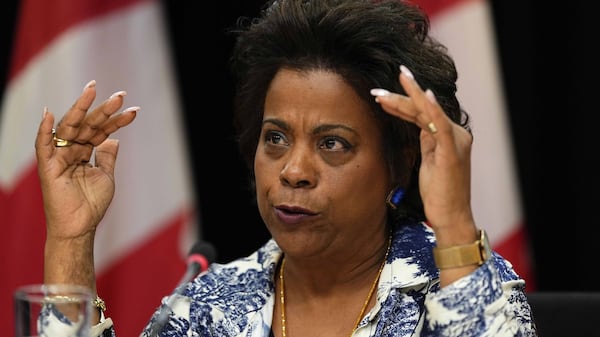
The CEO of the Ottawa Board of Trade is warning that the downtown core of the nation’s capital is at even greater risk with word of significant cuts to federal departments. Sueling Ching authored an op-ed in the Globe and Mail this week, saying the federal government has a responsibility to show leadership and transparency about its plans for workers and federal properties that occupy the heart of Ottawa. “Let us be clear: this is not a call to drag public servants back to the office or to cling to aging buildings for sentiment’s sake. It is a call for leadership, transparency and accountability from the federal government to the city it depends on, and to the capital that belongs to every Canadian,” Ching wrote in the Globe and Mail. Finance Minister François Philippe Champagne sent letters to fellow cabinet ministers on July 7 stating that they must present plans to find 15 per cent in day-to-day operational savings in their respective departments over the next three years. Crown corporations such as the National Capital Commission, the CBC, and Via Rail have also been asked to find similar savings. Speaking on CTV Morning Live on Wednesday, Ching said the federal government is an anchor employer in the capital, with more than 150,000 federal workers calling the National Capital Region home. “The main economy in Ottawa has been the federal public service and we have benefited largely from that for a long time,” she said. “When the pandemic hit five years ago and we went to work from home, that really disproportionately impacted our downtown core. It impacted many of the large city downtown cores but particularly us because of the federal government’s return to office strategy.” The vacancy rate in downtown Ottawa was 15 per cent in the second quarter of 2025, according to a recent CBRE report. Some buildings are being converted to housing, such as a former Department of National Defence building at the corner of Slater and O’Connor streets, but a federal auditor general’s report notes that the government has been slow to implement its plan to downsize its office footprint. Ching says her piece in the Globe and Mail is intended to highlight the need to work closely with the federal government on plans for Ottawa’s downtown. “If we get too far down the road about not being intentional about how we transform the city core of the nation’s capital, then it will be more difficult to come back,” she said. “In addition, with a new government and their ambitious mandate and desire to work closely with the business communities across the country, this is an opportune time for us to talk about how federal government decision making can, through policy, transform our downtown in a meaningful way that is very much aligned with our national agenda.” Some downtown business owners say they have yet to see business rebound to pre-pandemic levels. “We do about half the business we used to pre-COVID,” said Nick Cowin, of Angry Dragonz Food Truck. “We’ll probably look to move to a new location, probably won’t even come back down here if they keep cutting people down.” Cowin says Tuesdays, Wednesdays and Thursdays are still busy but Mondays and Fridays are not, with Fridays being the slowest. Peter Aboud, from the Slater Street Market, says the downtown core needs people. “We need to see more people downtown and more the offices occupied, and whether it’s federal, whether it’s whatever, you just need people downtown.” Proposed cuts to federal departments will also likely mean job losses, Ching says, which would further reduce the once regular foot traffic downtown Ottawa used to see. “So many of those jobs are concentrated in Ottawa, we know so many of their buildings are concentrated in Ottawa, so what we’re really asking for is a very defined and enforced workforce strategy,” said Ching. “We’re not saying you have to bring everyone back; we’re saying you have to be really transparent about what that plan is. You have to be accelerating and disposing of those assets very quickly and clearly and looking for opportunities such as bringing a concentration of, for example, defence to Ottawa to help diversify the economy.” Defence is one of the few sectors the government plans to grow. Prime Minister Mark Carney has announced plans to reach NATO’s defence and security spending target of two per cent of GDP by the end of this year and up to five per cent of GDP by 2035. “We really need to focus on what is within our control,” says Ching. “We need to build confidence in our own economy and look for ways to grow our own economy. We need to be very clear in our shared vision, all working towards the same goal, and working collaboratively, every level of government and the business community.” With files from CTV News Ottawa’s Peter Szperling