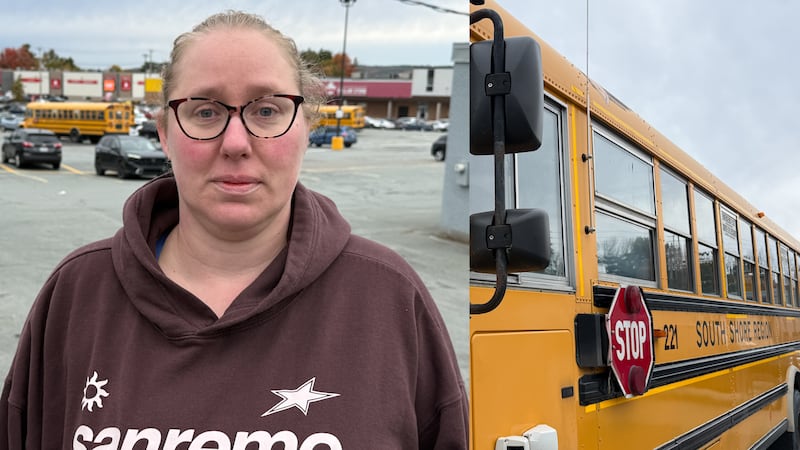
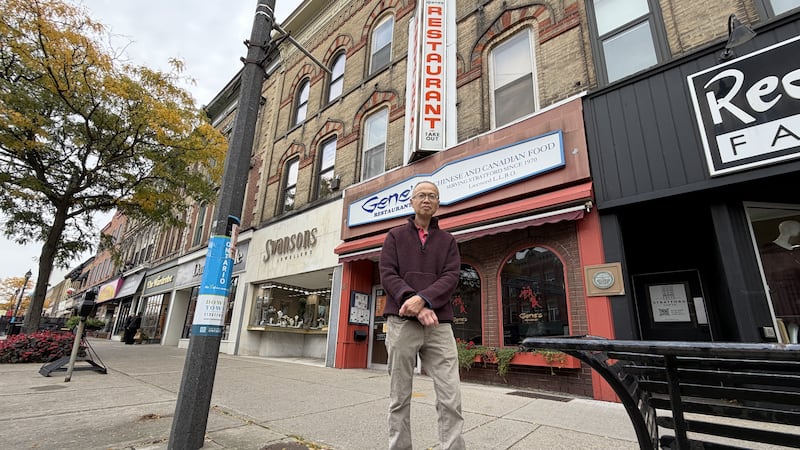
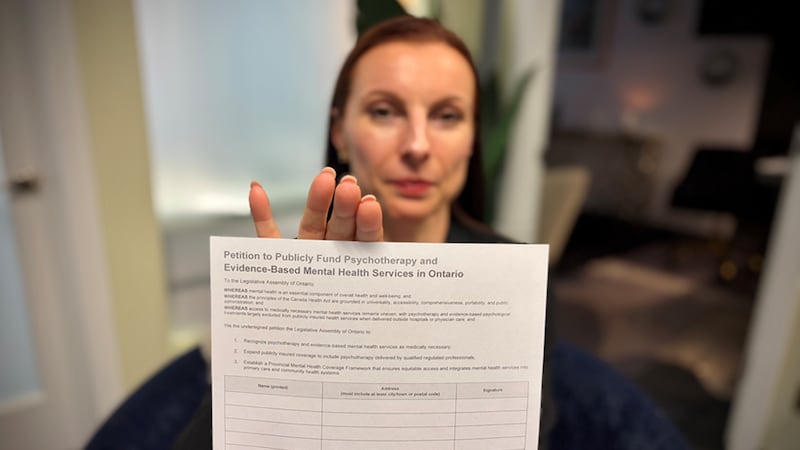
A Guelph, Ont. psychotherapist is calling on the Ontario government to expand public health insurance coverage for mental health services, saying too many people are going without care because they cannot afford it. Marinela Trickett started a petition urging the province to fund psychotherapy through the Ontario Health Insurance Plan (OHIP). She said her clinic regularly hears from people who need support but cannot afford it. Kari Parkhouse, 57, is among those who said the cost of care has left them struggling to get the help they need. Parkhouse has dealt with mental health challenges for much of her life. At 19, she attempted suicide and was left in a psychotic state after taking medication to try and end her life. Decades later, she said she continues to struggle. “I’m 57-years-old. I have deep issues with anxiety and depression. I have been self-employed for over a decade and that leaves me with no recourse, really,” Parkhouse said. She has accessed therapy periodically and found it helpful, but said the cost has made it difficult to continue. “This has haunted me my whole working life. So I have no savings. I have no RRSPs,” she said. Trickett said Parkhouse’s experience reflects a broader problem facing people who need ongoing mental health care. “We receive calls from people from all over Ontario, people who are in need of emotional support, in need of long-term psychotherapy care, who cannot afford that,” Trickett said. Petition calls for expanded OHIP coverage Trickett said OHIP only covers a limited portion of psychotherapy. She argues that expanding coverage to include registered psychotherapists would help more people access care. “Currently a very small part of psychotherapy is covered by OHIP — only psychotherapy delivered by a medical doctor. And in the field, very few medical doctors practice psychotherapy,” she said. Trickett’s clinic offers lower-cost sessions with students studying psychotherapy, but she said that option is not enough to meet demand. Green Party MPP Mike Schreiner has agreed to present the petition when the Ontario legislature resumes. “Every person in Ontario should be able to get the mental healthcare they need, when and where they need it. Unfortunately, the current provincial government treats mental healthcare as a luxury, leaving it unaffordable for many,” Schreiner said, in part, in a statement. The College of Registered Psychotherapists of Ontario also told CTV News the province has a growing number of qualified registered psychotherapists who could help address mental health needs. “Making better use of this workforce across the healthcare system could help improve access to appropriate care,” the college said. “While decisions about public funding and service delivery rest with government, CRPO’s responsibility is to ensure that Registered Psychotherapists are qualified, competent and accountable for the care they provide. We are also committed to working with health system partners to address barriers to access that can be reduced through regulatory changes.” Wait times remain a concern The office of Ontario’s health minister said the province is making record investments in community-based mental health services, including the free Ontario Structured Psychotherapy Program for those 18 years and older. “Additionally, through the Roadmap to Wellness, we are investing $3.8 billion over 10 years to build a modern, world-class mental health and addictions system in every corner of the province. This funding has supported over 32 new Youth Wellness Hubs (YWHs) across the province, delivering mental health services, peer support, recreation and wellness to youth aged 12 to 25, convenient cognitive behavioral therapy and expanding Mobile Crisis Response Team, and expanded Rapid Access Addiction Medicine (RAAM) clinics,” a spokesperson for the Minister of Health went on to say. However, access to these program can involve a wait. The Ontario Structured Psychotherapy Program indicates that some applicants in the West Region can expect to wait six to eight weeks before even being contacted. Trickett said waits can be much longer at some centres, with some people facing years before they can access services. “There are long waitlists and there are some centres, for example, waitlists are over two years,” she said. For Parkhouse, expanding access to affordable mental health care would offer hope after years of struggling to find support she can sustain financially. “If I am still haunted by anxiety and depression throughout my 60s and 70s, I’ll be the one out there with a Tim Hortons cup on a street corner trying to get you to give me money,” she said.