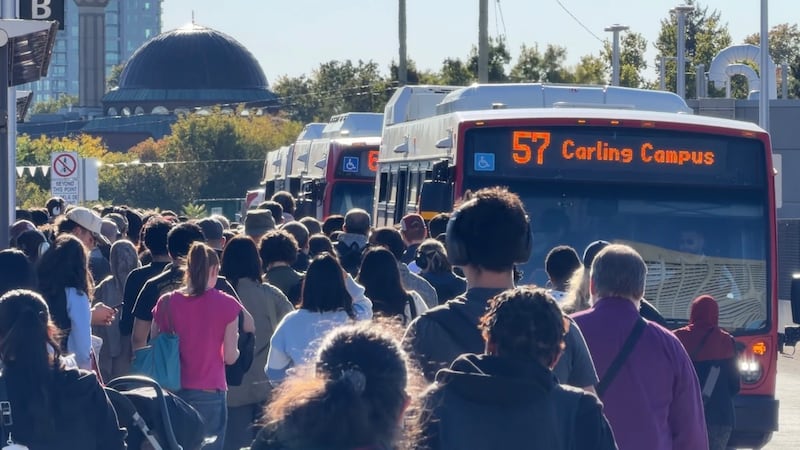
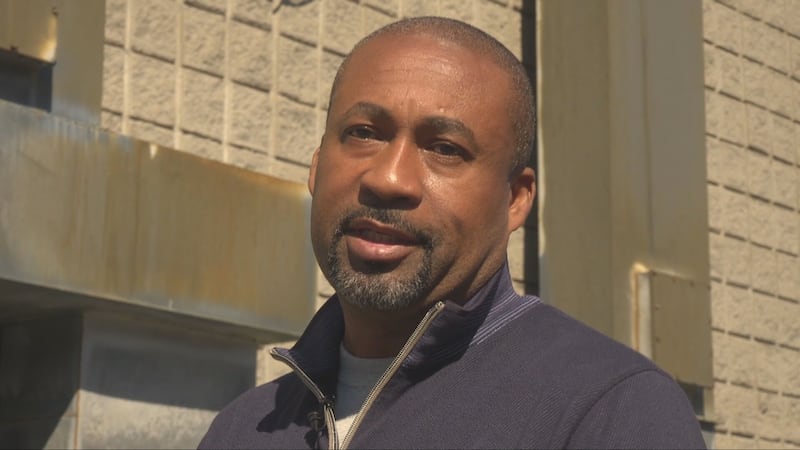
Ottawa’s Worst Commute: CTV News Ottawa travels with viewers on OC Transpo buses, the O-Train and Para Transpo to see what’s happening on the transit system. Visit our special Worst Commute page for more coverage. For a lot of Ottawa commuters, getting to work isn’t just a trip. It’s an ordeal. Delays, transfers and unexpected detours have become part of the daily grind on OC Transpo. With a shortage of buses and Line 1 still operating single-car trains during peak periods, many riders say reliability remains out of reach. To see what that looks like in real time, CTV News Ottawa followed one rider from doorstep to desk. Dong Ngo doesn’t own a car and uses public transit every day, including three days a week to go to the office. In fact, Ngo and his fiancée bought a home near a transit hub, believing the proximity to reliable service would make commuting easier. Instead, he says navigating OC Transpo has become a maze of buses and trains. The federal public servant travels from the Hunt Club area to Gatineau. On paper, the trip should be manageable. In practice, it’s unpredictable. “Particularly since January, since there are more bus cancellations,” Ngo explained. “On the best end, it’s 45 minutes. On the worst end, it’s more like an hour and 20, an hour and 30 min.” The trip begins: Waiting and watching the app Ngo leaves his house just after 7:30 a.m. and uses the OC Transpo tracker app to see when the bus is scheduled to arrive. “It’s supposed to come at 7:40,” he said, referring to his first bus. Questions start immediately: Will it arrive on time? Will it show up at all? At 7:40, the Route 90 Greenboro bus arrived. It’s a small win in a commute filled with variables. Eight minutes later, he arrives at South Keys Station, a major transfer point. Transfer decisions in real time The next leg of the journey presents a choice. Route 98 to Hurdman pulls up, but it’s packed. Ngo makes a split-second calculation and opts for Line 2 instead. “If I’m really in a rush, I’ll try to squeeze on,” he says. “But if not, sometimes Line 2 is more consistent and at least I can get a seat.” A northbound train arrives with plenty of room. Still, crowding builds at pressure points like Carleton University. From South Keys to Bayview, Line 2 takes about 20 minutes. But at Bayview Station, predictability fades again. The Line 1 bottleneck Bayview Station is the halfway point and a pinch point. This is the station for those passengers transferring to Line 1, which is currently running single-car service after a spalling issue was detected on some of the vehicles’ axles. A long line forms along the eastbound platform. It took three trains to come into the station for Ngo to be able to get onboard. “It’s kind of the calculation I make mentally,” he explains. “If I let the first one go, I can be among the first in line for the next train and at least be guaranteed a spot.” Since Line 1 has been running single car service, many passengers have reported crowded platforms and packed cars. Trains are running every 3-4 minutes during peak periods, but some passengers are left waiting for the next train. Transferring to STO The final stretch of Ngo’s commute to work requires transferring to Gatineau’s transit system. Parliament Station offers a relatively easy connection to buses on Queen Street. STO runs a 400-series rapibus, which is a two-way corridor extending over more than 14.8 km, exclusively for use by buses. It links boulevard Lorrain and boulevard Alexandre-Taché. It helps serve the Gatineau and Ottawa downtowns. At 9:03 a.m., after two buses and two trains, Ngo is a block from his office. Total commute time: one hour and 31 minutes. “It’s always a calculation” For Ngo, every commute is a mental exercise in contingency planning. “It’s always a calculation of which is the most optimal route,” he says. “Sometimes you just have to decide in the moment. The apps don’t really tell you how busy something is.” After a full workday, Ngo will make the same trip in reverse. He says the fix isn’t complicated. “More direct buses into downtown from the suburbs. More frequent buses. I think that’s the biggest thing.”