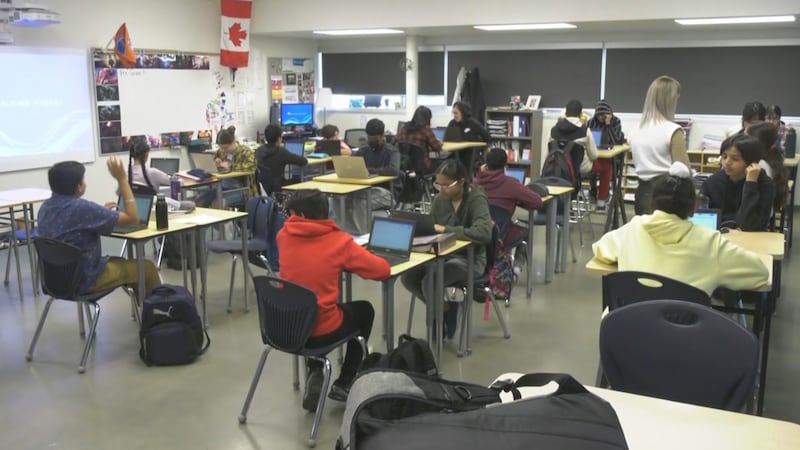
As the medical officer of health and CEO of the Eastern Ontario Health Unit says, school avoidance or anxiety is common among children. While school avoidance can be confusing and frustrating for parents and children alike, Dr. Paul Roumeliotis, A.K.A. Dr. Paul, told CTV’s Your Morning Ottawa that a little patience and understanding can go a long way in helping children get over their school-associated anxieties. What is school avoidance? According to Dr. Paul, school avoidance usually comes in two forms. The first, is when children who have never been to school before are fearful for their first day of class. “You can understand there’s anxiety, separation anxiety, and so on,” he said. The second form of school avoidance, according to Dr. Paul, is in children who already go to school but experience hesitancy over going to class in the morning. “It really has to do with underlying anxieties, and there can be multiple, multiple causes and reasons for it,” he said. What are the signs? A common sign of school avoidance is anxiety, but Dr. Paul says the tricky thing is the child often won’t exactly know what they are anxious about. “This is a common thing as pediatricians that we see all the time, you know, children refusing to go to school or having these symptoms that are very non-specific and it’s manifested by anxiety that they don’t even understand or can attribute to,” he said. As Dr. Paul explains, school avoidance can manifest from a fear of failing at school, fear of bullying or violence, or even anxiety over using the public bathroom. School avoidance can also stem from undiagnosed learning disabilities or difficulties. “These are very common,” Dr. Paul said. “We say, ‘oh, okay, they’re not a big deal,’ but it’s a big deal to the child, right? If they’re feeling it.” If a child is frequently feeling unwell during the week, but fine on the weekends, that could be school avoidance, Dr. Paul says. What should parents do? Dr. Paul says there is not a one-size-fits-all approach to helping a child with school avoidance. “There’s a whole slew of causes. That’s why there’s really no one fix,” he said. However, Dr. Paul says parents should approach the situation with sympathy and understanding. “Bottom line is: be aware, be sympathetic, be supportive, and you know you can also tell your child, ‘I’ve been there, done that, right?’” Parents should work with their child’s school if they suspect they’re dealing with school avoidance. Likewise, Dr. Paul says it’s important to consider the stressors at home that could be causing your child anxiety. “You need to work in concert with a child, with the school, and sometimes a health professional, a psychologist, or a pediatrician to do that. Recognize that it could be strictly school issues, but it could also be strictly home issues, like just recent divorce, recent those types of things,” he said.