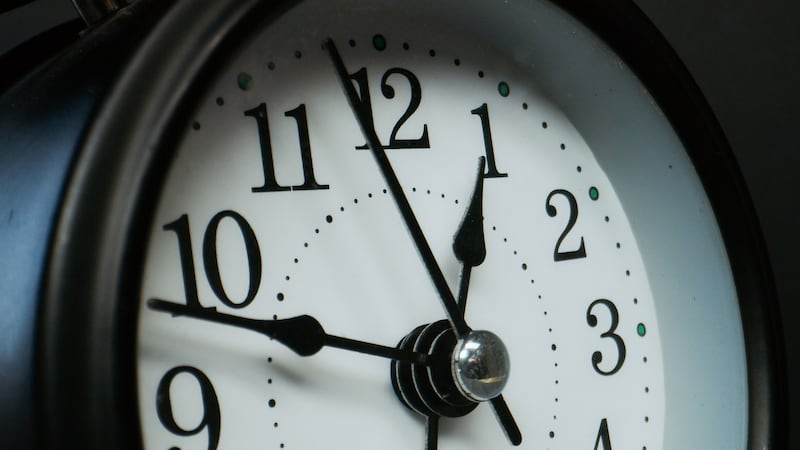
Although people planning to stay out late Saturday night will get an extra hour of sleep with daylight saving time coming to an end, an expert from the University of Waterloo says the long-term consequences of the shift could be harder on your body than you realize. Anita Layton specializes in mathematics, biology and medical research at the university. According to the professor, it’s much easier to change a clock than for our biology to catch up with the fall back. “Our internal clock coordinates a lot of things like sleep, hormones, metabolism, blood pressure,” Layton explained. She said that a simple one-hour shift—even if it’s to gain back the hour—throws off our biological clock. “Most people adjust. But when an entire population experiences that change all at once, even very small effects can become relevant to public health.” Meanwhile, Alison DeMuy, of the Canadian Mental Health Association Waterloo Wellington, said the time shifts can also play a negative role in our mental well-being due to the change in our circadian rhythm. “You might feel a little bit more tired and sluggish, but then you’ll also notice it in your mood, our ability to emotionally regulate things. Things kind of get on your nerves a little bit more. We’re feeling sad,” DeMuy said, adding that those feelings are normal at this time of year. With the return to standard time, we will see an earlier sunrise and sunset. The extended darkness at night can also lead to people experiencing seasonal affective disorder. However, if the feelings of sadness become prolonged, DeMuy said that’s when you should contact your family physician or call 988 for round-the-clock support. Parts of Ontario not turning back clocks Starting this weekend, Ontario is moving some areas in its northwest region to permanent year-round daylight time, allowing them to align with Manitoba. Other areas have announced the same plans this year, including the Northwest Territories, British Columbia, Alberta and Manitoba. “We’re a 22-hour drive from Toronto, and you’re still in Ontario,” Kenora MPP Greg Rickford told CTV News. “We didn’t want to be stranded in our own time zone. So some of this was born out of necessity, some of it was born out of common sense.” The province insists that the only way the rest of Ontario will also scrap the time change is if the neighbouring jurisdictions of Quebec and New York state do the same because of economic ties. But Layton said she hopes more parts of the province will follow suit sooner rather than later. “With science, we understand a lot better about biological timing, and I think it does make sense to reassess the policy and stop the twice-yearly changes,” Layton said. In a perfect world, she would like to see a change to permanent standard time rather than permanent daylight saving time to better synchronize our biological clocks with sunrise. With files from Christl Dabu