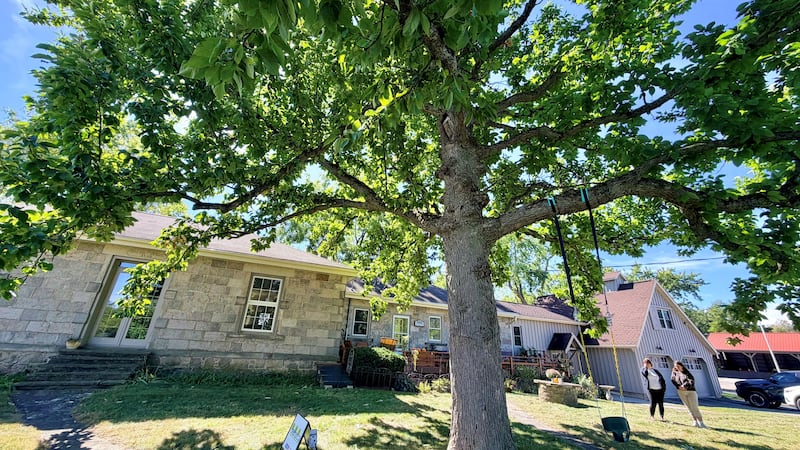
What started as a series of conversations around a family table during the COVID-19 pandemic has grown into an award-winning cidery in Ottawa’s west end. At 1818 Farm and Cidery in Carp, cider-maker Wes Hunter and his family have turned land that had been sitting largely unused into a growing farm, cidery, restaurant and destination. And now, one of their ciders has been named the best in Canada. Their cider, Golden Child, took home Canadian Cider of the Year at the Canadian National WineAlign Awards, earning 91 points in the competition. “We’re not trying to be anybody else in our cider-making process,” Hunter said. “When this started, there really was a carte blanche where we get to really start fresh into who we are as cider makers here at 1818.” The story of 1818 began during the pandemic, when Hunter and his family started thinking about how they could use the land that had been part of the family for years. “Business plans started to get written around the table and conversations just kept going to, you know, buying a tractor and starting to clear some land and start what we thought was just a small little farm and cider,” he said. The first trees were planted in 2022, alongside the establishment of a greenhouse. Hunter brought years of experience in the restaurant and wine industries to the project. He grew up on Vancouver Island before pursuing a career in wine that eventually took him to British Columbia’s Okanagan Valley. Hunter later moved to Ottawa with his wife. Today, the orchard includes more than 26 varieties of apples. For Hunter, the appeal of cider is partly the unpredictability. “Every apple is different. It’ll do something different,” he said. “The process of converting it from an apple into juice, watching it go through fermentation. Every step is a bit of a journey.” Hunter says his background in wine influenced the style of cider he wanted to make. Rather than producing a sweet cider designed simply to taste like apples, 1818 focuses on dry ciders, natural fermentation and techniques such as barrel aging. The cidery does not add sugar to its ciders. Hunter also sees cider as something that can have the complexity and character often associated with wine. “We don’t want to just have cider that just tastes like apples,” he said. “We want all these other characteristics to come through.” That approach is evident in Golden Child — a cider Hunter says was particularly challenging from the beginning. Hunter knew there was something different about Golden Child early in the process. “What should have taken maybe three to four weeks for fermentation took over four months,” he said. Rather than forcing the cider through the process, Hunter let it develop at its own pace. “It really was particular about this temperature and where it wanted to be,” he said. “So, we let it do its thing.” “In the end, after the first sip, I just knew right away through all the challenges, it was something that everyone was going to love,” he said. The result was a major milestone: Golden Child was named Canadian Cider of the Year. Hunter says the recognition is particularly meaningful because 1818 is a small craft producer competing in an industry that also includes much larger companies. “For a smaller craft producer to be able to be recognized for wild fermentation, to be recognized for a barrel-aged program, to be recognized, I think opens some doors to some small craft cideries that may want to get involved in these types of awards,” Hunter said. And at the heart of it all are the apples that were already there. “They are hyper local,” Hunter said of the ciders. “It takes that touch, that art and craft to really put them out.”