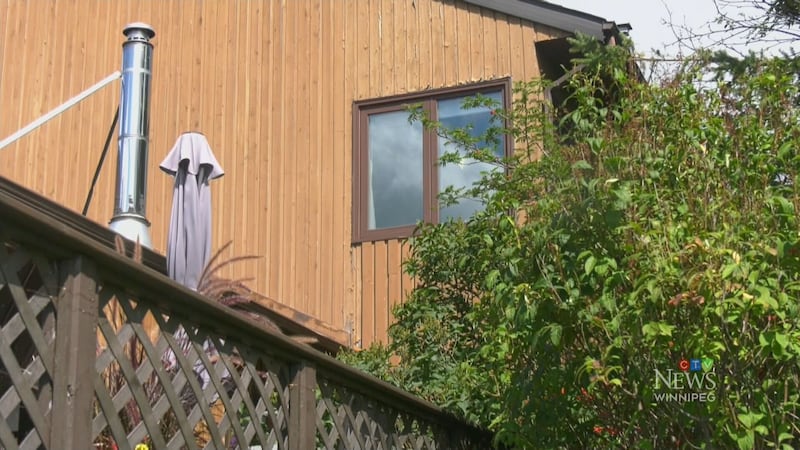
When the COVID-19 pandemic shut down salons across Ontario, Dawn Barton says she lost her income overnight. For nearly three decades, Barton worked as a hairstylist. But when lockdowns hit, she says public health restrictions forced her to stop working, leaving her scrambling to support her family. So, like thousand of others, Barton applied for CERB, the Canada Emergency Response Benefit. “We were told to go home and when I applied for EI, it redirected me instantly to the CERB program, so I just assumed that was where I was supposed to be,” said Barton. She also applied for the Canada Recovery Benefit and the Canada Recovery Sickness Benefit. In total she received $17,000 during the shutdowns. Now she’s been told to pay it all back. “In between lockdowns and restrictions being lifted our salon was exposed a couple of times so we had to shut down so I applied for those sick benefits instead of reapplying for CERB again,” she said. “I needed this income; I had a family to feed.” According to the Canada Revenue Agency, Barton was not eligible for CERB because it says she earned more than $1,000 in income during an applicable payment period, something Barton disputes. As for the other benefits, the agency says Barton did not experience a 50-per-cent reduction in average weekly income compared to the previous year. “Hairstylists a lot of us don’t get paid by the hour we get paid a commission so it’s really something I feel the CRA should take into consideration.” Barton’s not alone. The CRA says it is owed more than $10 billion in COVID-19 relief benefits from Canadians later found not to qualify. “It’s very common,” said Doug Hoyes, a licensed insolvency trustee and co-founder of Hoyes Michalos Associates Inc. “A lot of people received CERB when the rules weren’t entirely clear, and now the government has decided they didn’t qualify and wants the money back.” Barton says she has appealed the CRA’s decision and was denied twice. She says she still doesn’t fully understand why. Barton also posted her story to Facebook and says dozens of others in the same industry responded with similar stories. “There’s a lot of us out there that could really use some guidance and some help on how we can navigate the situation without feeling like we are being penalized by our government and feeling like we’re thieves because that’s pretty much how I feel,” she said. In the meantime, she says the agency has already begun recovering the money by withholding tax refunds and other benefits. “I’ve had to visit food banks. I’ve had to ask for loans,” she said. “About seven-thousand dollars they’ve taken from me this year alone, money that could have helped keep my head above water.” In a statement, the CRA says it remains sensitive to the hardship some Canadians may still be facing as a result of the pandemic. The agency says flexible payment arrangements are available for those who cannot repay the full amount immediately. It also says applicants who disagree with a second review can apply to the Federal Court for a judicial review within 30 days of the CRA’s decision.