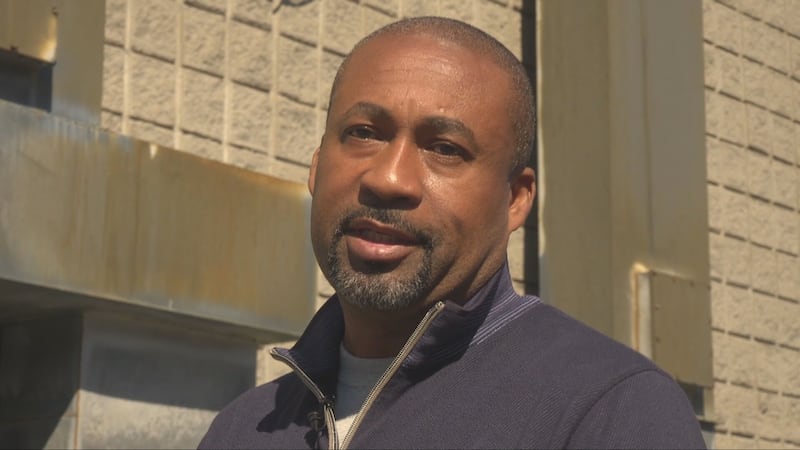
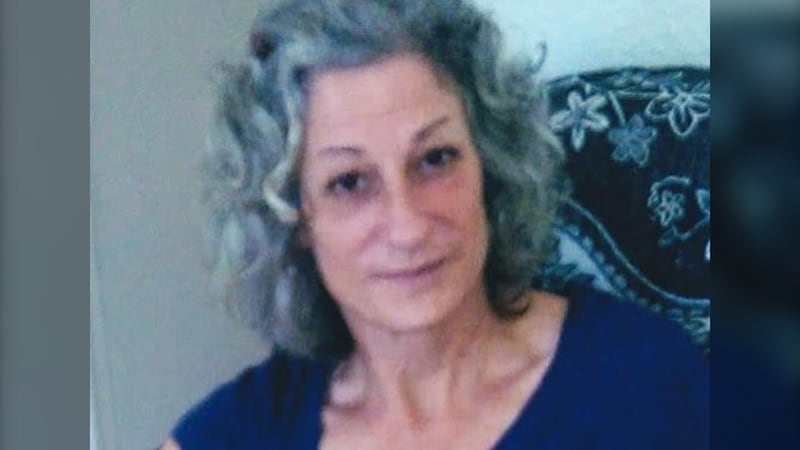
For more than two decades, Chantal Theriault dedicated her career to helping others at The Ottawa Hospital; first in admissions, then in the intensive care unit working alongside colleagues she calls “incredible.” But six years ago, she became a patient. It started with a tremor in her hand. “At first, I ignored it,” she says. “But then it spread to my arm, my leg. That’s when I knew I had to get it checked.” Because it was the height of the pandemic, her first medical appointment happened over the phone, making it difficult to fully explain her symptoms. After a series of tests and an MRI, she was referred to a neurologist. What came next was life-altering. Theriault was told it was Parkinson’s disease. “I thought he had the wrong chart,” she says. “I was 37.” Like many people, Theriault associated Parkinson’s with older men - figures like Muhammad Ali and Michael J. Fox. The idea that she could have it at her age felt almost impossible. “Your world just stops,” she says. “Everything just goes blank.” Parkinson’s is a brain condition that gradually affects movement, causing tremors, stiffness and slower motions. Dr. Michael Schlossmacher is a neurologist at the Ottawa Hospital. He says while Parkinson’s is often associated with older adults, about 10 to 15 per cent of cases are considered “young onset,” diagnosed before the age of 40. Theriault is part of that group, one that is often overlooked or misdiagnosed. Schlossmacher says treatment is mostly medication based. “We try to help people to overcome when they have slowness or tremor or stiffness. And so, we use medicines that were introduced, believe it or not, in 1962,” he says. “And it’s usually on one side more than the other when the symptoms arise. The mainstay treatment is to replace it with a treatment approach that’s called dopamine replacement therapy. I would say 90 plus per cent of people benefit from that. And you do this for as long as they live.” Theriault’s symptoms have evolved since that first tremor. Muscle contractions, fatigue, and involuntary movements are now part of her daily life. “It’s tiring,” she explains. “Even if you don’t see it, it’s happening inside.” Still, Theriault refuses to let Parkinson’s define her limits. She continues to work, drive, and stay active - especially through kickboxing, which she credits as a key part of managing her condition. Theriault also plays a role in shaping the future of Parkinson’s care. Through The Ottawa Hospital Foundation, she has taken part in clinical trials, helping researchers better understand the disease and develop new treatments. Schlossmacher says Theriault is an inspiration. “I’m really impressed by Chantal,” he says, “One of the things she does is she’s curious about clinical trials and what trials mean, communicates that very effectively and participates in some of them.” Her experience reflects a broader effort at the hospital, where cutting-edge research and patient care go hand-in-hand to improve outcomes for people living with neurological diseases. “We want to come up with better ways by which a family doctor or nurse practitioner makes a diagnosis without a neurologist,” Schlossmacher said. “And that would be huge, because current estimates are that about 30 to 40 per cent of all people living with Parkinson’s in Canada never see a neurologist. If we were to be able to have a better prediction and diagnostic tool that’s simple, inexpensive and can be put into the hands of a family doctor, that would be fantastic.” It’s a perspective Theriault didn’t fully appreciate before becoming a patient herself. “Now it’s personal,” she says. “This is my future, and other people’s future.” “If a door closes,” she says, “you kick it down.” There is no clear timeline with Parkinson’s. The disease progresses differently for each person. Her symptoms remain manageable. Her independence is intact. And her mindset is unwavering.