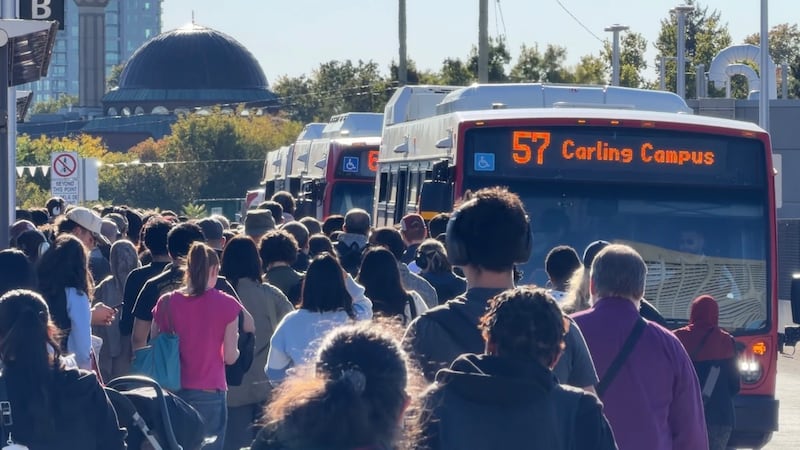
Ottawa’s Worst Commute: CTV News Ottawa travels with viewers on OC Transpo buses, the O-Train and Para Transpo to see what’s happening on the transit system. Visit our special Worst Commute page for more coverage. Ottawa transit riders continue to feel the ripple effects of a technical problem on the city’s east-west light rail transit line. In January, OC Transpo identified a spalling defect in axle bearing components that forced dozens of trains off O-Train Line 1, reducing capacity and creating heavy crowding on platforms and inside single-car trains during peak periods. The problem centres on the cartridge bearing assemblies on the Alstom Citadis Spirit trains. Spalling occurs when flakes break off the metal surface inside the bearing, creating pits that can worsen over time and potentially lead to failure if not replaced. Out of caution, transit officials ordered any train with more than 100,000 km on these components removed from service until bearings are replaced. The impact on the fleet has been significant: 41 train cars were removed from service in January. As of the last update provided by OC Transpo, only 21 cars were available, with no timeline for full restoration of capacity. In the latest media availability, Interim General Manager Troy Charter said OC Transpo has shifted its focus away from adding small numbers of trains back to the line and toward the restoration of the full train fleet. “One of the things that we want to make sure that we’re doing is maintaining the kilometers on the vehicles, as well as maintaining the supply of the cartridge bearing assemblies,” he said. “So, we shifted our focus to the full return of the full fleet. And that’s where our focus is right now.” Charter says that the rail maintainer and the train manufacturer Alstom are gathering more technical information by carrying out further technical analysis and laboratory testing of the cartridge bearing assemblies, and that detailed technical work and safety reviews are progressing on a containment and monitoring system. With fewer vehicles available, the line continues to run at a three- to four-minute frequency. Riders report the effects most strongly at transfer hubs such as Blair, Tunney’s Pasture and downtown tunnel stations, where passengers must wait for multiple trains to board. Because Line 1 is Ottawa’s primary east-west spine — connecting buses, downtown employment and major transfer points — capacity reductions quickly cascade through the wider transit system. The spalling defect is the latest in a series of mechanical issues affecting the Line 1 rolling stock since opening. Officials emphasize it is separate from earlier axle-bearing problems but again requires large-scale inspection and replacement across the fleet. City council has now ordered a safety audit once full service returns, reflecting ongoing concerns about recurring train defects and prolonged capacity constraints. For commuters, the technical language of bearings and assemblies translates into everyday frustration: crowded platforms, missed trains, and longer journeys. Commuter Rojvan Abdullah says, “the stations get pretty crowded. Most of the time you have to try to wiggle your way to the front, to try and possibly go through the doors.” Kiana Vazvani says, “there are times where there are too many people on the train, and you have to wait for the next one … or it’s too crowded to even get in the doors.” Until more trains return to service, Line 1 is expected to continue operating with reduced capacity — meaning Ottawa’s busiest rail corridor will remain squeezed, and riders will continue to feel the pinch at the platform edge.