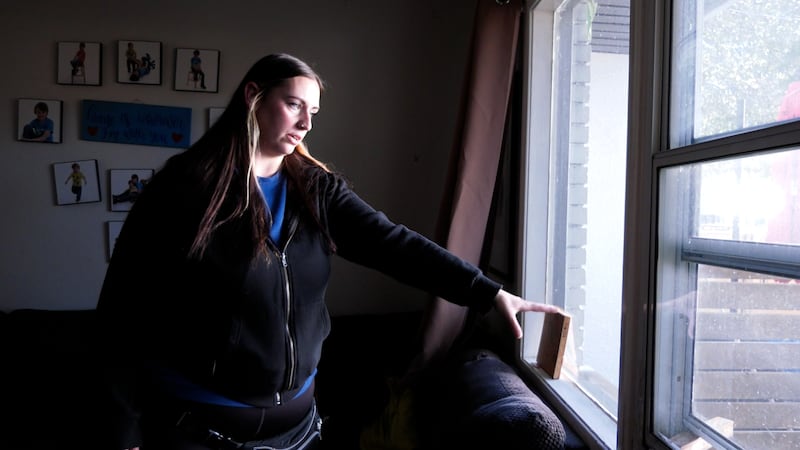
Jennifer Curran became a new mom and a cancer patient at the same time in her life. During her pregnancy, she received the news that she had cervical cancer. “I had the cancer removed at the same time as my c-section,” she said. Curran said she had not experienced any symptoms leading up to that point, but her cancer was advanced enough that she required radiation and chemotherapy. “I didn’t get a chance to linger in being sad for myself because I had this little baby to take care of,” she said. Human papillomavirus, or HPV, is the main risk factor for cervical cancer. Most cases occur in women under 50 years of age, and the Canadian Cancer Society estimates 430 Canadians die from it each year. The HPV vaccine is an effective tool to prevent the virus and is administered in schools across Quebec, but the vaccine was not available when Curran, now 44, was in school. Until recently, pap tests were the main way to detect cervical cancer, but research is now shifting towards HPV tests. Dr. Annie Leung, a gynecologic oncologist, and her team at the McGill University Health Centre (MUHC) are working on a new HPV screening that is more sensitive, more accurate, and can detect HPV before cells become abnormal, saving women from invasive, life-altering treatments. “The possibility that I would need to do surgery to remove their uterus and cervix, that has huge implications on what their future looks like,” she said. While pap tests are still recommended, Dr. Leung says self-testing, where swabs can be done by women at home, makes screening more accessible, especially in northern and Indigenous communities where cervical cancer rates are the highest in the country. “With new technology we’re able to actually detect the virus itself,” she said. “So before we even see abnormal cells were able to identify and detect the virus that causes the abnormal cells.” Self-screening is already available in B.C. and Ontario, and Dr. Leung says it should be rolled out in Quebec by the middle of 2026. The MUHC Foundation, which is funding Dr. Leung’s work, has committed to raising $5 million for research into women’s diseases, which are underfunded, according to Kim Cavener, who leads strategic giving at the foundation. “Women’s health research receives only 7 per cent of federal health research funding in Canada,” she said. Curran is also working with the foundation to help them raise funds for cervical cancer research. She said she wants her story to encourage others to get tested for HPV. “Had I had that test available to me at the time, my story could have been very, very different,” she said. Fortunately, her story ended well. Her daughter is turning five soon, and both she and her daughter are healthy and strong.