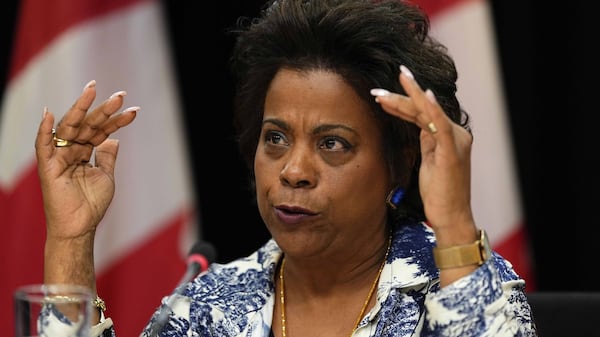
A London council member is looking for assurances the city is protecting municipal tax dollars as the financial fate of the Aspire Food Group unfolds. Aspire was formed by five McGill University students in 2013. They won a $1million (USD) prize awarded for business ideas that solve a pressing social issue. The business proposed using cricket protein to address global food shortages. A Toronto Superior Court of Justice ruling placed Aspire Food Group in the hands of a receiver on May 6th. The decision was based on a filing from Farm Credit Canada, with the crown corporation reporting Aspire had debts of more than $41 million. Among those owed money was the City of London, prompting an inquiry to city staff from councillor Susan Stevenson, “The question is, what exposure do we have? Is there anything that we can do to limit the exposure there?” The city’s finance department confirms that Aspire owes $1,063,467 in back taxes, with arrears dating back to 2014. According to Stevenson, “I think it’s just going to be of public interest when we see that there’s $1 million in property taxes owed to the city.” While being placed in the hands of a receiver is seen as a step towards bankruptcy there are some who believe Aspire still has a viable business model. Professor Sylvain Charlebois, Director of the Agri-Food Analytics Lab at Dalhousie University told CTV News in an interview on May 13 that the company may have been hindered by its initial marketing approach. “We shouldn’t pretend that we are out there to feed humans with bugs or crickets. There’s no appetite for that in North America, or very little of it.” Charlebois said that, along with operational changes, a shift of focus to alternative uses for cricket protein, like livestock feed and fertilizer, could help Aspire turn the corner. The city says, at this point, there’s been no indication of a bankruptcy filing and the plant continues to operate. In statement to CTV News, City of London Deputy City Manager of Finance Anna Lisa Barbon said they’re not committing to a specific path, but if there is bankruptcy action taken, they could recover outstanding property taxes through a sale of the land - either by the receiver, by a trustee in bankruptcy or by the city itself. As for where the city stands in the list of creditors, Barbon said unpaid property taxes would constitute a special lien under the Bankruptcy and Insolvency Act and would rank in priority ahead of most other claims. Stevenson believes it’s important to keep the public appraised of how the city approaches situations like the one Aspire if facing, “What can we learn from this? And is there anything that needs to change? And what can the public learn about how we operate and are good stewards of the receivables that we have?”