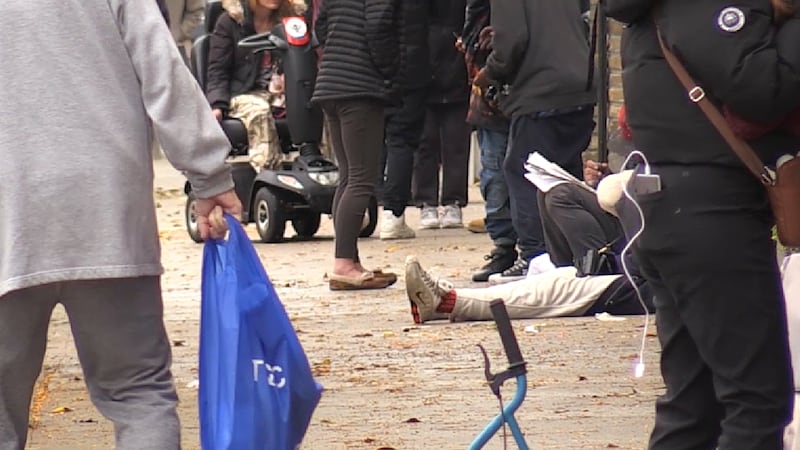
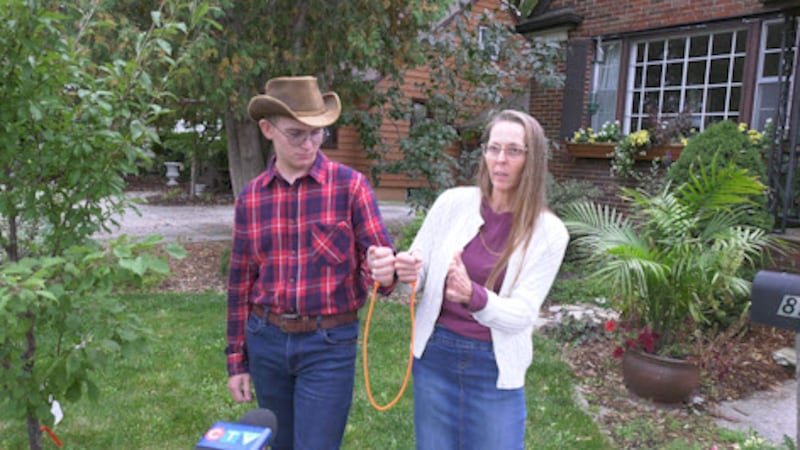
Months after city council allowed municipal bridge funding to expire for some frontline homelessness services, this week a procurement process re-allocated $350,000 between four agencies. On Wednesday, the Executive Director of Ark Aid Street Mission Sarah Campbell told CTV News about conditions in the Old East Village (OEV) since municipal funding stopped on July 31 and the agency had to slash daytime drop-in spaces and hours. “Pressure has actually intensified as the number of people on the street is growing and the services are reducing,” Campbell explained. She says without municipal funding for an encampment support strategy, people living in encampments relocated to the OEV to meet their basic needs like food and bathrooms. At the same time, the growing number of unsheltered Londoners arriving in the business district discovered that the capacity of daytime drop-in shelters had been greatly reduced when municipal funding wasn’t renewed. The result has been a greater number of homeless Londoners on Dundas Street and in the nearby alleys and parking lots. The current situation can be traced back to funding uncertainty six months ago. On March 31, the federal government’s Unsheltered Homelessness and Encampments Initiative (UHEI) expired. The next day, it was announced that the fund would be renewed-- but the federal government’s timeline to disburse the money was uncertain. In response, council provided $350,000 of bridge funding (until July 31) to extend daytime drop-in space at The Ark and encampment outreach services by 519Pursuit. It was early August when the federal government notified City Hall that it would receive $2.5 million from the renewed UHEI fund, but council directed most of that money ($2.1 million) towards the upcoming Winter Response to Homelessness, and a municipal reserve account that had been the source of stopgap funding for The Ark and 519Pursuit was reimbursed with the remaining $350,000. At the time, Council also directed staff to conduct a fair and transparent procurement process to determine how the $350,000 could best be utilized by frontline agencies. Recently a report to the Community and Protective Services Committee recommended dividing those dollars four-ways: However, on Wednesday Coun. Susan Stevenson objected to the use of municipal dollars to fund the services that would be provided on the main street of the OEV Business Improvement Area (BIA), in accordance with a previous direction by Council. “Ark Aid used to be a volunteer charity organization, and now these organizations are becoming taxpayer-funded contracts at a time when people need shelter beds,” Stevenson told council colleagues. “They need a space to sleep at night. The other stuff the public can, and is willing to, do through charity.” Despite Stevenson’s objections, a majority of council supported dividing the funds four-ways. After the meeting, Campbell responded to Stevenson’s comment. “The assertion was these services have been provided by volunteers in the past,” Campbell explained. “The truth is they’re provided by organizations with the help of volunteers. But we can’t rely on volunteers alone to do this work.” The Ark had submitted three proposals totaling $548,716 to the procurement process to demonstrate what the agency believes is the coordinated system response needed at this time. “This is a fractional improvement,” Campbell said about the $130,000 approved by council. “This is adding one or two staff so we could have 20 or 30 more people come inside for a period of time. It does not cover the costs.” Since the bridge funding expired, The Ark’s limited drop-in hours have been funded through public donations and with the support of volunteers. Campbell emphasizes it will be is being left to the generosity of donors to cover the remaining costs related to the drop-in service.